Scintillating Grid
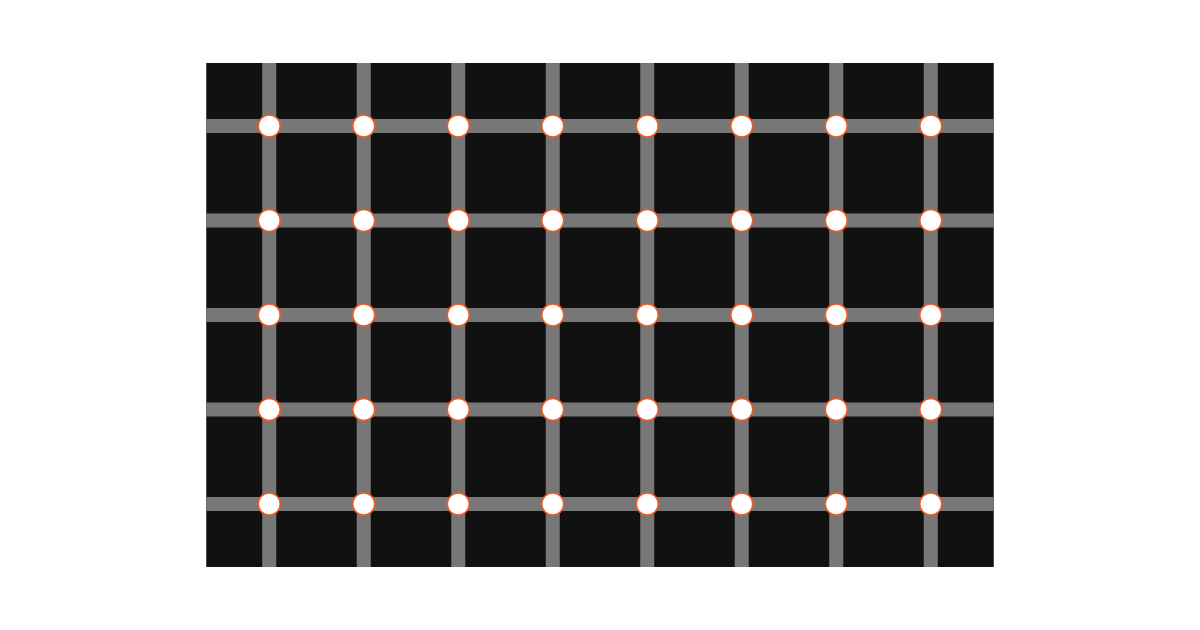
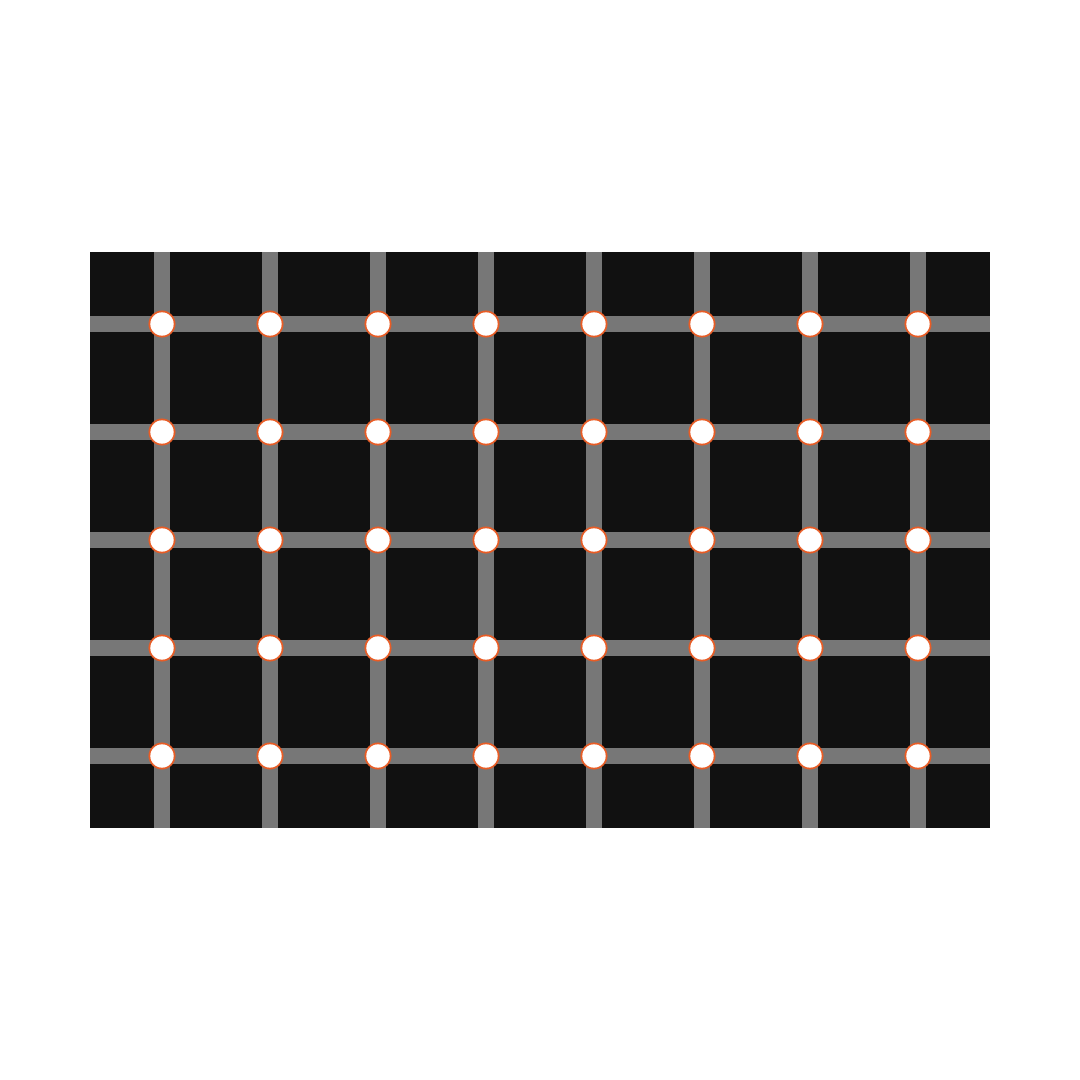
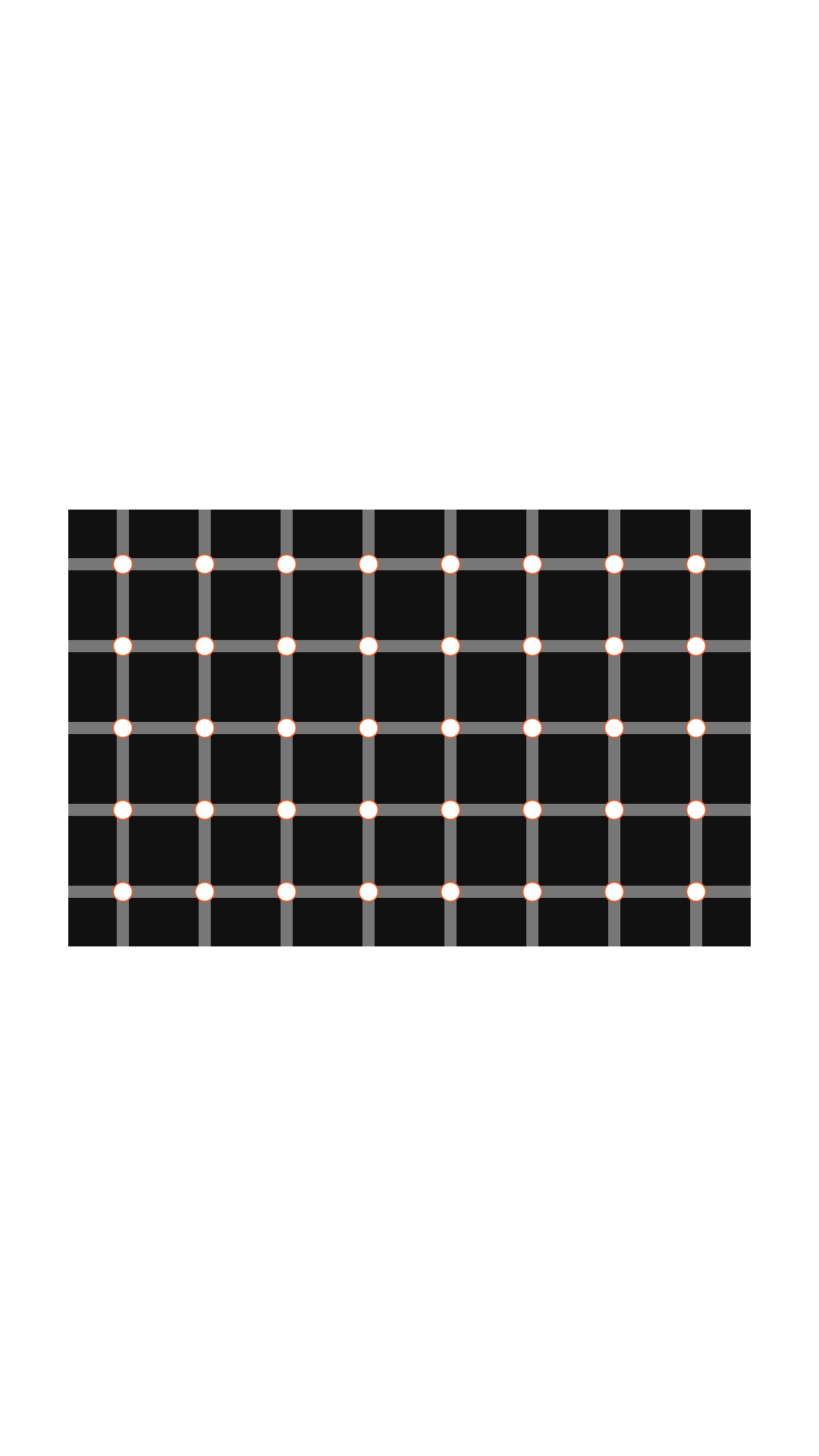
Scintillating Grid — 2026, generated SVG, dimensions variable · Luminance · Still
After Elke Lingelbach, 1994
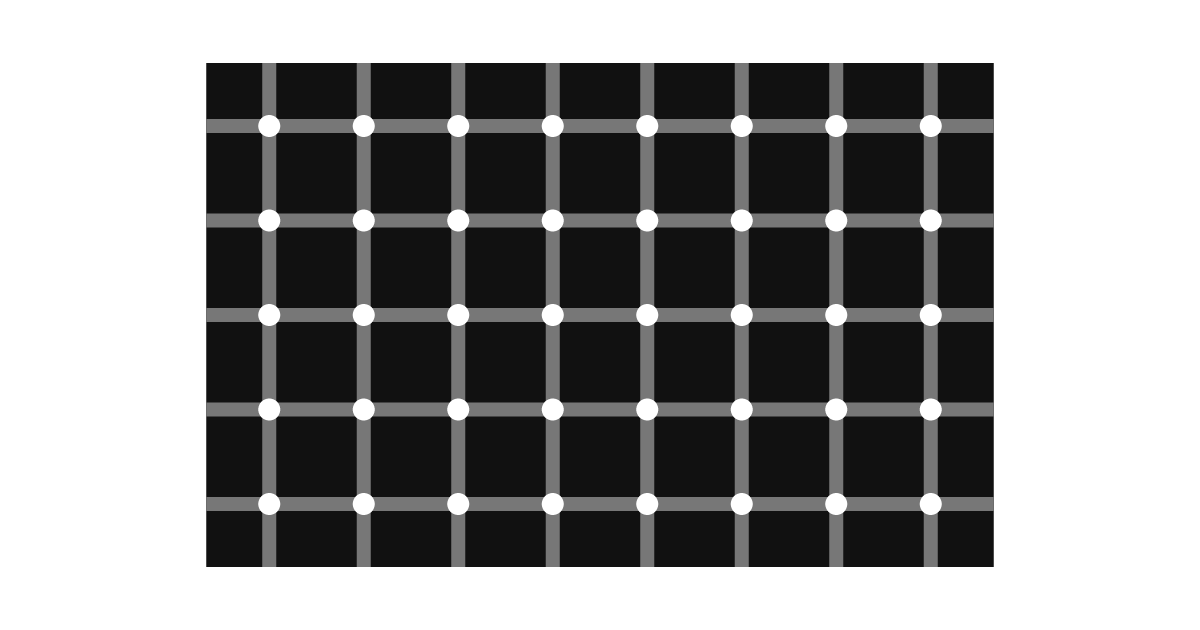
How many black dots are there?
How many black dots are there?
Share
Reveal the answer
Every circle drawn is white. There are zero black circles.
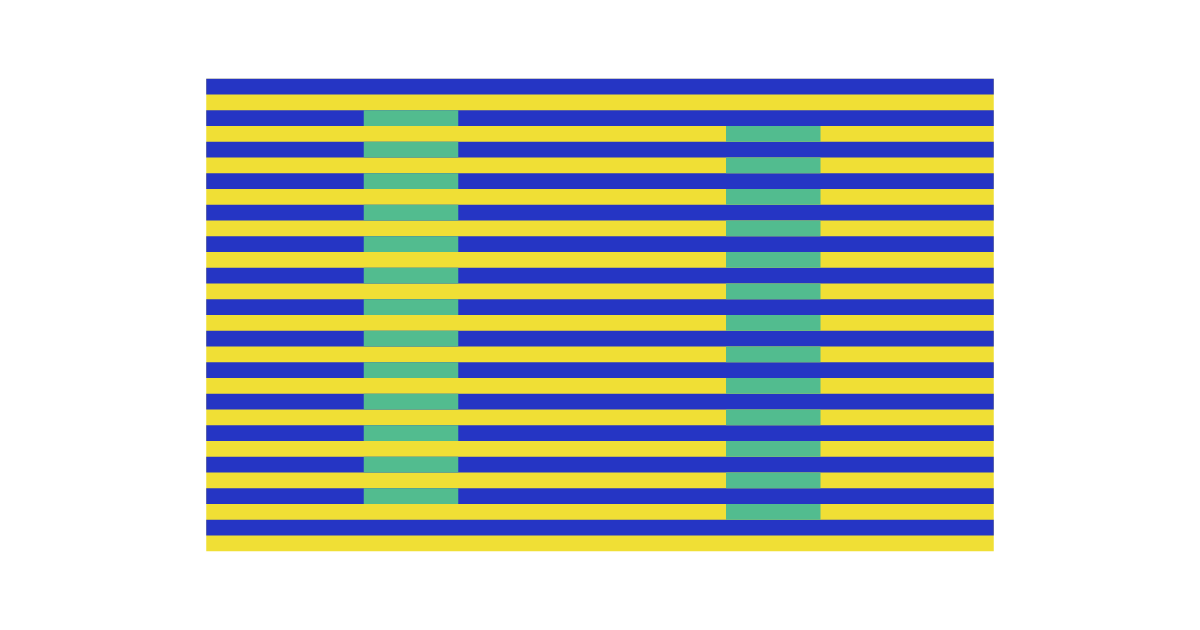
↑ The mechanism, made visible.
Notes — why it looks that way
What is happening
Move your eyes slightly while scanning across the top-right and bottom-left of the figure. A dot other than the one you’re currently looking at can appear black, and it tends to vanish the moment you try to count it. All 40 circles here are drawn in the same white. There is no processing that changes a dot’s color over time.
Why it looks that way
The combination of the white circles at the intersections, the gray lines, and the black background makes the perceived brightness of nearby dots feel unstable. Where you direct your attention and how your eyes move both play a role. It resembles the Hermann grid, but the flicker produced by the added white circles is what makes this one distinct.
How to check
Revealing the answer colors the outline of each white circle to show exactly where they’re drawn. If chasing the black dots tires your eyes, take a break. Not seeing the effect doesn’t say anything about your ability to count numbers.
For reference: Michael Bach’s explanation. The figure here is an original implementation for this site.
First described
After Elke Lingelbach, 1994
Reported as a variant of the Hermann grid.



Media — images and data
- OG / X (1200×630)
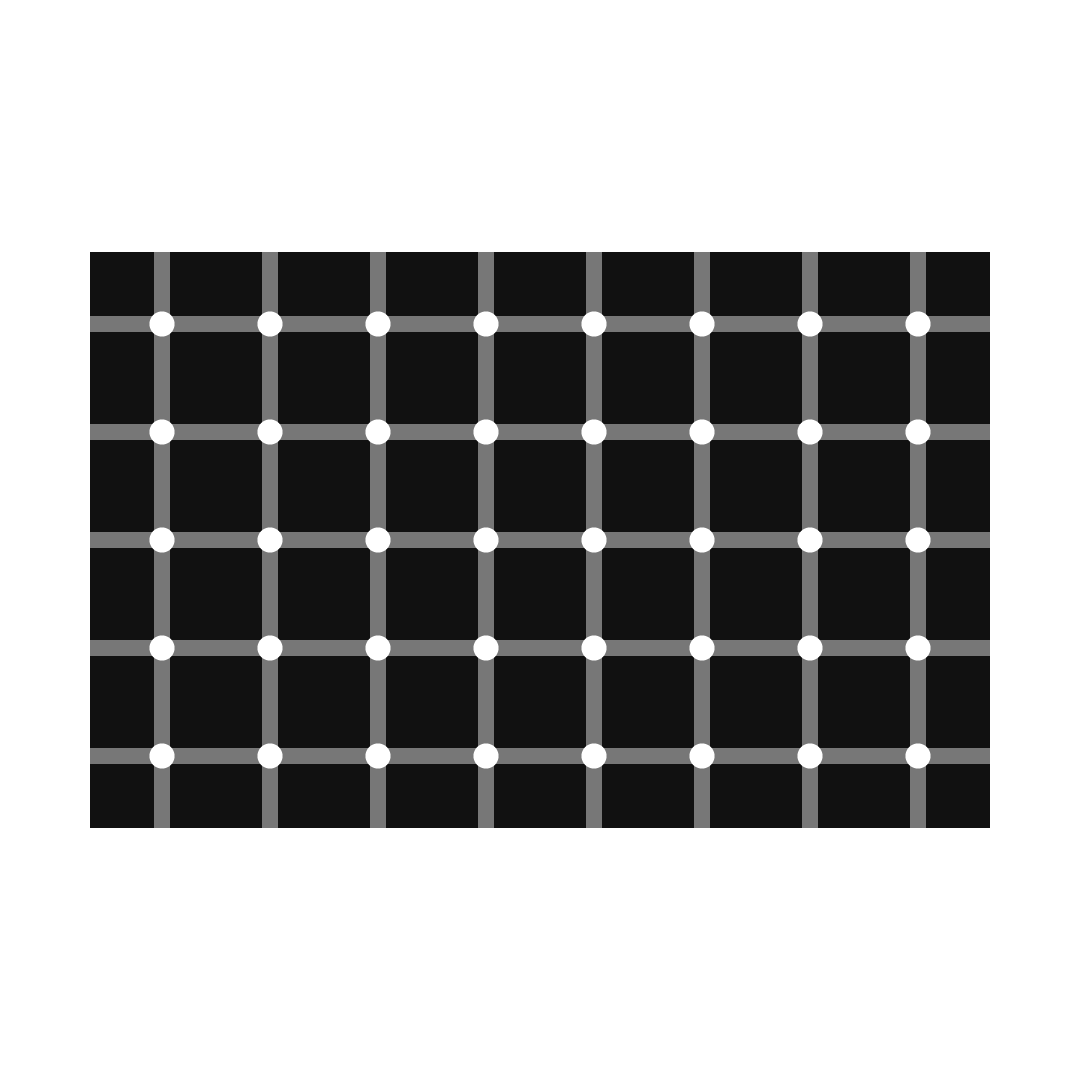
- Instagram square (1080×1080)
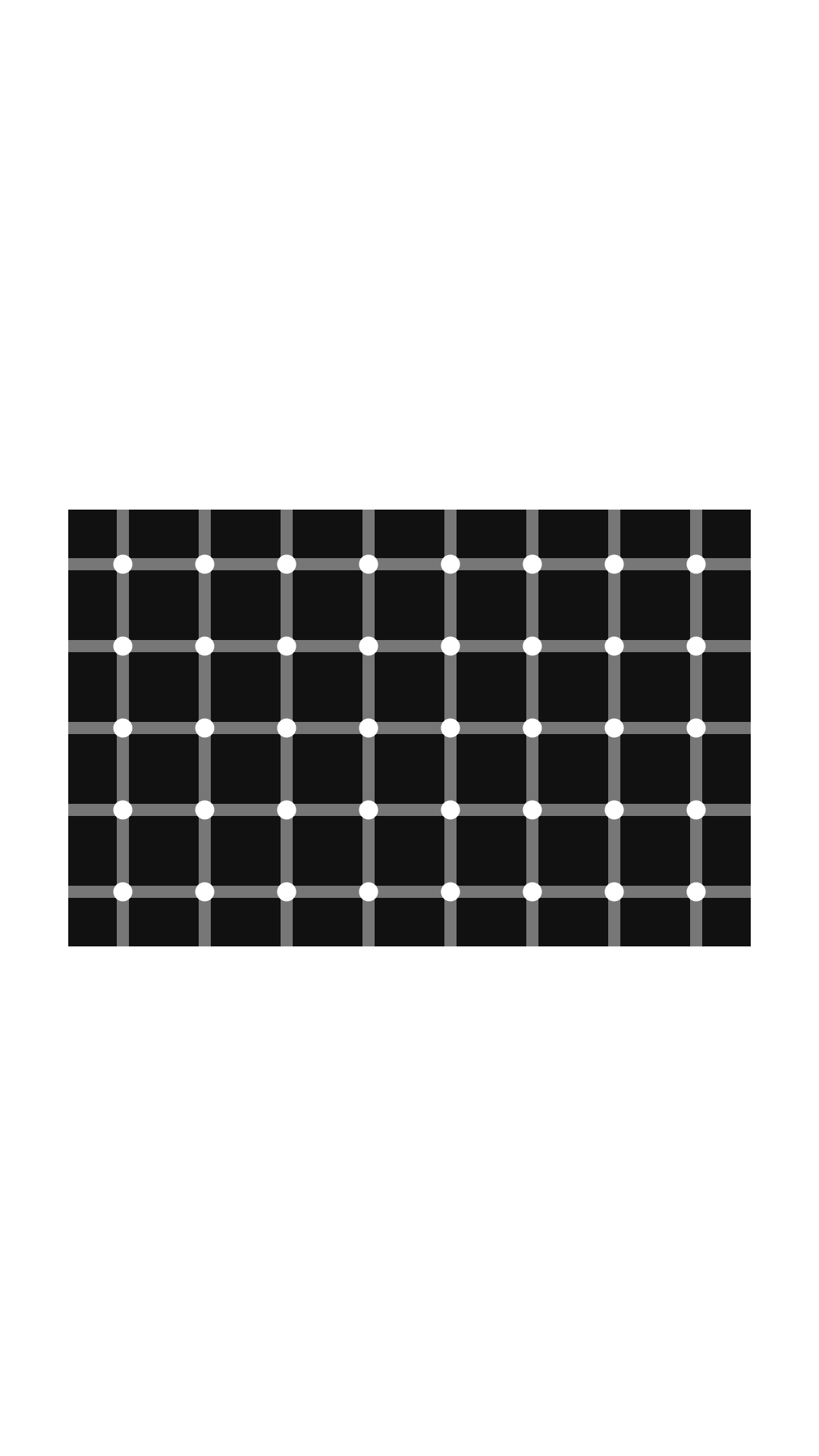
- Shorts / Reels vertical (1080×1920)
- Answer image — landscape (X)
- Answer image — square (Instagram)
- Answer image — vertical (Shorts)
- Post drafts (JSON)
Free to use for non-commercial purposes such as classes, school projects and blogs, with a link back to this page as the credit. Commercial use is not covered
Every figure is generated here from the phenomenon itself (re-implemented). The general scintillating grid principle is re-implemented here as SVG. No existing figure or code is reproduced.