Müller-Lyer
Müller-Lyer — 2026, generated SVG, dimensions variable · Geometry · Interactive
After Franz Carl Müller-Lyer, 1889
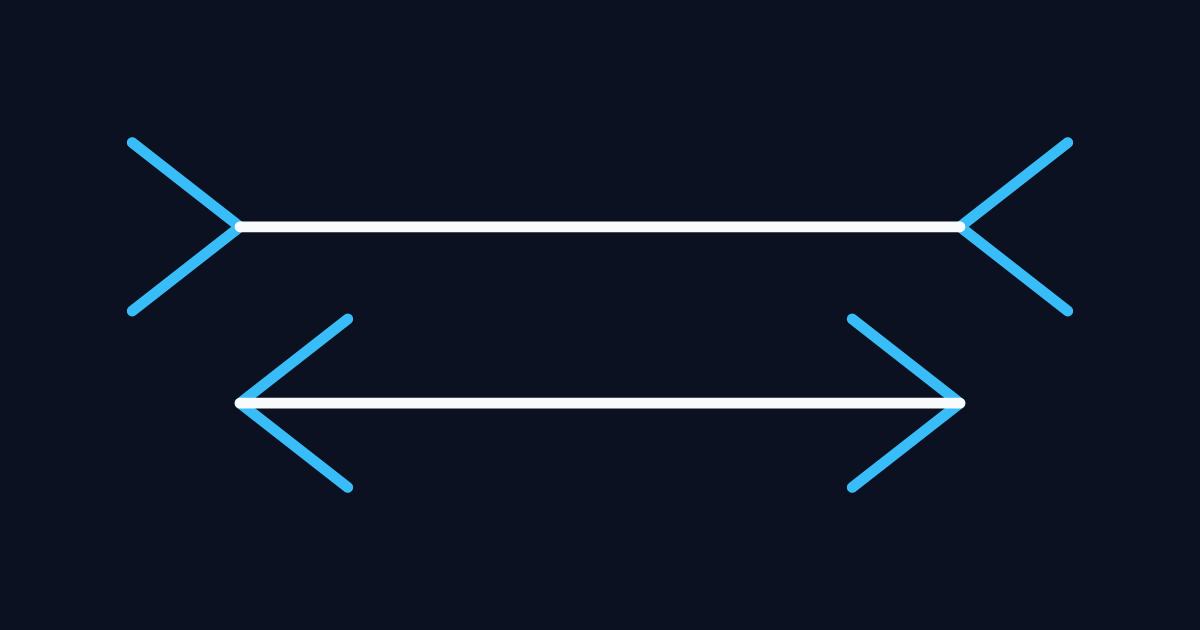
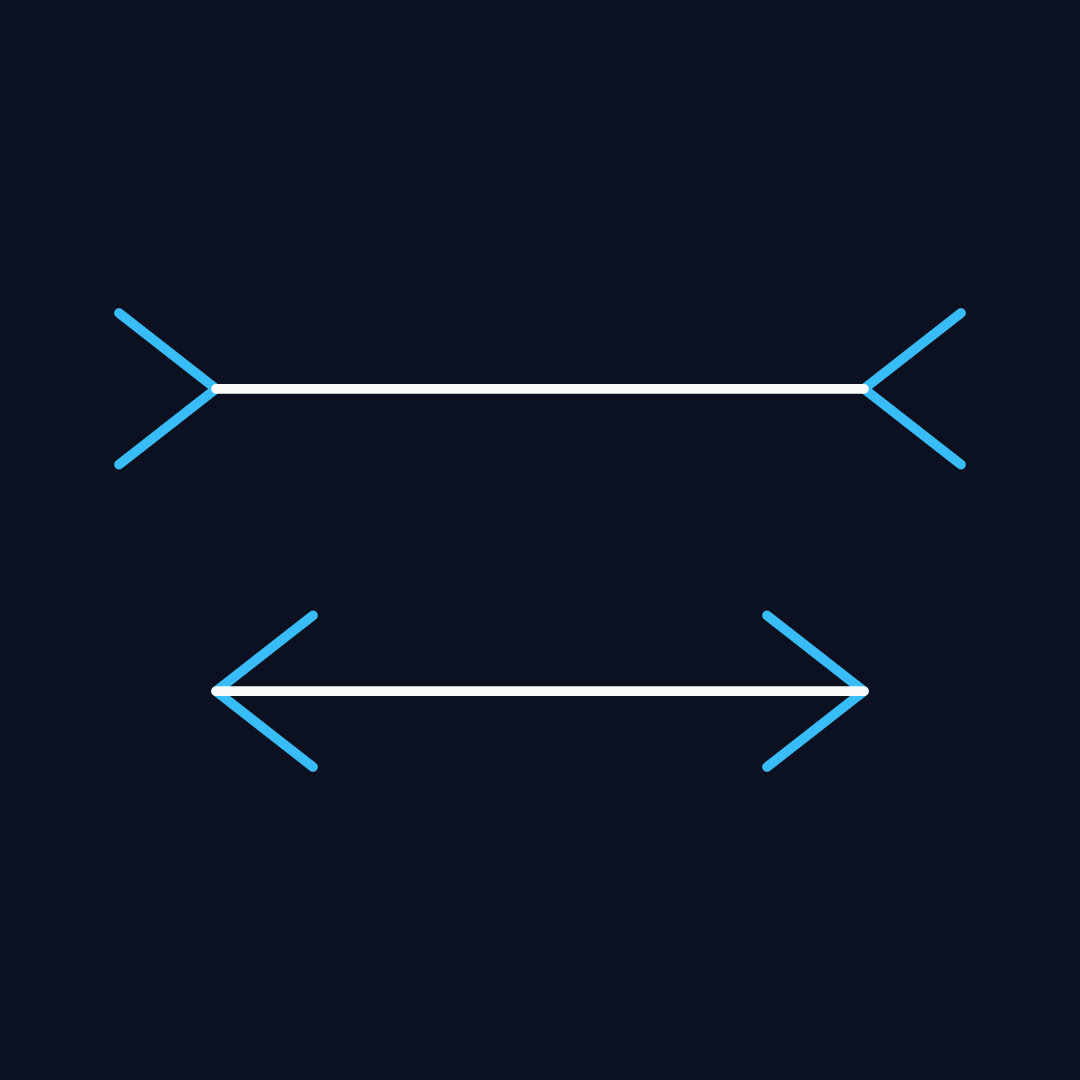
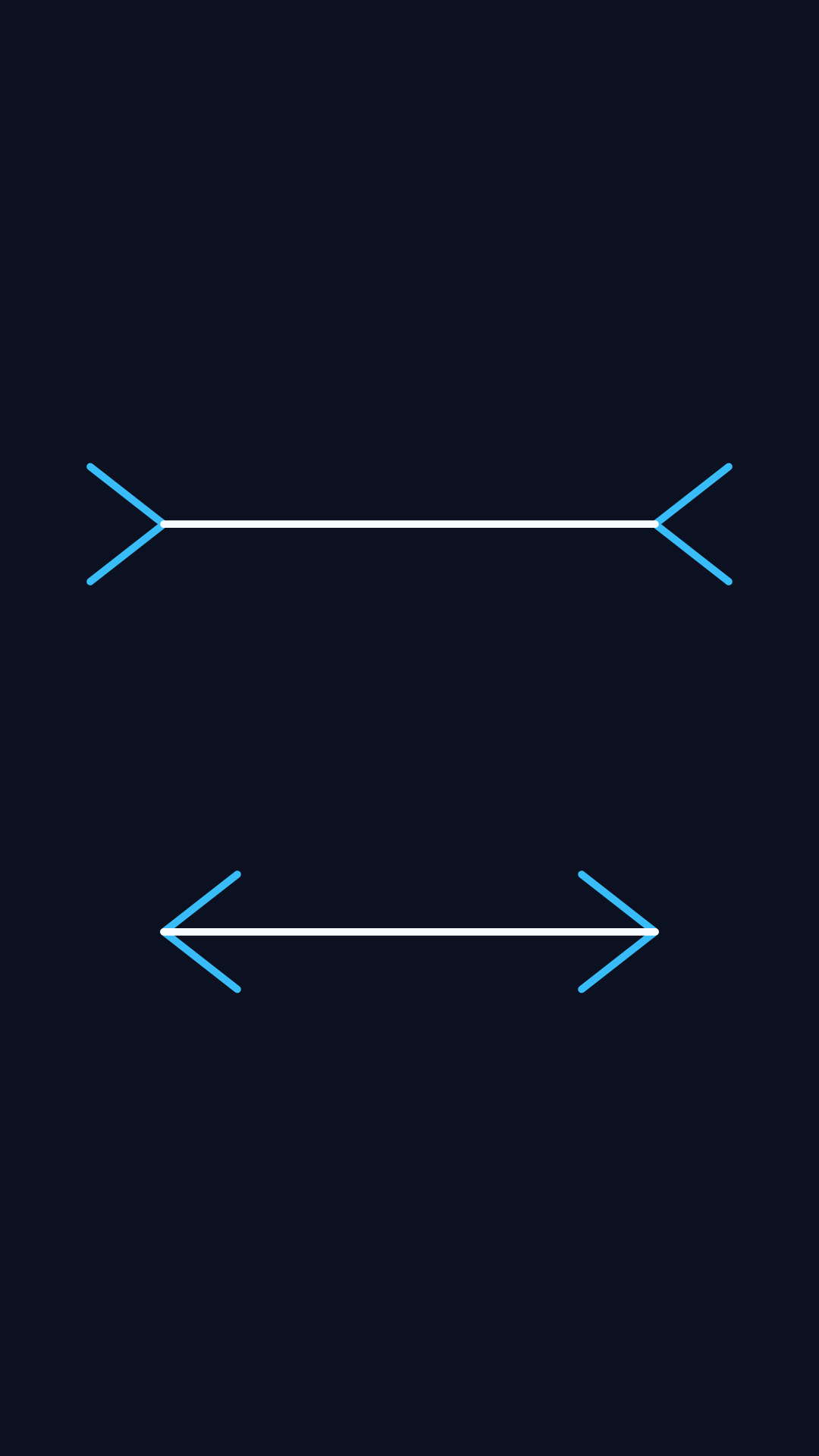
Which line is longer?
Top, bottom, or exactly the same?
How to look: Look only at the lines. Try to ignore the fins.
Share
Reveal the answer
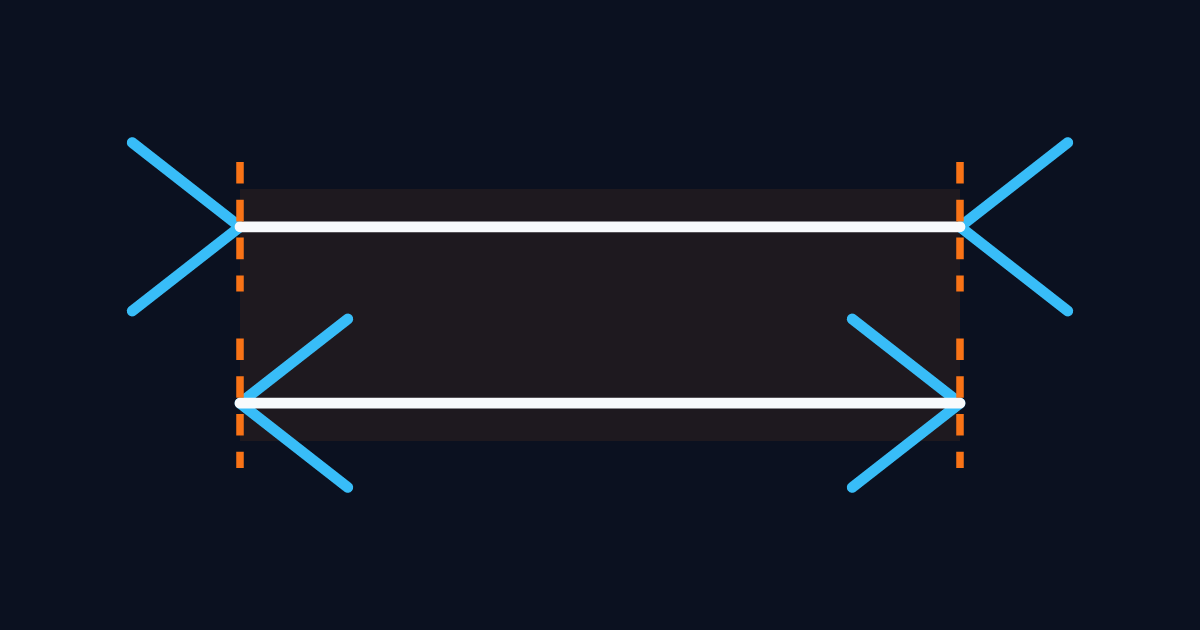
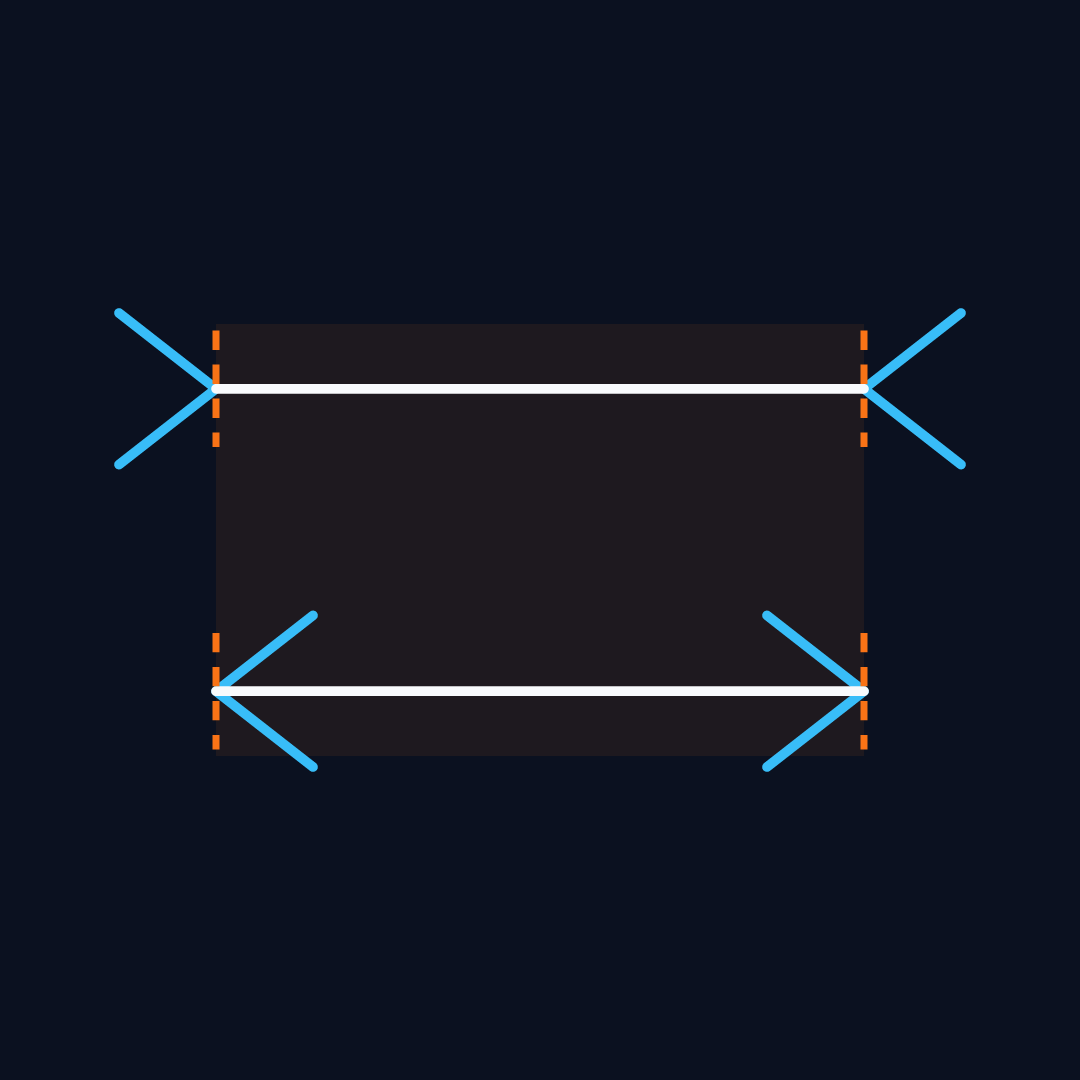
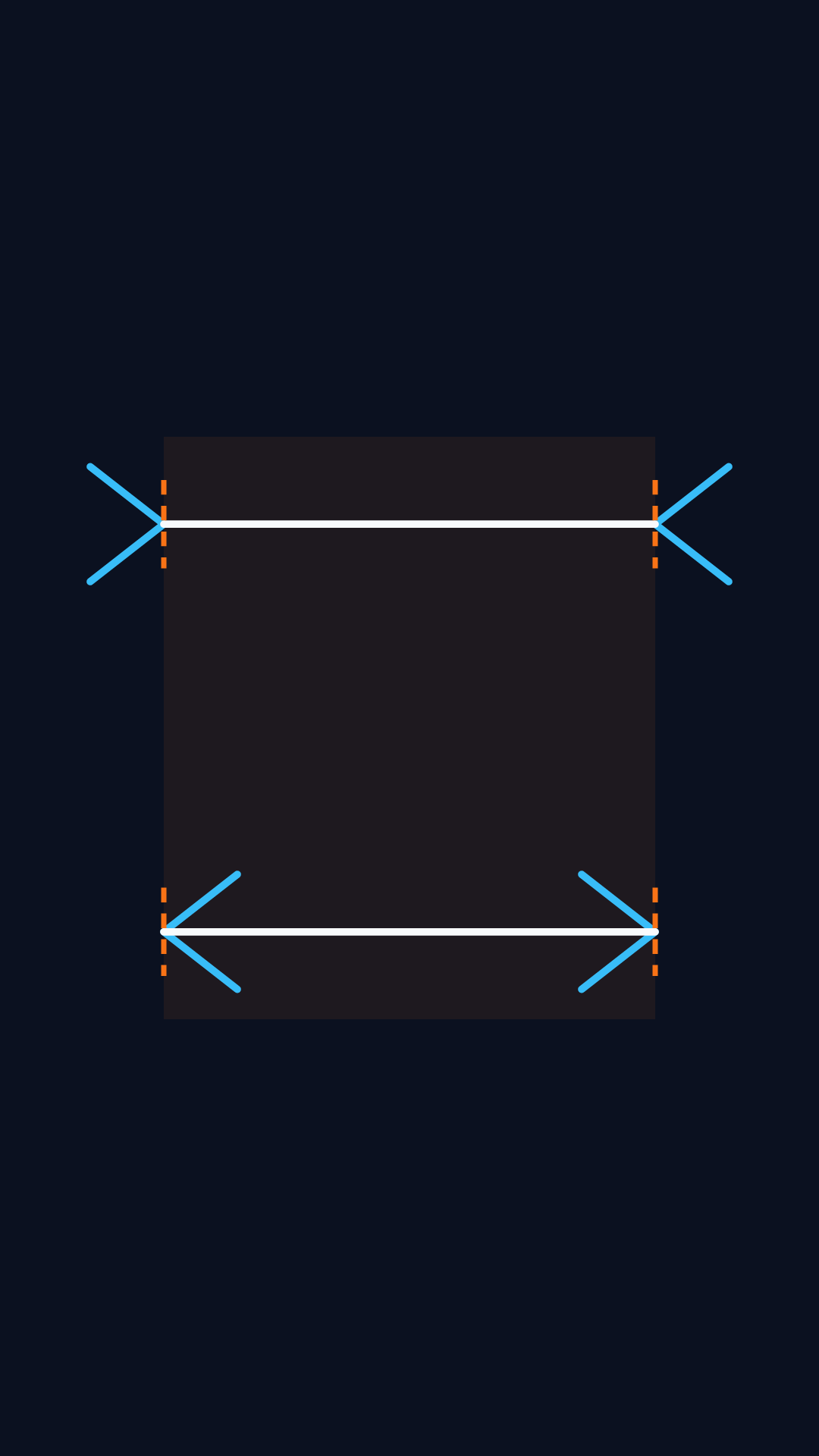
They are exactly the same length.
↑ The mechanism, made visible.

Notes — why it looks that way
What is happening
The two lines are the same length down to the pixel. The only difference is which way the fins at their ends point. Fins turned outward make a line look longer; fins turned inward make it look shorter.
Press “Remove the context” and the fins disappear on their own, leaving the two shafts side by side. Nothing about them moves — and they were always equal.
Why it looks that way
There are several respectable explanations and no settled winner.
- Depth cues. Outward fins resemble the far corner of a room; inward fins resemble a corner jutting toward you. The visual system enlarges what it takes to be distant, so the “far corner” line is scaled up.
- Contour capture. When your visual system decides where a line ends, it does not stop cleanly at the tip. It takes in the neighbouring fins and ends up measuring the extent of the whole figure rather than the shaft alone.
What both accounts share is the interesting part: your eyes never measure the line on its own. They measure it together with whatever surrounds it, and the surroundings are free to lie.
Turning the knobs
Flatten the fin angle and the effect fades; at zero degrees, where the fins lie along the shaft, it disappears entirely. Widening the angle strengthens it — up to a point. Push it too far and the figure stops reading as “a line with fins” and starts reading as a separate shape, and the illusion weakens again.
First described
After Franz Carl Müller-Lyer, 1889
Source: “Optische Urteilstäuschungen”, Archiv für Anatomie und Physiologie
Media — images and data
- OG / X (1200×630)
- Instagram square (1080×1080)
- Shorts / Reels vertical (1080×1920)
- Answer image — landscape (X)
- Answer image — square (Instagram)
- Answer image — vertical (Shorts)
- Post drafts (JSON)
Free to use for non-commercial purposes such as classes, school projects and blogs, with a link back to this page as the credit. Commercial use is not covered
Every figure is generated here from the phenomenon itself (re-implemented). Reported in 1889 and widely known since. The figure here is re-implemented as SVG on this site; no existing artwork is reproduced.