Hidden Text
Hidden Text — 2026, generated SVG, dimensions variable · Frequency · Still
After Aude Oliva / Antonio Torralba / Philippe Schyns, 2006
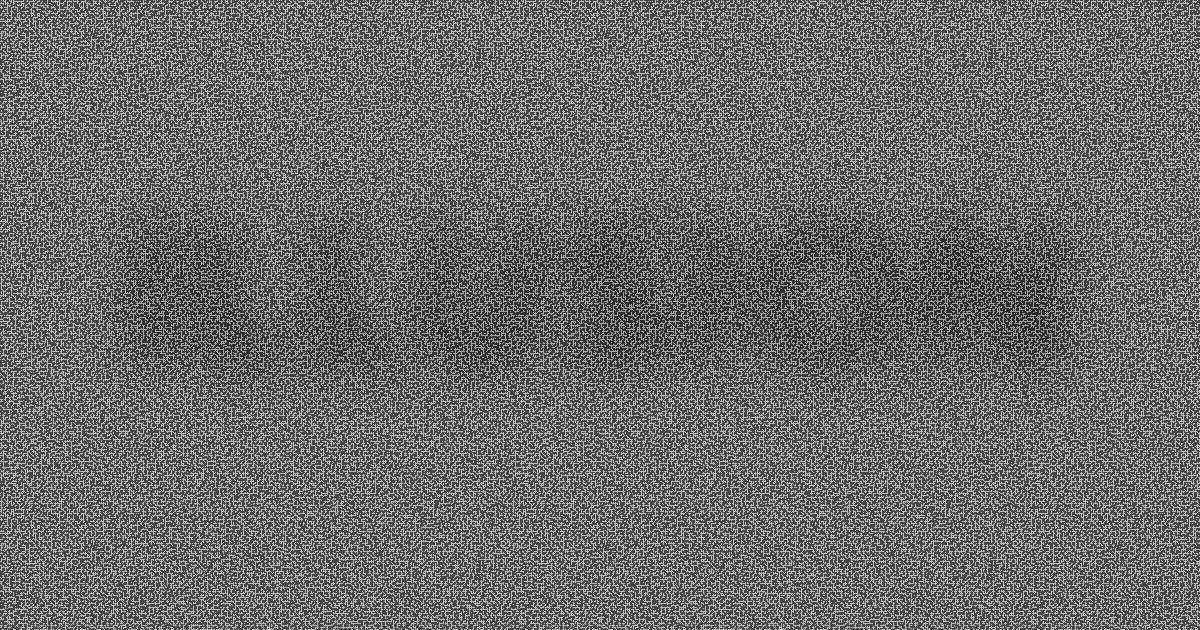
Step back from the screen.
What does this image say?
How to look: Hold the screen at arm’s length, or squint.
Share
Reveal the answer
It says ILLUSION.
↑ The low-frequency layer on its own. This is what sits in the image.
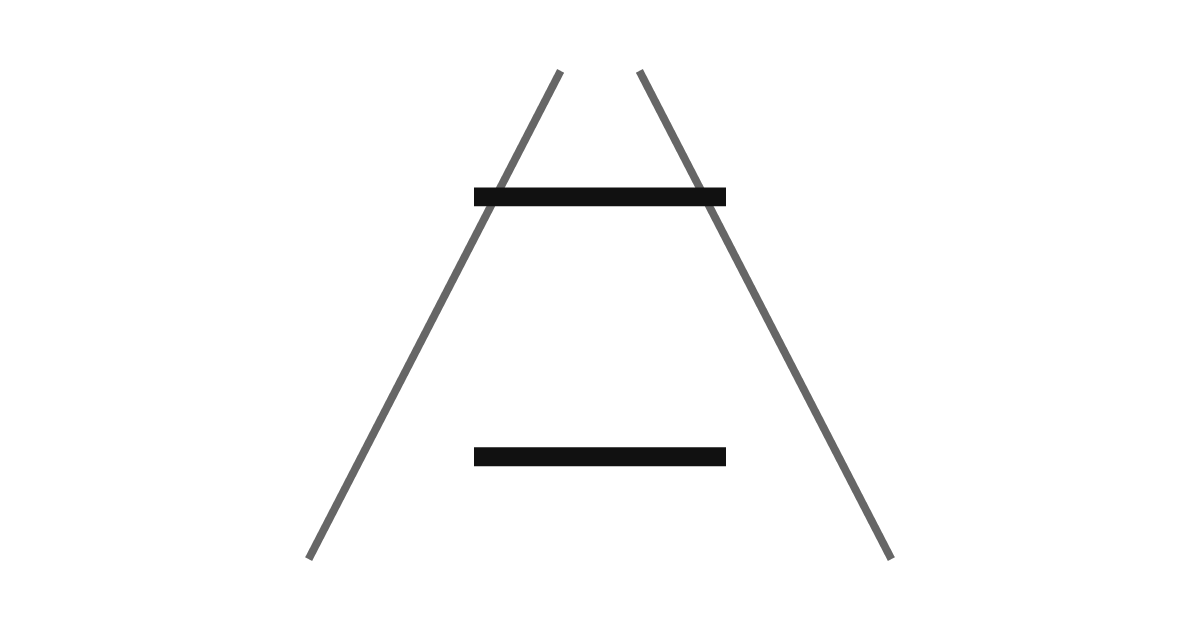
Notes — why it looks that way
Your eyes are not a camera. Before anything reaches you as “a picture”, the visual system has already split the scene into coarse structure and fine detail — low and high spatial frequencies — and handed them to different channels.
This image puts two things in the same rectangle. The word ILLUSION is there as a heavily blurred shape: large, soft, low frequency. On top of it sits a field of hard two-tone noise: small, sharp, high frequency. Up close, the noise wins. It is the loudest thing in view, and your fine-detail channel reports a mess of dots.
Now increase the distance. Every feature in the image shrinks in angular size, and the noise shrinks past the point where your eye can resolve it at all — the fine grain averages into a flat grey. The blurred word does not disappear, because it was never made of fine detail. What is left is the coarse structure, and the coarse structure is the word.
Squinting does the same thing by a different route. Narrowing your eyelids and defocusing throws away the high-frequency content before it is measured, which is why the trick works without you moving at all.
The unsettling part is that nothing about the image changed. The same pixels, on the same screen, carry two different messages depending only on how far away you stand. Whatever you are seeing at any moment is not the image — it is the part of the image your eyes are currently able to resolve.
First described
After Aude Oliva / Antonio Torralba / Philippe Schyns, 2006
Source: “Hybrid images”, ACM SIGGRAPH
Two layers are combined: one carrying high spatial frequencies, one carrying low.



Media — images and data
- OG / X (1200×630)
- Instagram square (1080×1080)
- Shorts / Reels vertical (1080×1920)
- Answer image — landscape (X)
- Answer image — square (Instagram)
- Answer image — vertical (Shorts)
- Post drafts (JSON)
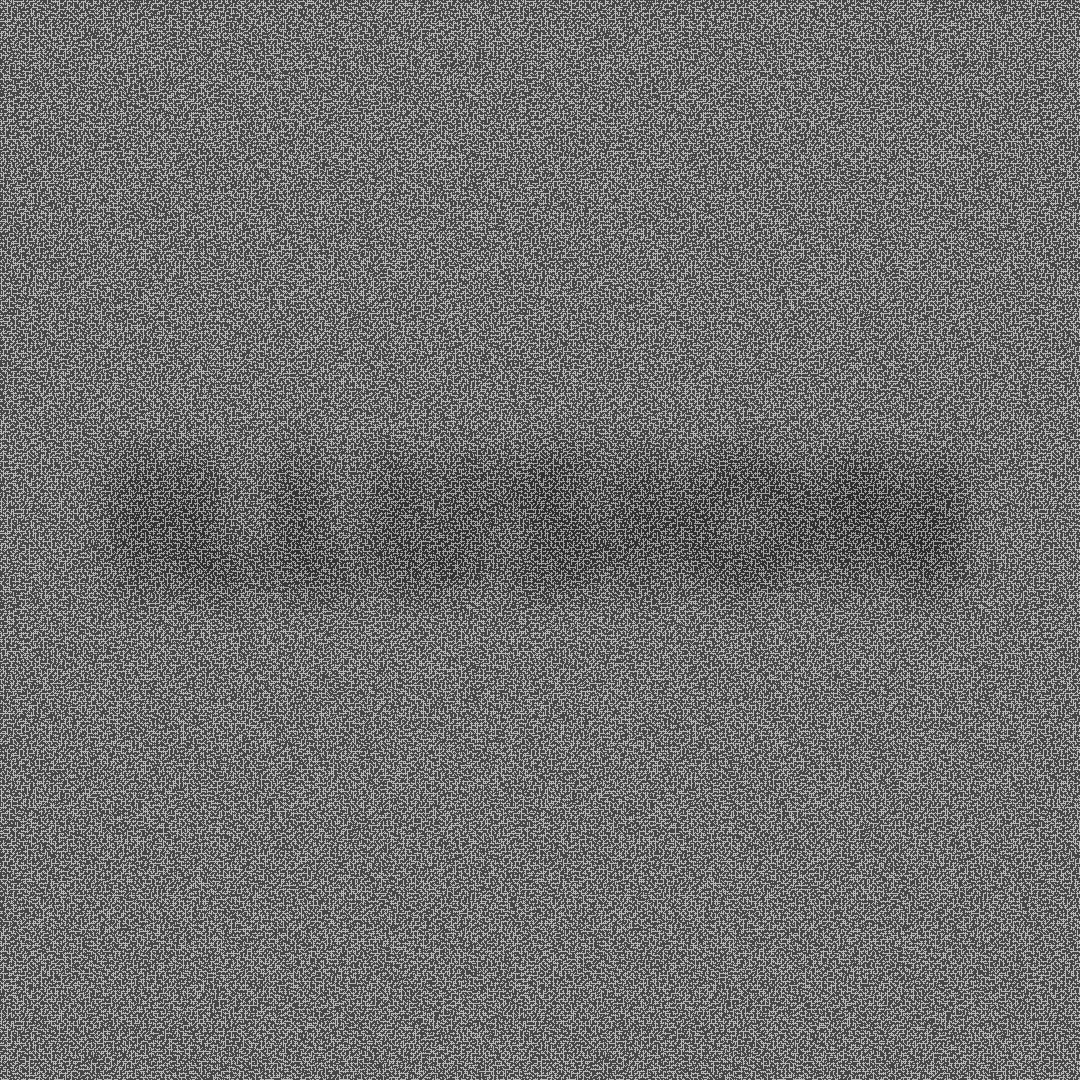
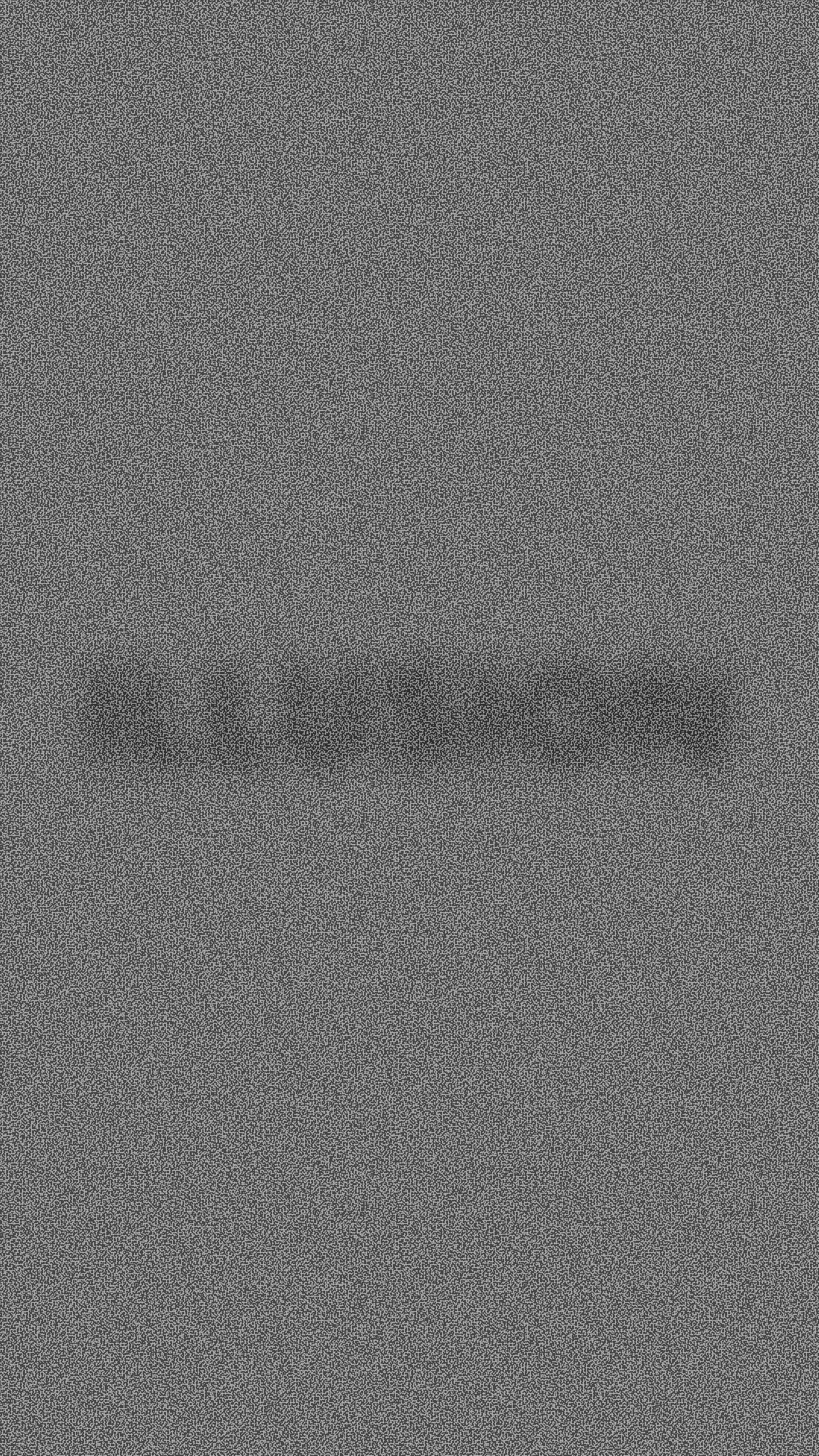



Free to use for non-commercial purposes such as classes, school projects and blogs, with a link back to this page as the credit. Commercial use is not covered
Every figure is generated here from the phenomenon itself (original design). Built here from the general principle of spatial-frequency separation: a blurred word at low frequency, binary noise at high frequency, nothing else. It is not a copy of any existing work.