Motion Aftereffect
Frozen but Moving — 2026, generated SVG, dimensions variable · Motion · Moving
After Robert Addams, 1834
Still moving after it stops?
It stopped — but is it still moving?
How to look: Keep your eyes fixed on the center dot without moving them.
Share
Reveal the answer
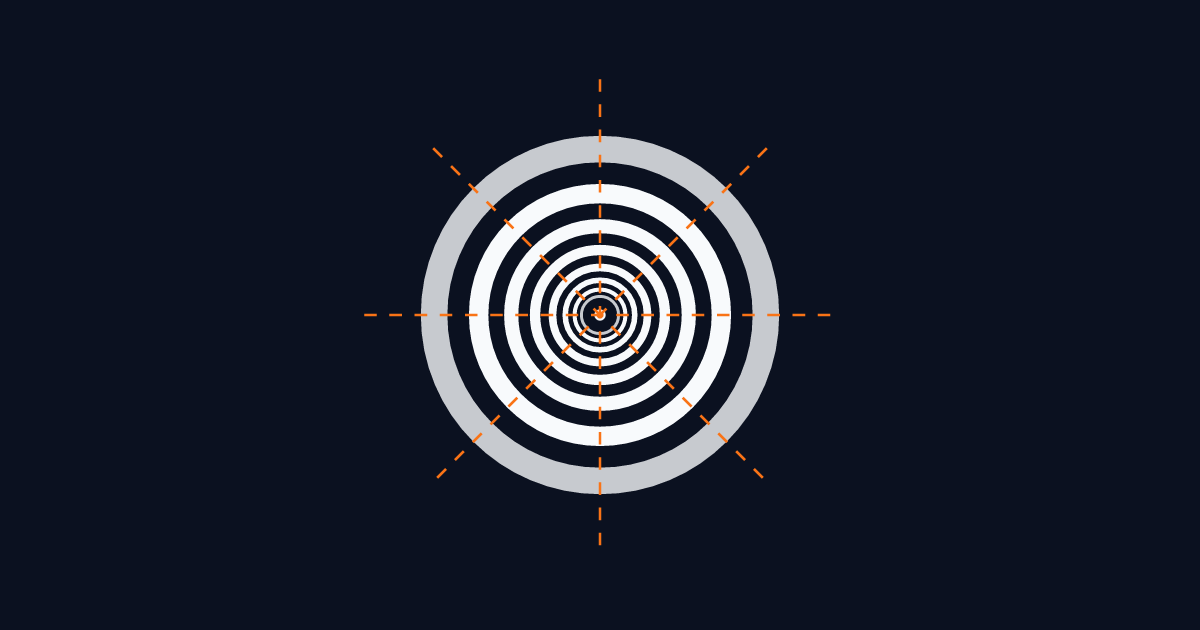
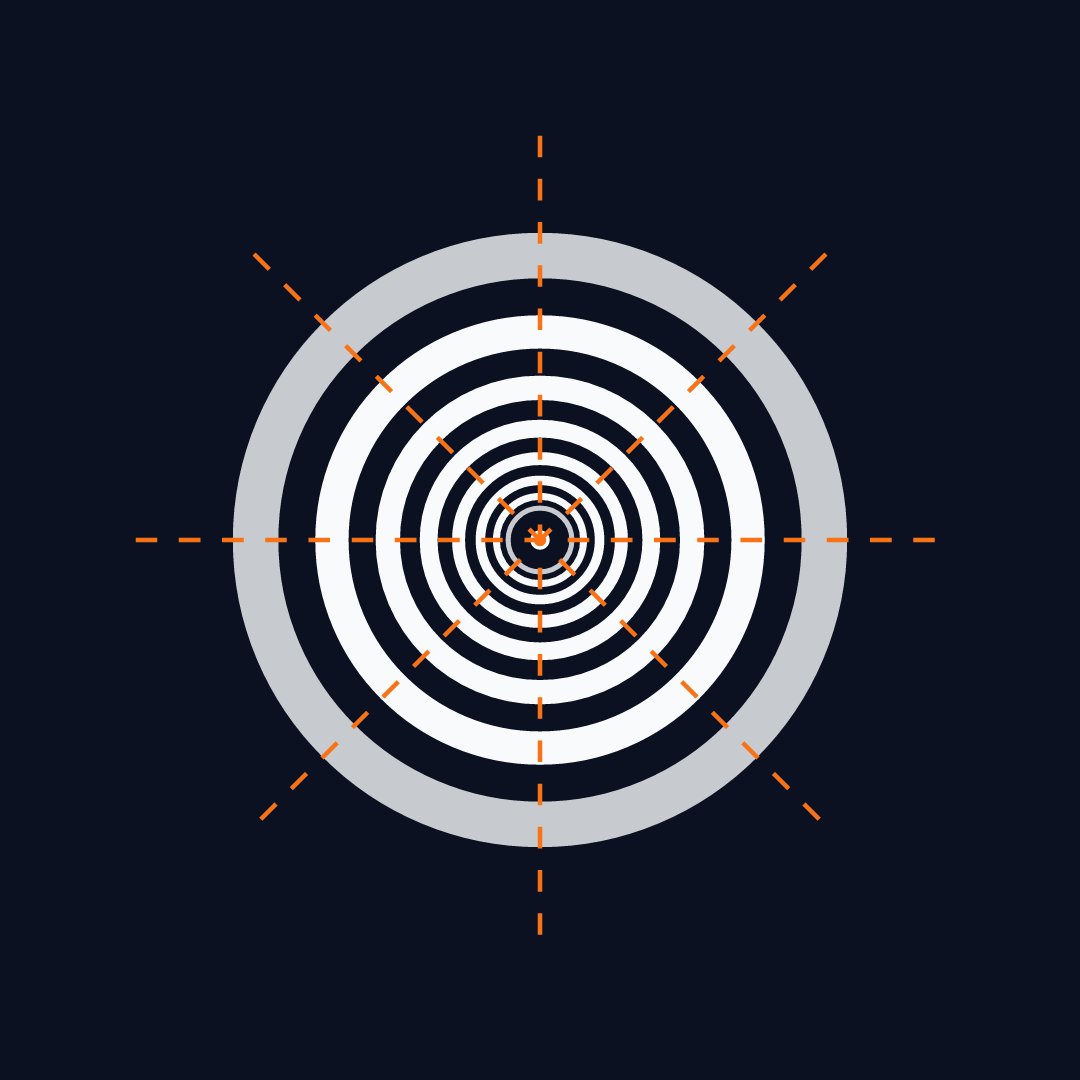
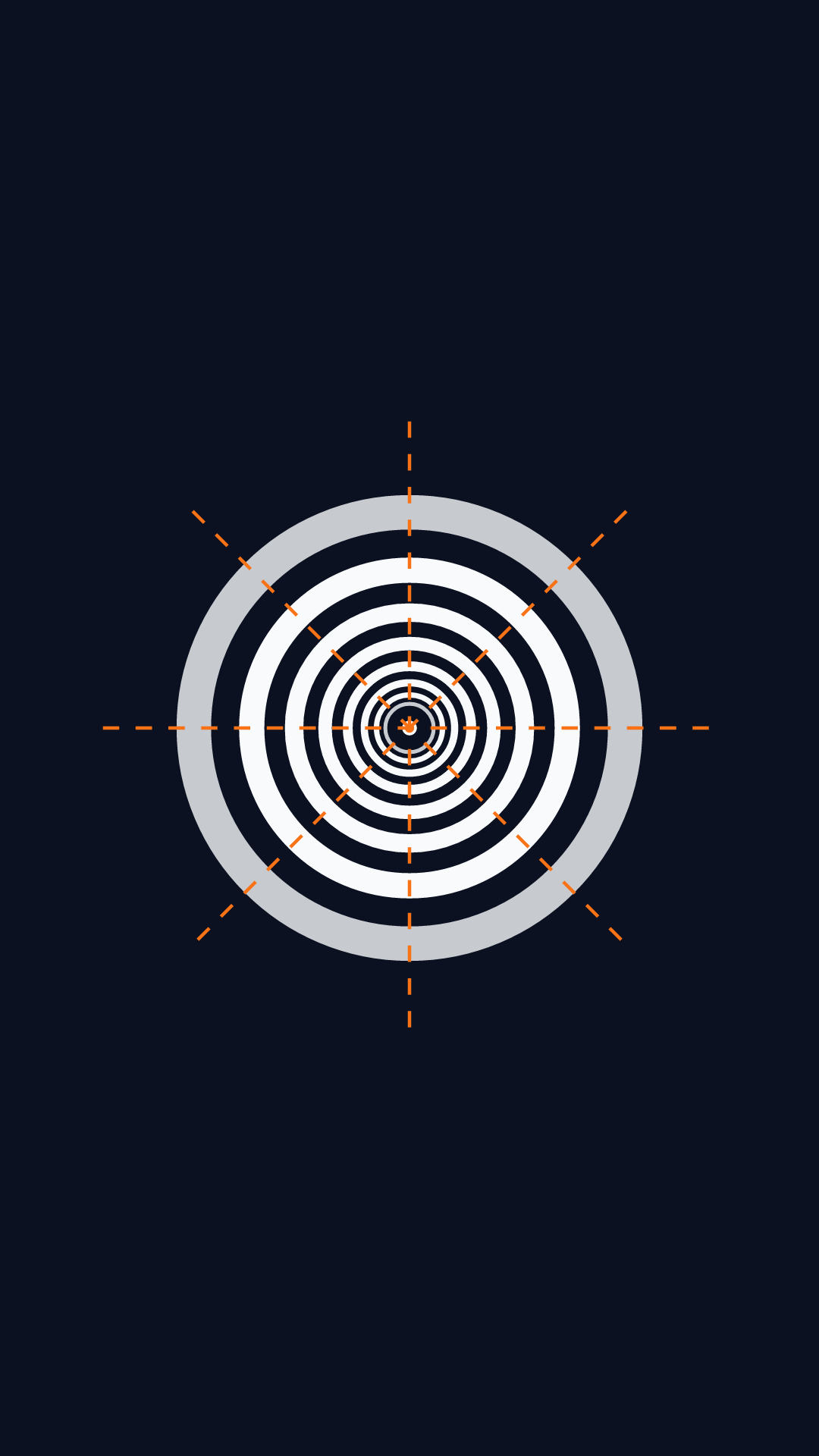
The image is completely still. Any shrinking you see is coming from your eyes.
↑ The mechanism, made visible.

Notes — why it looks that way
What is happening
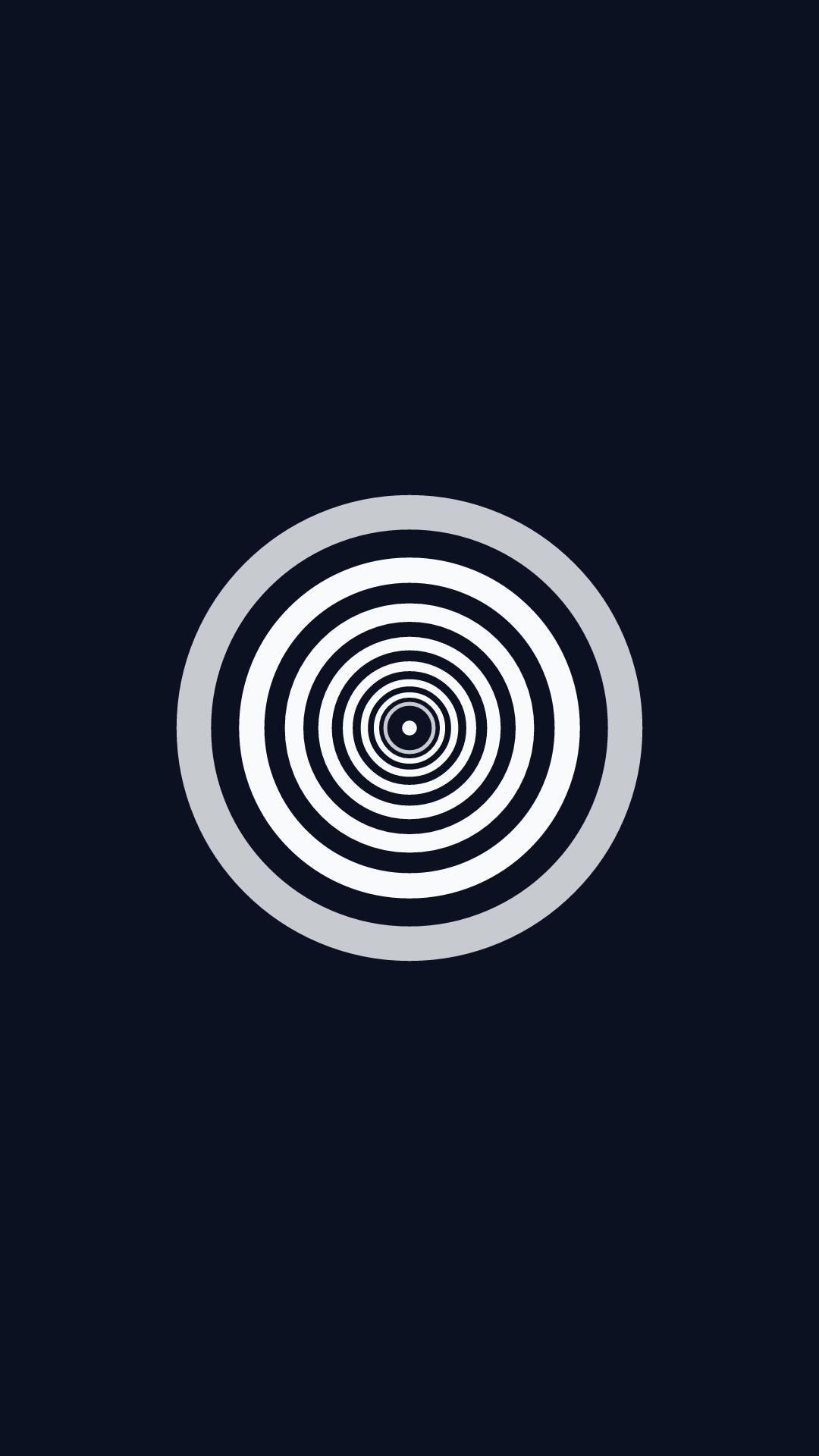
Keeping your eyes on the center dot, watch the concentric circles expand outward for about ten seconds. Then the image stops completely. For a few seconds afterward, the pattern still looks like it is shrinking inward.
The screen after it stops has not changed by a single pixel. Comparing it against the reference lines shown in “Reveal the answer”, every circle sits in exactly the same place. What is moving is not the screen — it’s you, the viewer.
Why it looks that way
Your brain has cells that respond to “outward motion” and cells that respond to “inward motion”, and whether something feels like it’s moving comes from the balance between these two.
Watching outward motion for a long stretch tires out only the outward-responding cells, weakening their signal. Then, when you look at a still image, the balance is thrown off and the inward-responding cells end up dominating. Your brain interprets that difference as “moving inward.” This is the motion aftereffect — the same phenomenon behind rocks appearing to flow upward after watching a waterfall (the waterfall illusion).
Once the tired cells recover, the balance returns, which is why it fades within a few seconds.
Tips to strengthen the effect
- Don’t let your eyes leave the center dot. If your gaze wanders, the adaptation spreads thin across your visual field and weakens
- A dimmer room works better than a bright one (because the pattern’s contrast matters more)
- If it didn’t work, try again from the start — adaptation takes time to build up
While both are “things that appear to move,” something that isn’t moving looking like it’s moving works from a still image alone. This one relies on the order you watch it in — it doesn’t work without the period of actual motion first.
First described
After Robert Addams, 1834
Called the "waterfall illusion" because rocks appeared to move upward after Addams watched a Scottish waterfall. The description of the phenomenon itself is said to trace back to Aristotle.

Media — images and data
- OG / X (1200×630)
- Instagram square (1080×1080)
- Shorts / Reels vertical (1080×1920)
- Answer image — landscape (X)
- Answer image — square (Instagram)
- Answer image — vertical (Shorts)
- Post drafts (JSON)


Free to use for non-commercial purposes such as classes, school projects and blogs, with a link back to this page as the credit. Commercial use is not covered
Every figure is generated here from the phenomenon itself (original design). The general phenomenon of the motion aftereffect (waterfall illusion) is implemented here from scratch as a continuously expanding set of concentric circles. It is not a copy of any specific existing work.