Spinning Point Clouds
Spinning Point Clouds — 2026, generated SVG, dimensions variable · Rotation · Moving
After Hans Wallach / D. N. O'Connell, 1953
Can you flip the way it spins?
Can you flip the way this solid is spinning?
How to look: Imagine the dots flowing at the back are the near ones.
Share
Reveal the answer
Yes. Whichever flow of dots you read as near sets the direction.
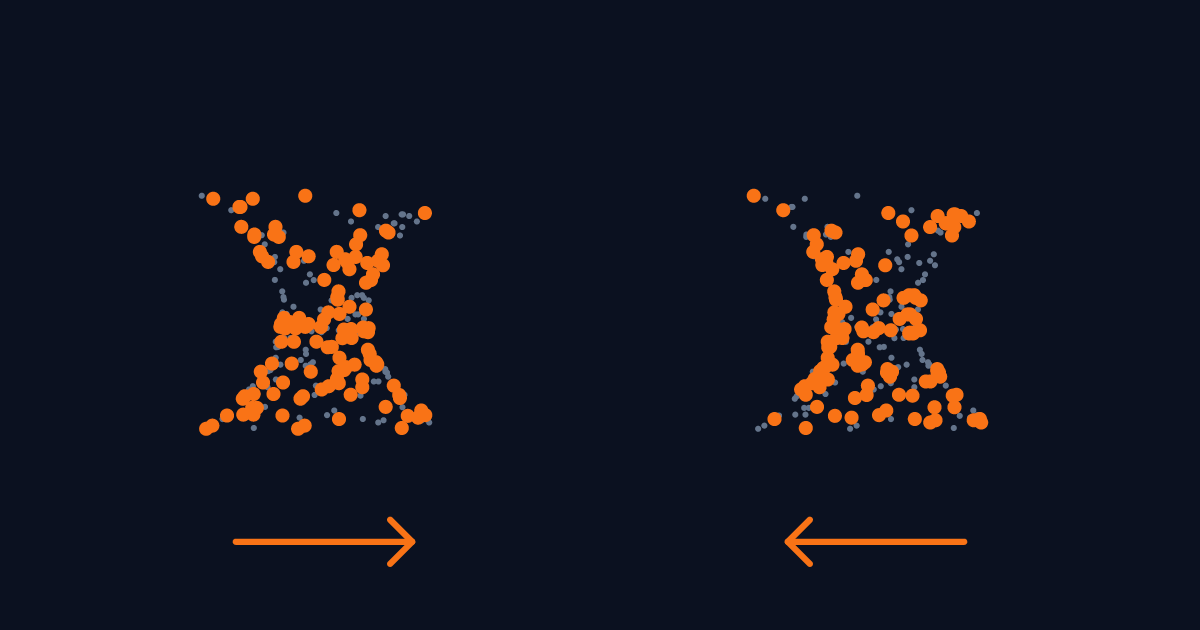
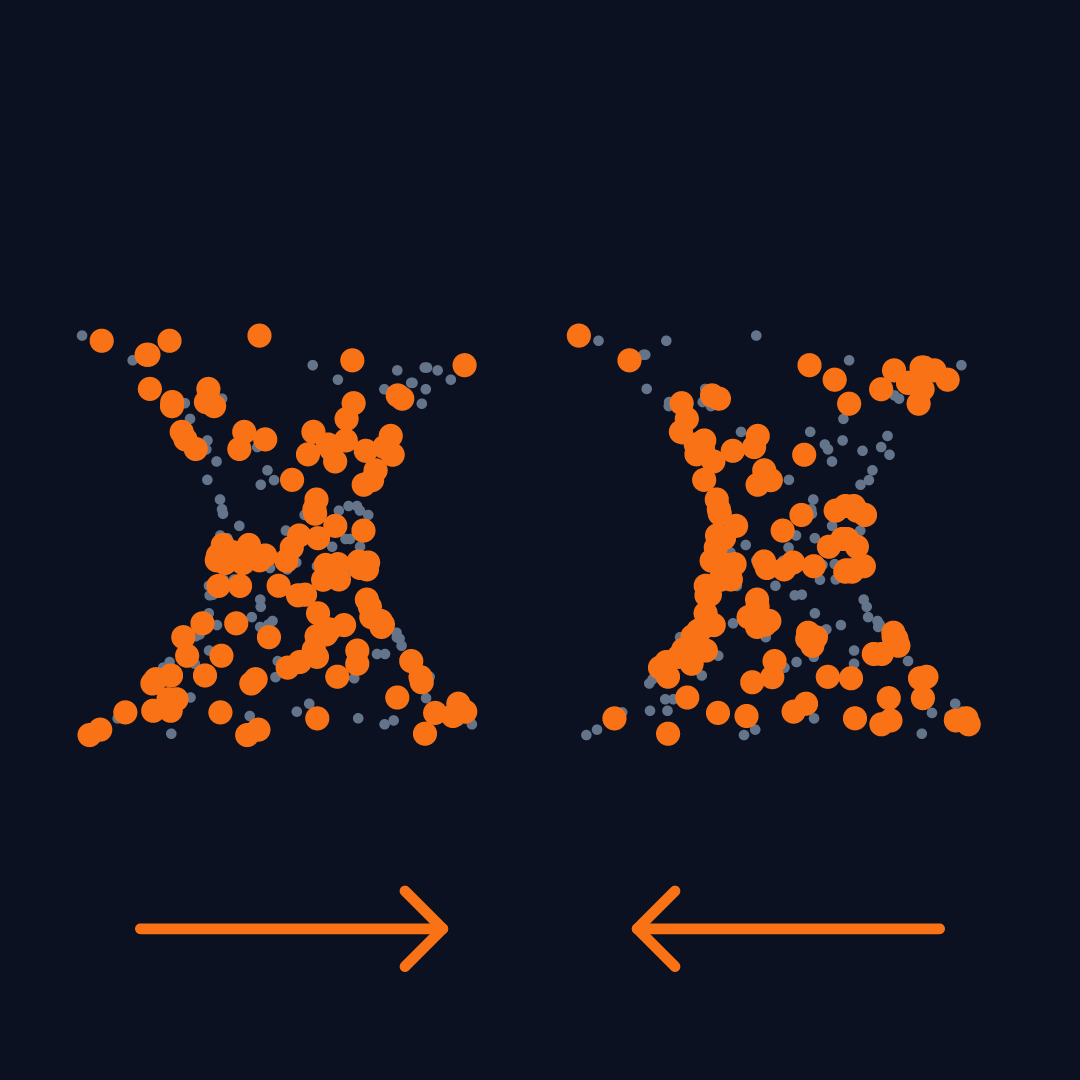
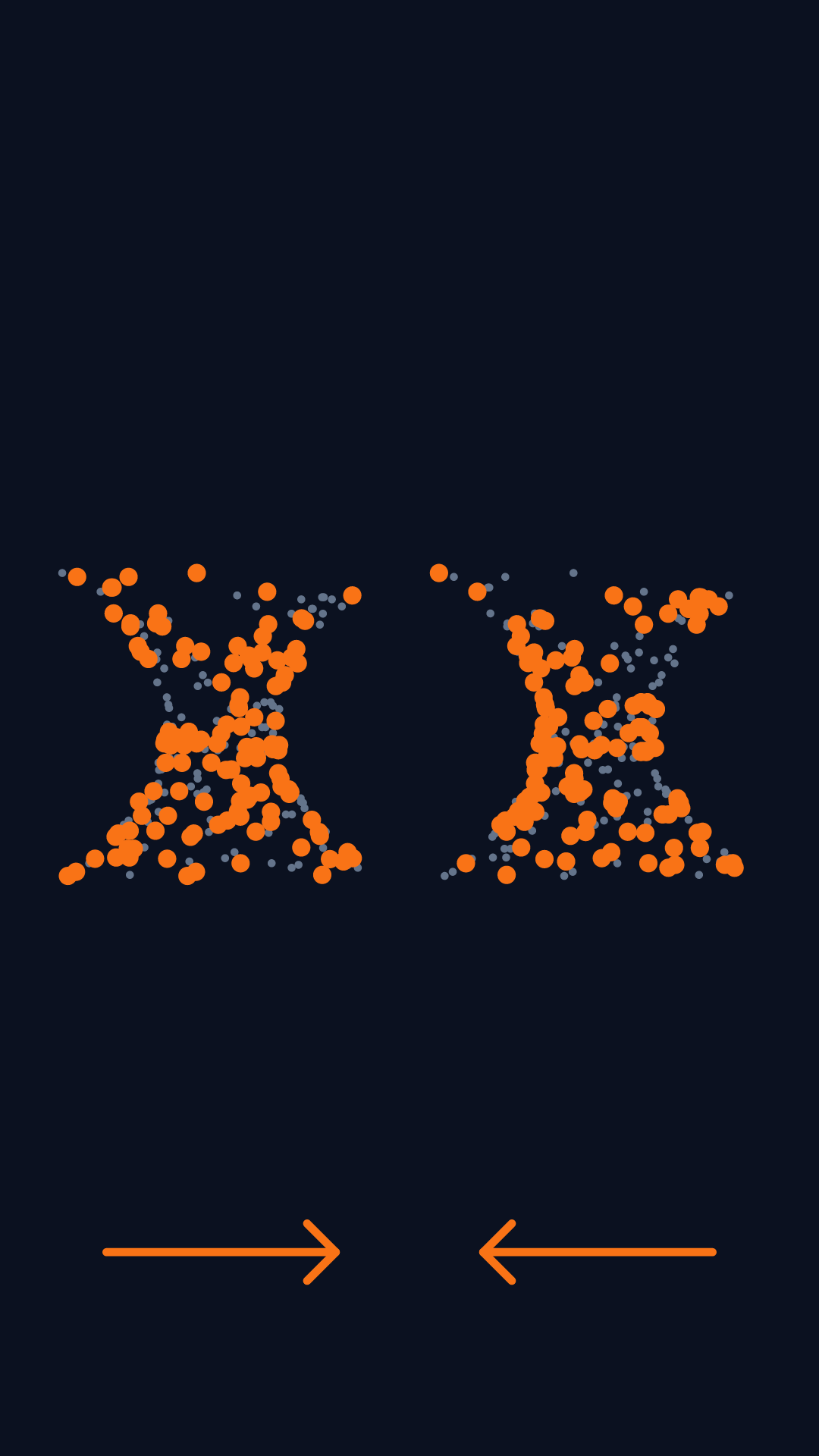
↑ Same drawing; only the dots read as near (large orange) differ. Left: the near dots move right. Right: they move left. Treat the orange dots of the reading you are not seeing as near, and the spin flips.
Notes — why it looks that way
What is happening
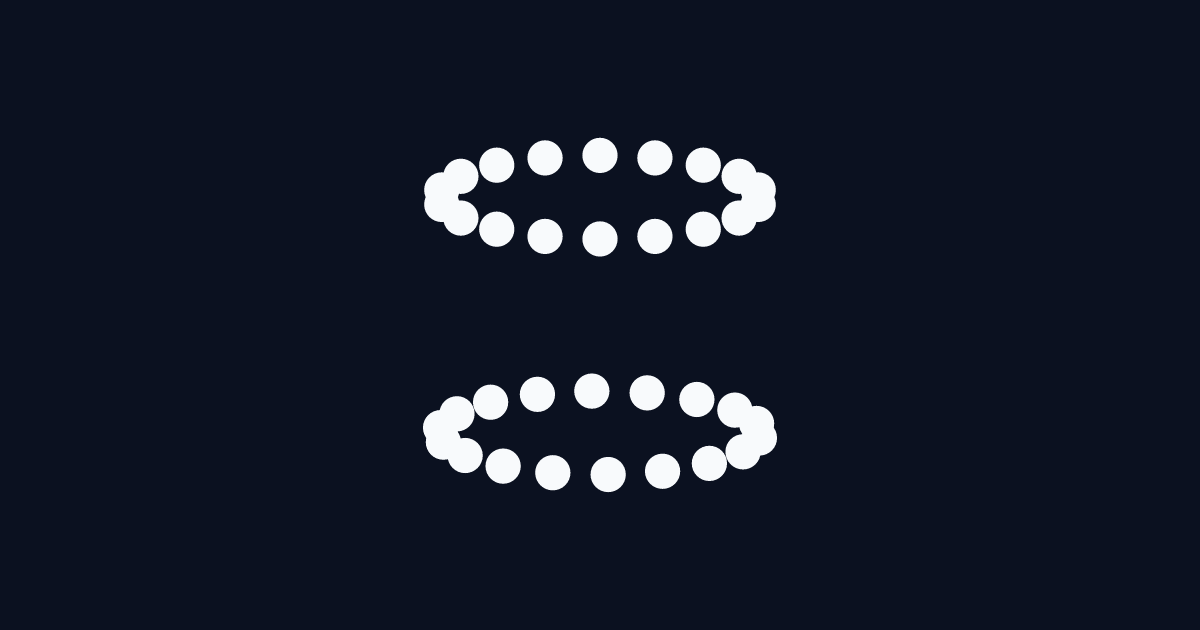
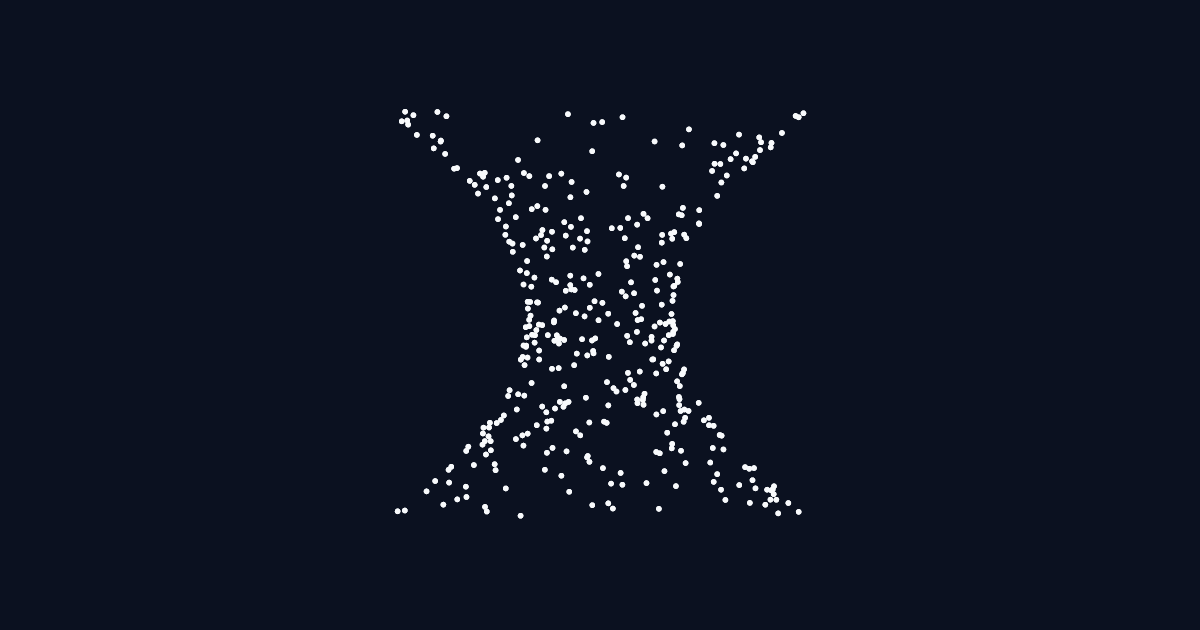
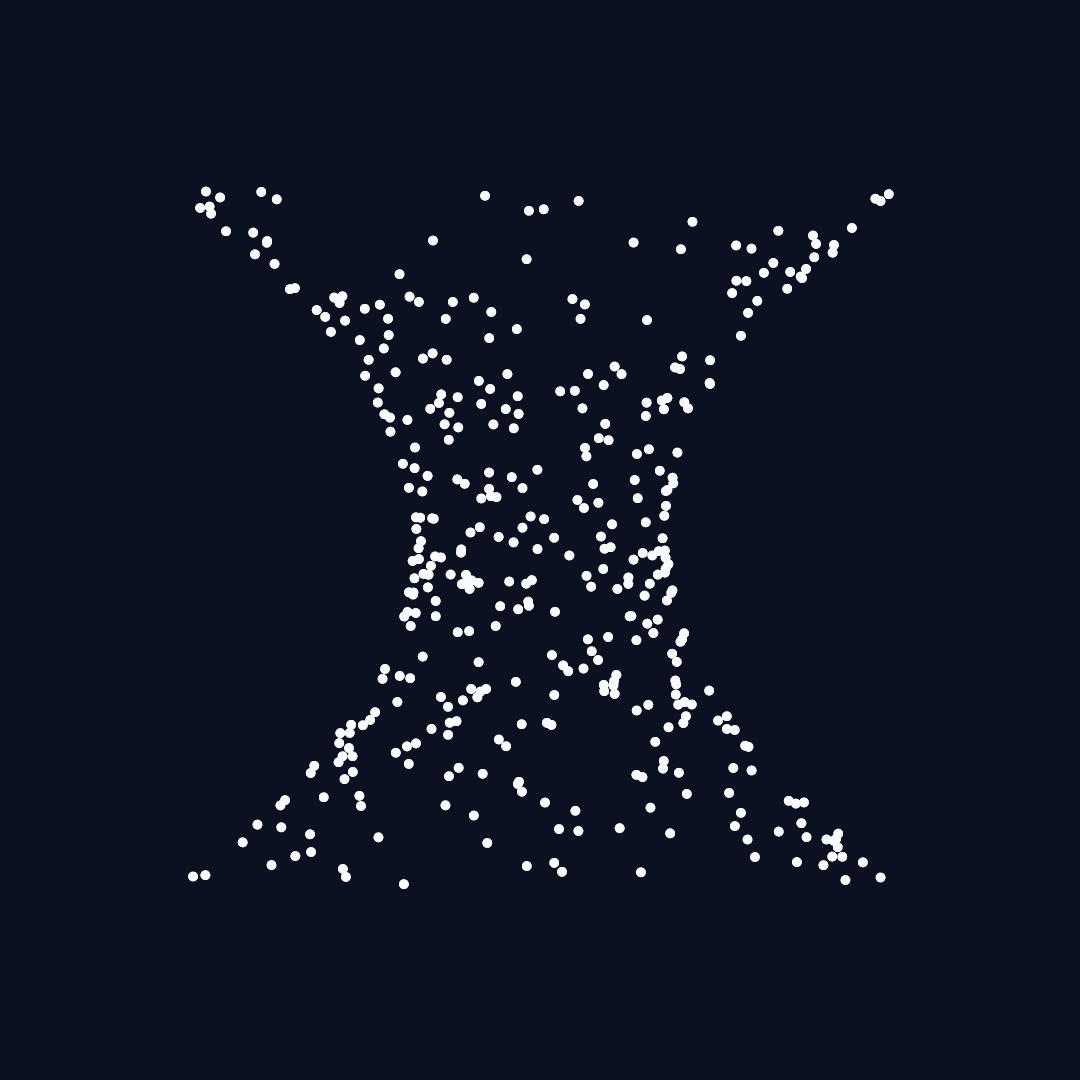
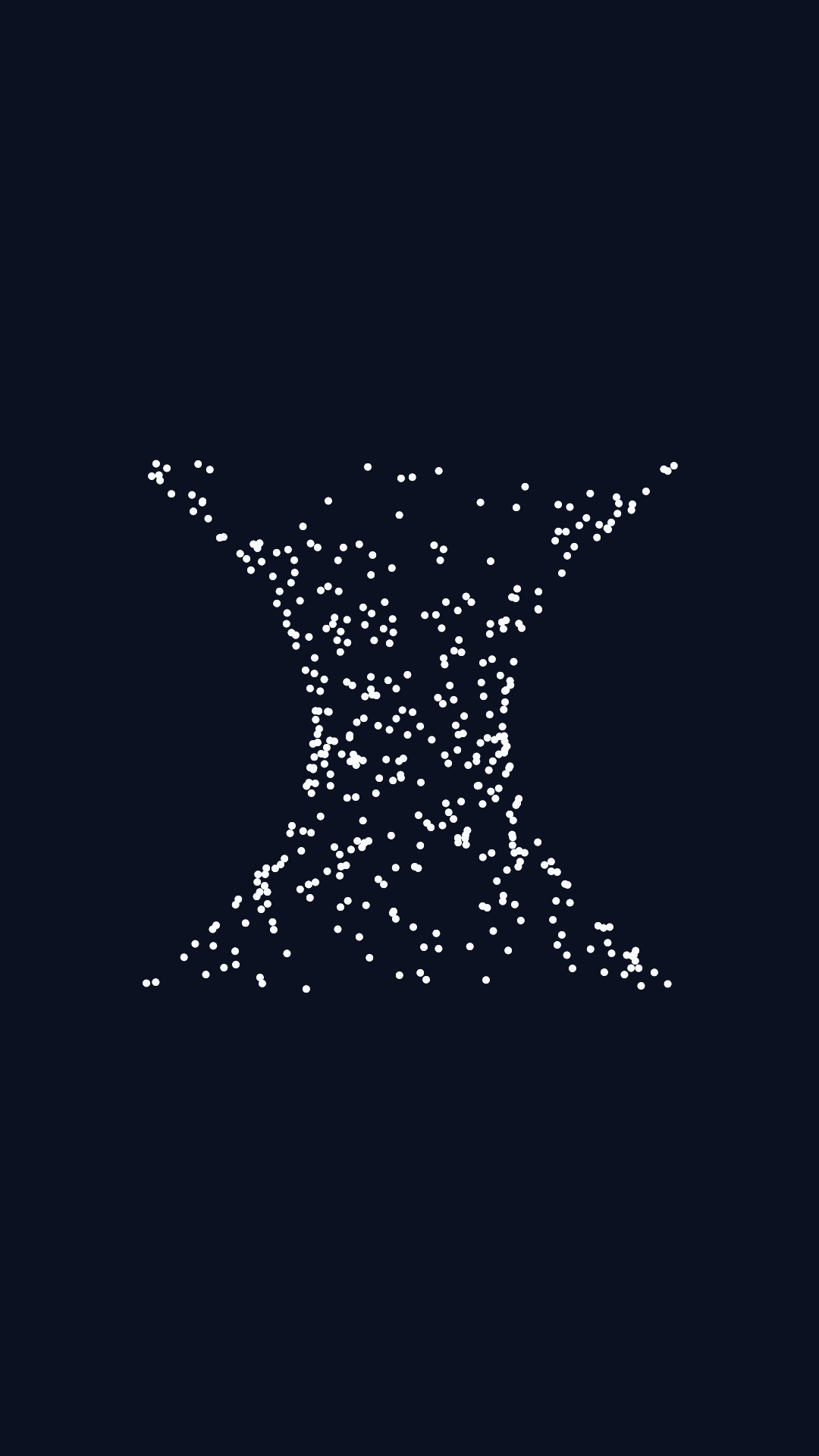
A solid made only of dots turns slowly around a vertical axis. You can pick the shape with “Shape” below the work: hourglass, sphere, cylinder, helix or torus.
Every dot has the same size and brightness. Look closely and you will see two flows: dots moving right and dots moving left. On a spinning solid, the near dots and the far dots always move in opposite directions. But nothing in the picture says which flow is the near one.
That is why the picture has two readings:
- The dots moving right are near, and the solid turns that way
- The dots moving left are near, and the solid turns the other way
Either way, the dots on the screen move in exactly the same way. Neither reading is the true one.
How to flip it
It helps to open “Reveal the answer” first. The two pictures there are the same drawing. Only the dots read as near (large orange) are different.
- Check which reading you have now. See whether the right-moving or the left-moving dots look near
- Assume the other reading. Follow only the dots in the flow that looks far, and tell yourself: “these are the near ones”
- Keep watching. When the dots you were following start to look near, it has flipped, and the direction of the spin flips with it
If it does not work, set “Speed” below the work to 0.5×. Looking away and back again also helps.
Focusing on one part of each shape makes it easier still:
- Hourglass: watch just above the narrow waist. Slanted streaks cross in two directions there. Pull the far streak toward you
- Sphere: ignore the outline and watch only the flow of dots near the middle
- Cylinder: watch only one of the side edges. The dots turn around there. Treat the dots that have just turned as the near ones
- Helix: pick one place where the strands seem to cross, and treat the far strand as near
- Torus: watch only the rim just above the hole
Why it can be flipped
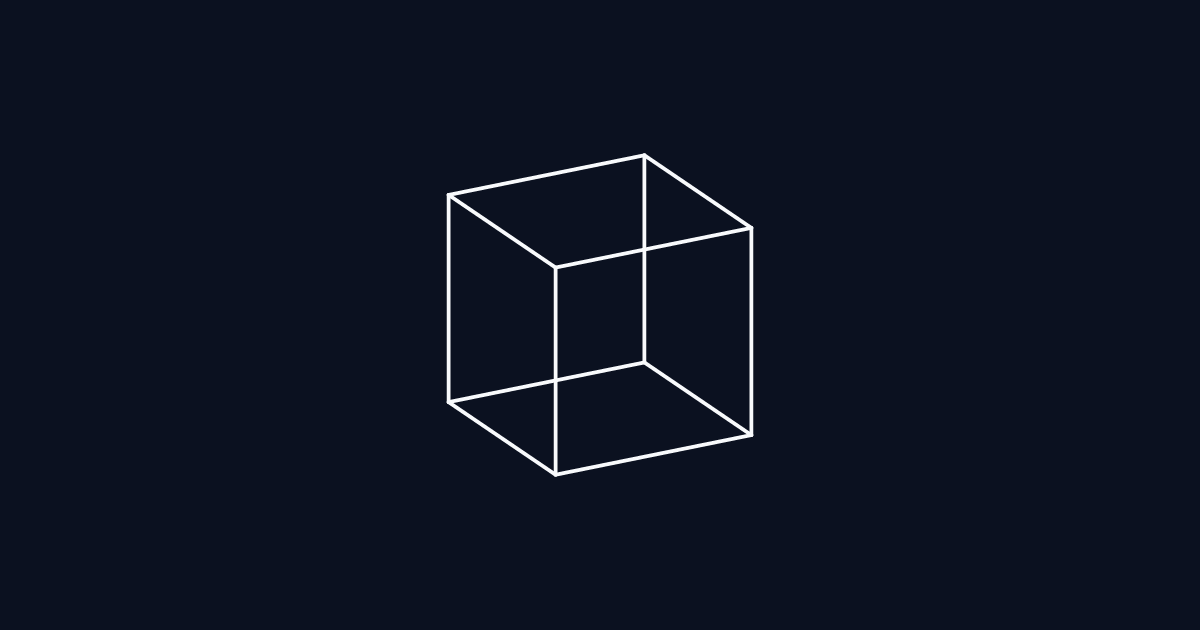
When the brain sees a picture that fits two readings, it picks one and holds it steady. But nothing in the picture supports that choice, so simply assuming the other reading is enough to switch. It is the same mechanism as the Necker cube.
The reverse is also true. Make the near dots larger and only one reading is left. That is why, in the answer, you can only see the reading where the large dots are in front.
Compared to the ring version
The reversing ring is a flat ring of dots. Here the dots sit on the surface of a solid, which creates a stronger contradiction: the shape reads as a solid, yet its direction is not fixed. For a version drawn in lines, try Spinning Wireframes.
First described
After Hans Wallach / D. N. O'Connell, 1953
Source: "The kinetic depth effect", Journal of Experimental Psychology
Nobuyuki Kayahara's "Spinning Dancer" (2003) is a widely known work built on the same depth ambiguity.
Media — images and data
- OG / X (1200×630)
- Instagram square (1080×1080)
- Shorts / Reels vertical (1080×1920)
- Answer image — landscape (X)
- Answer image — square (Instagram)
- Answer image — vertical (Shorts)
- Post drafts (JSON)
Free to use for non-commercial purposes such as classes, school projects and blogs, with a link back to this page as the credit. Commercial use is not covered
Every figure is generated here from the phenomenon itself (original design). The general principle that a rotational direction cannot be uniquely determined from an orthographically projected point cloud (the ambiguity of structure-from-motion) is implemented here from scratch as point clouds in five shapes (hourglass, sphere, cylinder, helix, torus). It is not a copy of any specific existing work.