Kanizsa Triangle
Kanizsa Triangle — 2026, generated SVG, dimensions variable · Ambiguity · Still
After Gaetano Kanizsa, 1955
Do you see a white triangle?
Do you see a white triangle in the middle?
Share
Reveal the answer
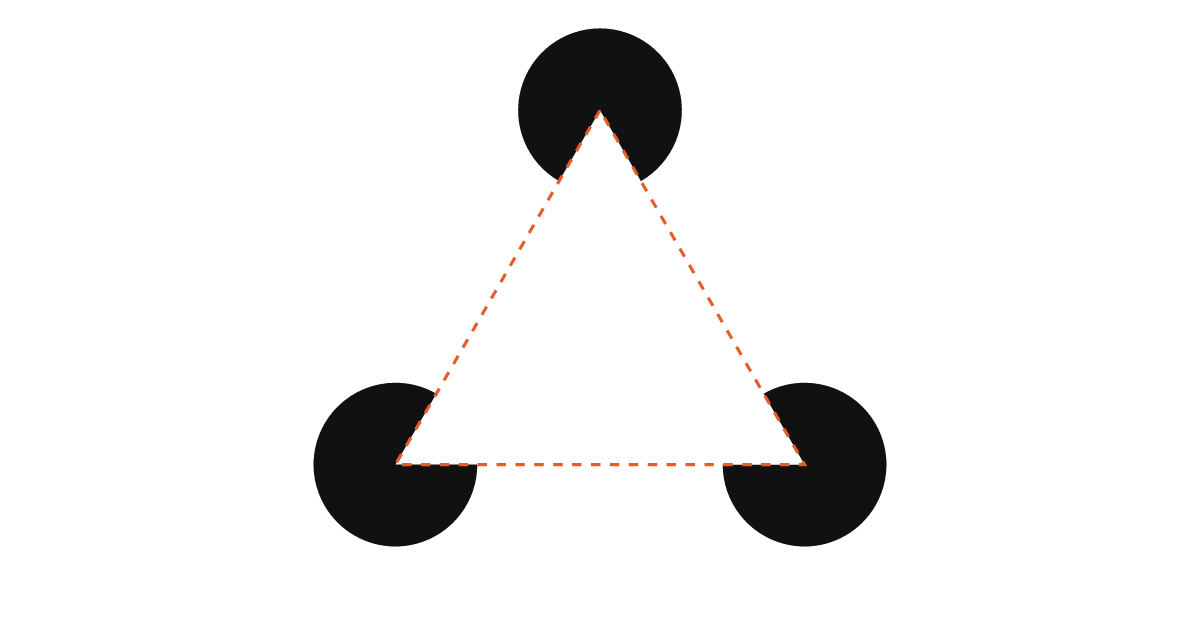
No triangle edge is drawn between the notches in the circles.
↑ The mechanism, made visible.
Notes — why it looks that way
What is happening
Start by looking at the whole center of the figure. Then look only at the gaps between the circles, and you can see there is no black edge there. The notches cut into the circles are placed by our own coordinate calculations so they all point toward the same triangle. This is not an image cropped from another figure.
Why it looks that way
When separated notches all line up in orientation, your visual system can group them into a single surface that appears to be covering them. A contour is felt even where no line actually exists — this produces a different look than a white shape simply outlined by drawn lines.
How to check
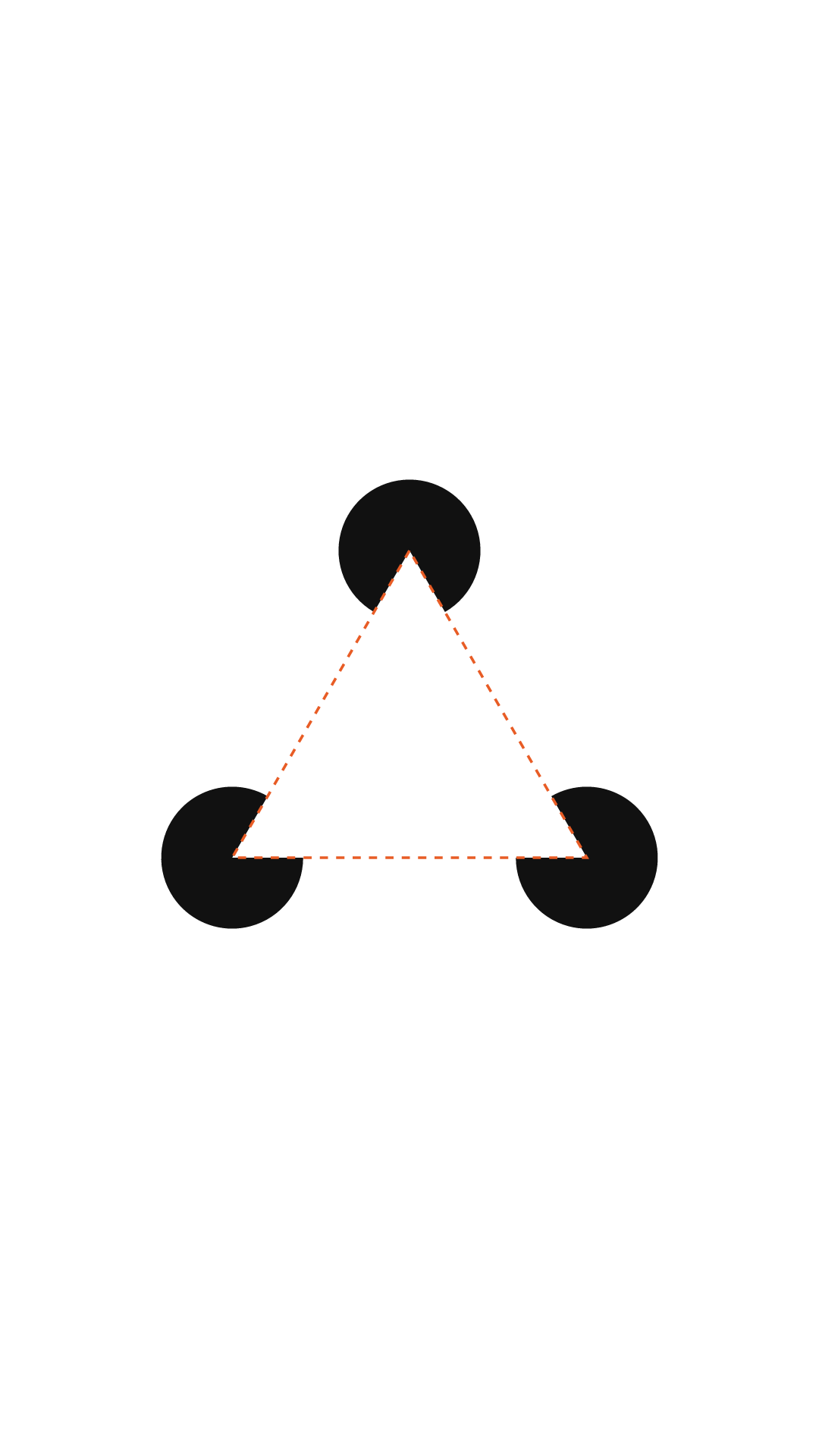
Revealing the answer adds a dotted line at the position of the perceived triangle. This dotted line is only for confirmation and is not present in the original image. Close the answer and compare again the difference between a physical line and a contour that is felt without one.
For reference: explanation and research. The figure here is an original implementation.
First described
After Gaetano Kanizsa, 1955
A subjective contour: an outline appears where none is actually drawn. Friedrich Schumann reported a similar figure earlier, in 1900.


Media — images and data
- OG / X (1200×630)
- Instagram square (1080×1080)
- Shorts / Reels vertical (1080×1920)
- Answer image — landscape (X)
- Answer image — square (Instagram)
- Answer image — vertical (Shorts)
- Post drafts (JSON)




Free to use for non-commercial purposes such as classes, school projects and blogs, with a link back to this page as the credit. Commercial use is not covered
Every figure is generated here from the phenomenon itself (re-implemented). The general phenomenon's principle is re-implemented here as SVG. No existing figure or code is reproduced.