Vase or Faces
Vase or Faces — 2026, generated SVG, dimensions variable · Ambiguity · Still
After Edgar Rubin, 1915
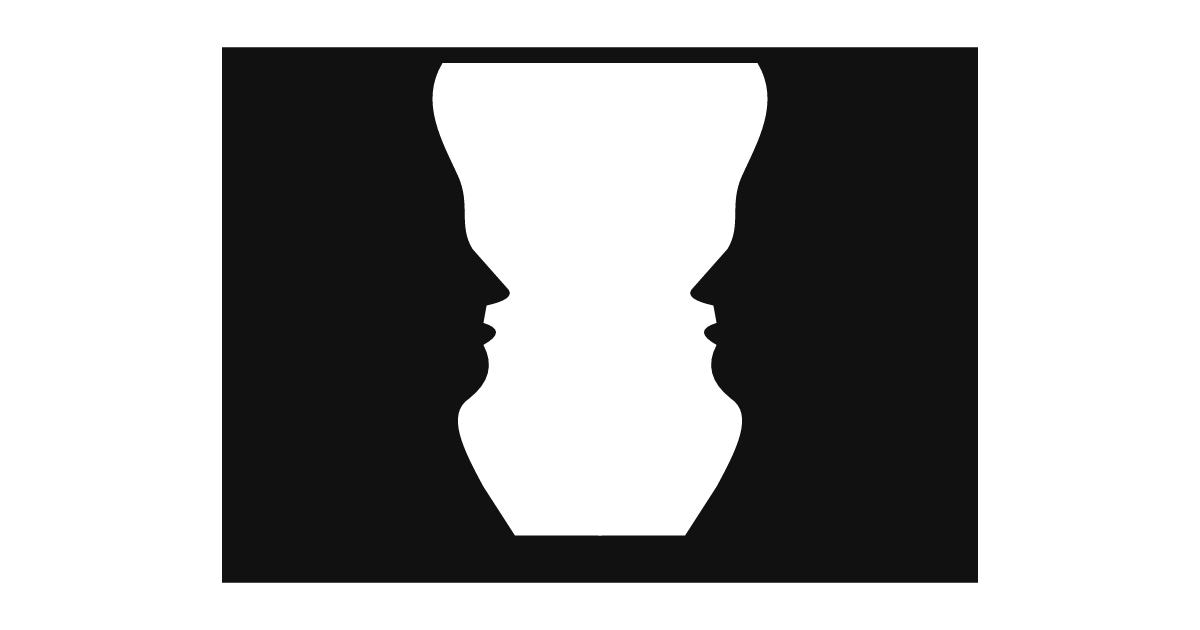
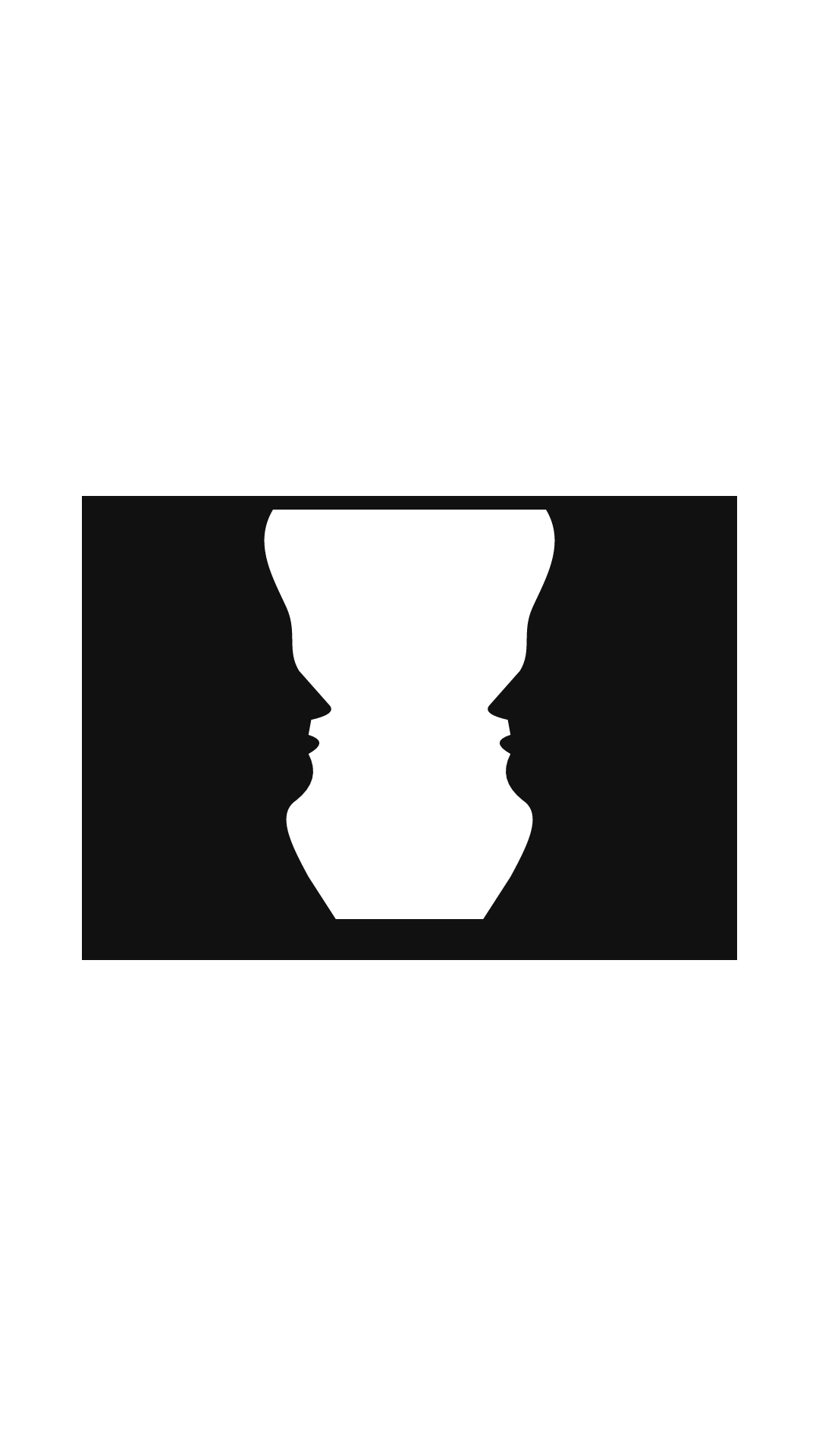
A vase or two faces?
A white vase, or two faces looking at each other?
Share
Reveal the answer
Both readings work: a white vase, or two black profiles facing each other.
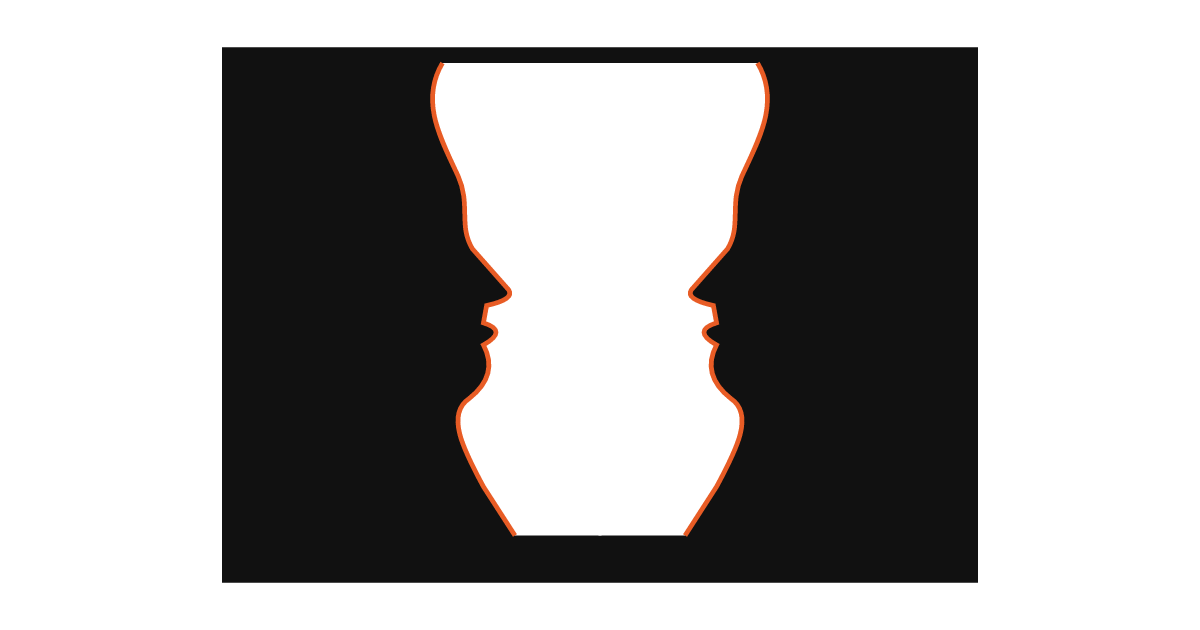
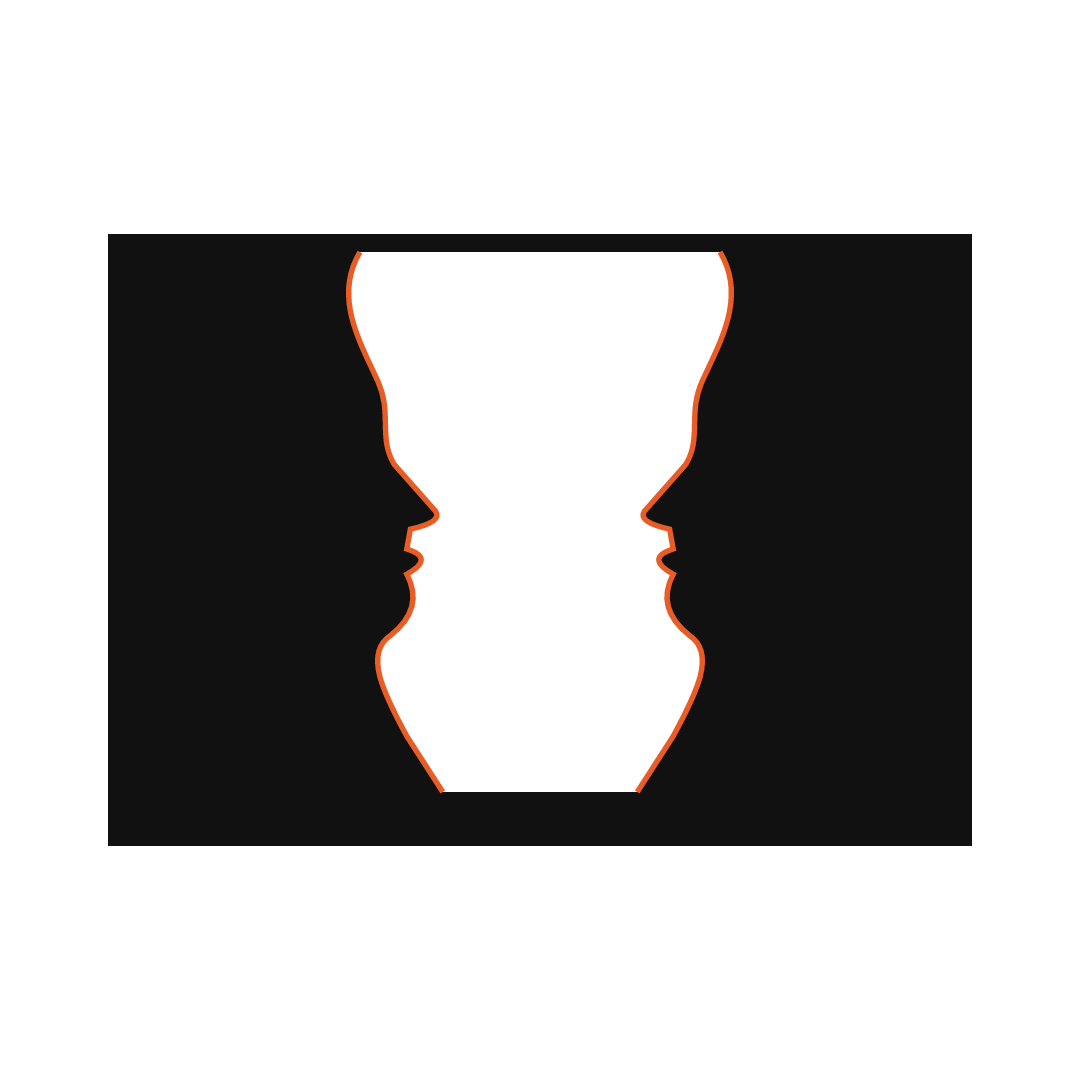
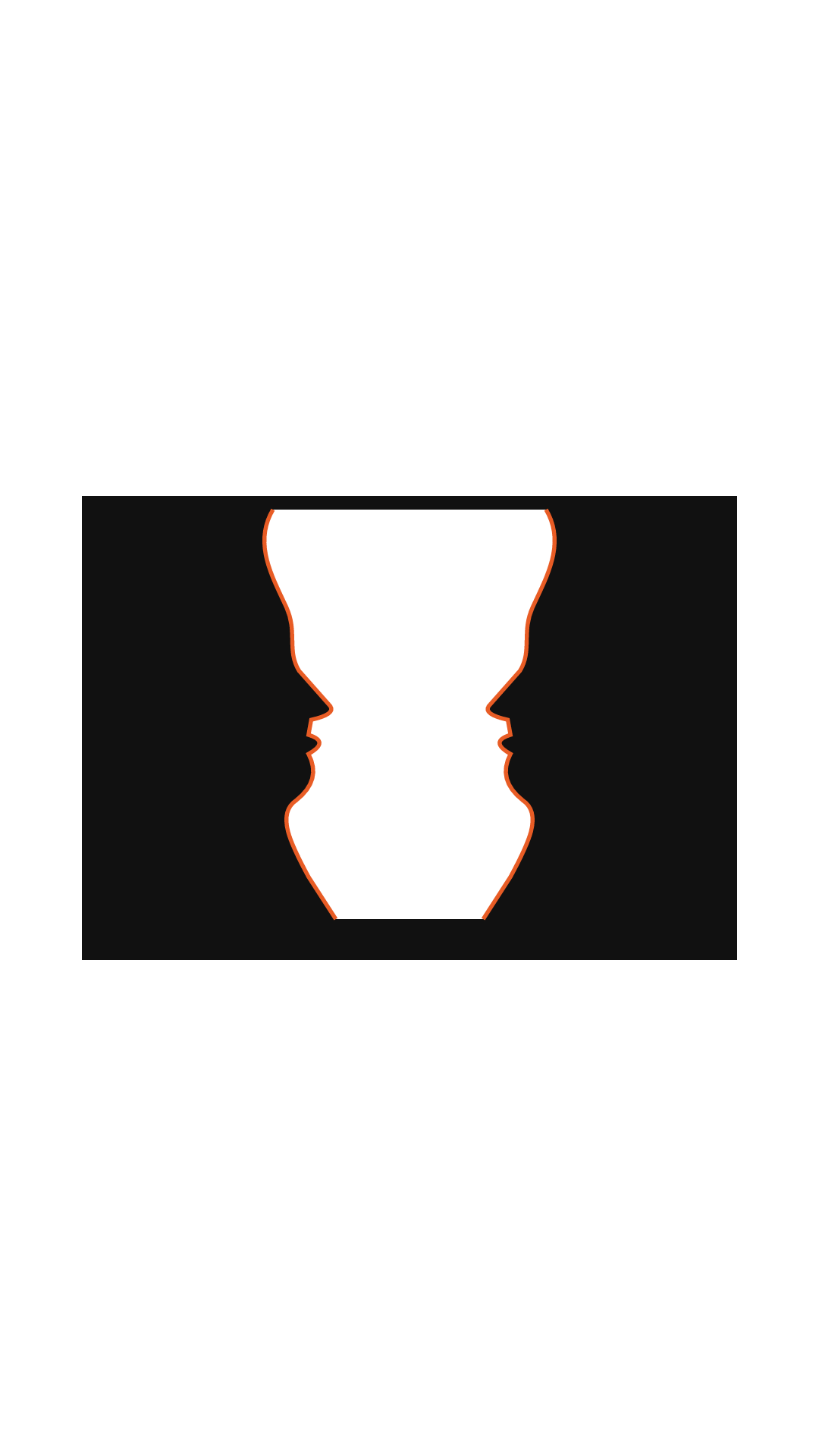
↑ The mechanism, made visible.
Notes — why it looks that way
What is happening
Follow the white area as a single object from its top edge down to the base, and a vase appears in the middle. Now look at the outline of the black areas from the top, and look for a sequence that reads as forehead, nose, mouth, chin. This figure is not modeled on any specific real person’s face.
Why it looks that way
Depending on which side of a contour you read as belonging to which shape, the roles of figure and ground swap. Treat the center as a single object and it becomes a vase; shift your attention to the black areas on either side and the profiles appear. The same pixels, but a different interpretation.
How to check
Revealing the answer highlights the boundary shared by the two meanings. It’s not that separate face outlines are added afterward. Rather than tracing any famous figure’s outline, the symmetric curves here are newly composed for this site.
For reference: explanation and research. The figure here is an original implementation.
First described
After Edgar Rubin, 1915
Source: "Synsoplevede Figurer" (Visually Experienced Figures)
Figure-ground segregation: the picture flips depending on which part you read as "the object".
Media — images and data
- OG / X (1200×630)
- Instagram square (1080×1080)
- Shorts / Reels vertical (1080×1920)
- Answer image — landscape (X)
- Answer image — square (Instagram)
- Answer image — vertical (Shorts)
- Post drafts (JSON)

Free to use for non-commercial purposes such as classes, school projects and blogs, with a link back to this page as the credit. Commercial use is not covered
Every figure is generated here from the phenomenon itself (re-implemented). The general phenomenon's principle is re-implemented here as SVG. No existing figure or code is reproduced.