When Where You Look Changes
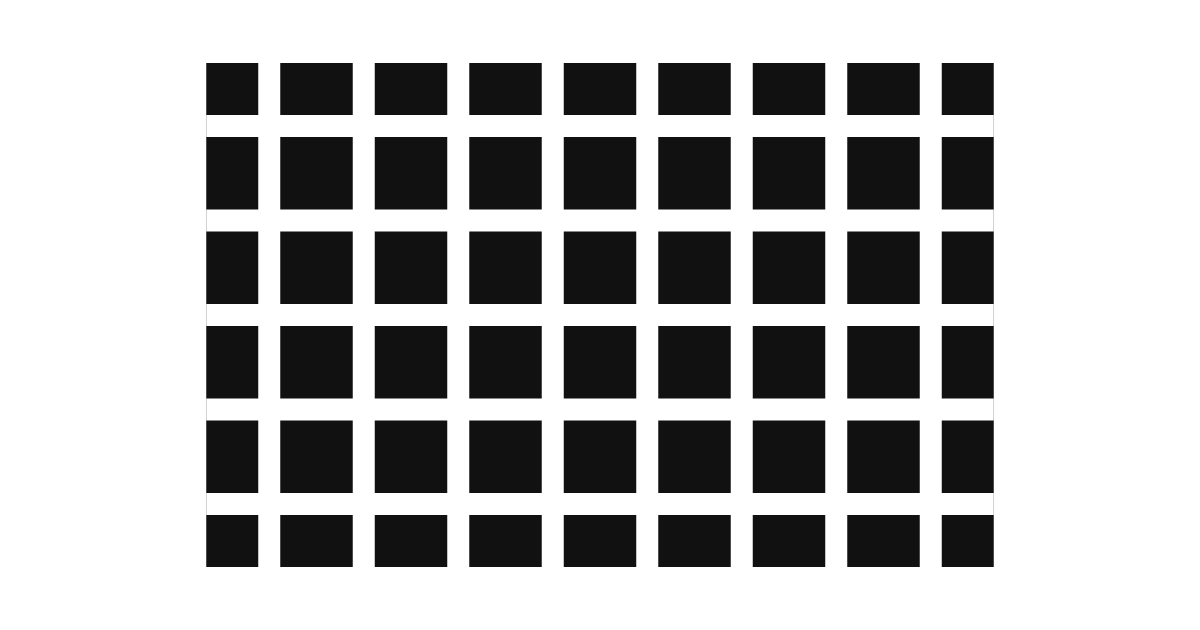
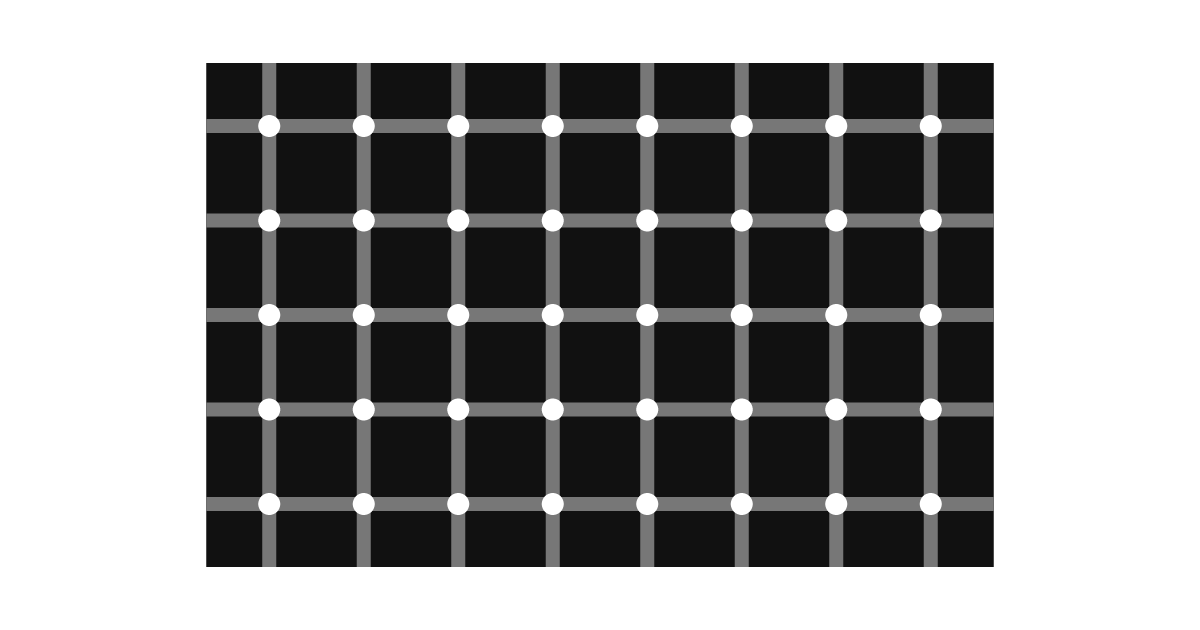
At the white intersections of the Hermann Grid, you may sense grey smudges in places you are not looking at directly. Move your eyes to a smudge and check whether it fades. The Scintillating Grid uses grey lines and white discs, and dark dots seem to flicker in your periphery. Both are still images.
Fading as Time Passes
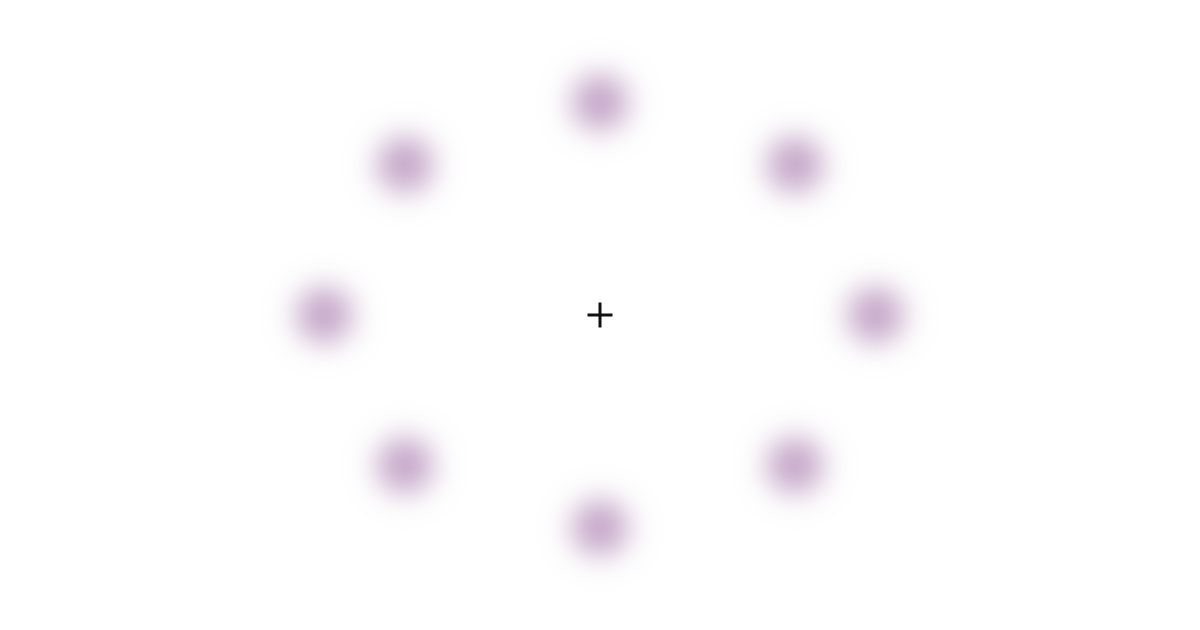
In Fading Dots (the Troxler effect), keep your gaze on the central cross and look at the faint surrounding dots without chasing them. Peripheral stimuli that barely change can become less noticeable, and moving your eyes makes them easier to see again. The dots are not deleted from the image.
How things look also depends on distance, screen size and how steady your gaze is. You do not need to hold out for a long time or stop blinking. Please do not tie not seeing the effect to health or ability.
What a Preceding Motion Leaves Behind
In the motion aftereffect, you watch a moving pattern and then look at a still picture. After that adaptation, the still picture may seem to keep moving. The conditions differ from grid smudges and fading dots: watching motion in one direction first is part of the experiment.
When motion is reduced in your settings, a still frame is shown. That state alone is not the same adaptation experiment, so the absence of an aftereffect cannot be judged an implementation failure.
Record the Conditions Too
Besides “seen” or “not seen”, note where you looked, for how long, and whether you used a phone or a large screen. An illusion is not determined by the properties of a single image alone. If you feel tired, stop observing and move on to the next piece or take a rest.
References: Michael Bach on the Hermann grid, A review of perceptual filling-in and the Troxler effect.