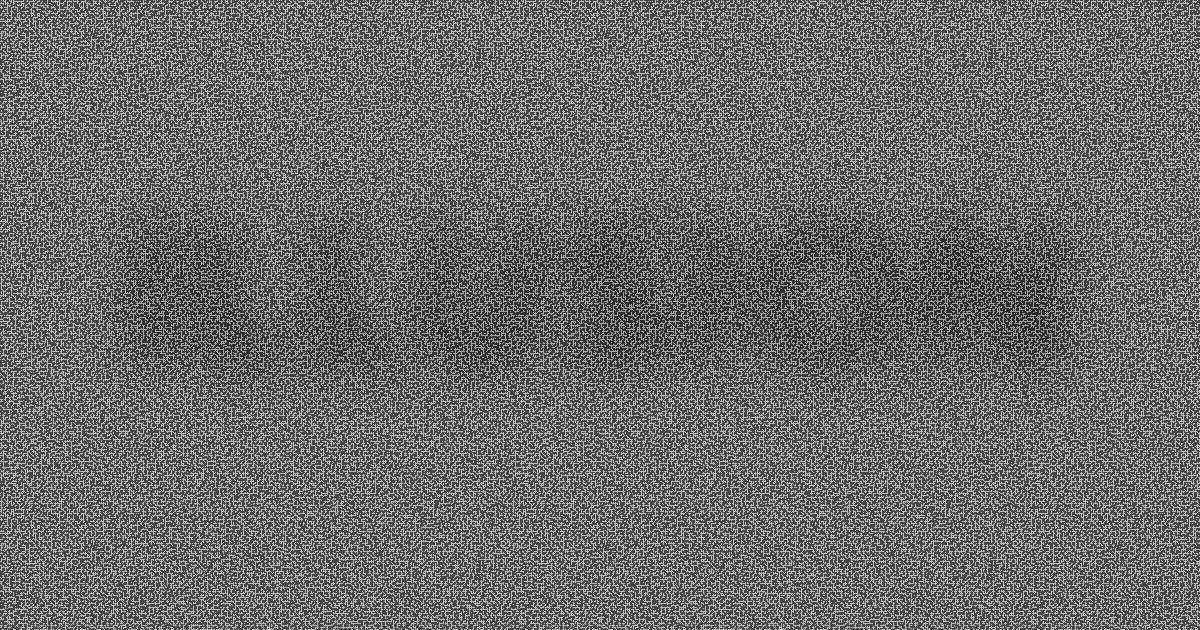
An Image Can Be Split Into Layers of Coarseness
Any image can be written as a sum of fine changes (high spatial frequencies) and slow changes (low spatial frequencies). The edges and graininess of a photo are high frequency; the overall layout of light and dark is low frequency.
Distance Is a Low-Pass Filter Built Into Your Eyes
Human contrast sensitivity differs by spatial frequency, and it peaks around a few cycles per degree. When you move an image away, the fine patterns in it rise in frequency per degree of visual angle, fall into the dip in sensitivity, and become invisible.
So the following four are visually almost the same operation:
- Moving away
- Shrinking the image
- Squinting
- Blurring
How to Make a Hybrid Image
This property lets you make a single image that holds two contents.
- Make the content you want seen up close high frequency only (thin lines, fine noise, edges only)
- Make the content you want seen from far away low frequency only (blur it strongly and lower the contrast)
- Overlay the two
The Hidden Text on this site implements this in its simplest form: the low frequency is blurred text and the high frequency is black-and-white binary noise.
Design Tips
- Make the high-frequency layer’s average brightness mid-grey (if it drifts, it contaminates the low-frequency layer when seen from far away)
- If you lower the contrast of the low-frequency layer too much, it cannot be seen even from far away. Around 0.3 is easy to work with
- The more characters there are, the smaller each one gets and the longer the distance needed. Eight characters or fewer is practical