Ames Room
Ames Room — 2026, generated SVG, dimensions variable · Geometry · Still
After Adelbert Ames Jr., 1946
Which figure is taller?
Which figure is taller?
Share
Reveal the answer
Both are the same height. The right one stands closer, so it looks bigger.
↑ The mechanism, made visible.
Notes — why it looks that way
What is happening
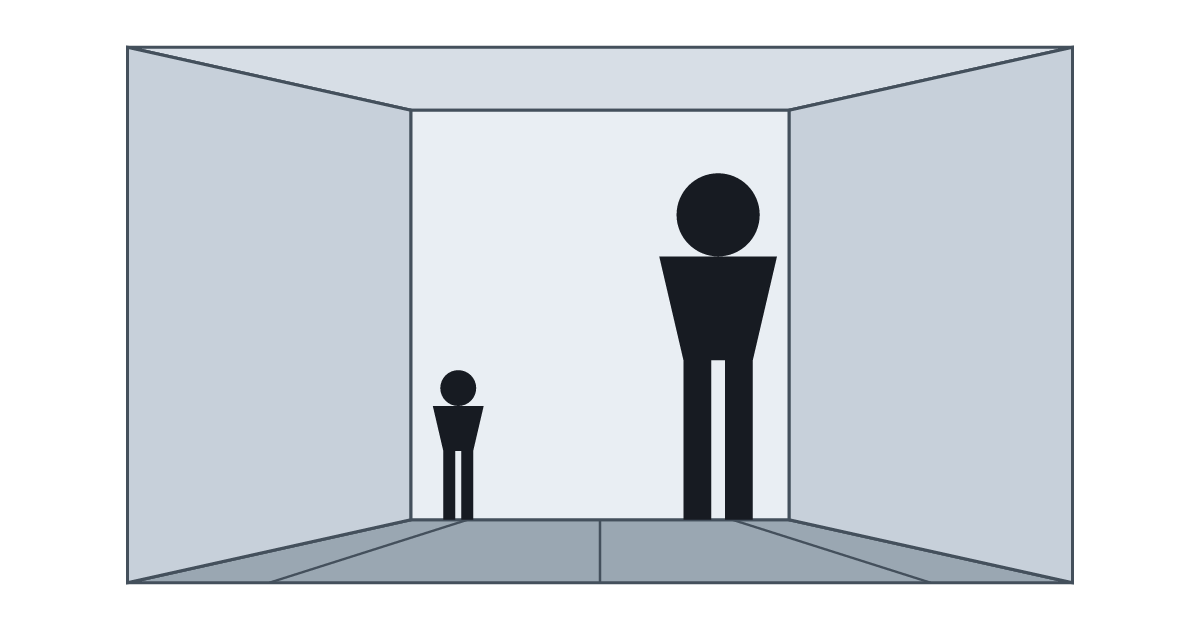
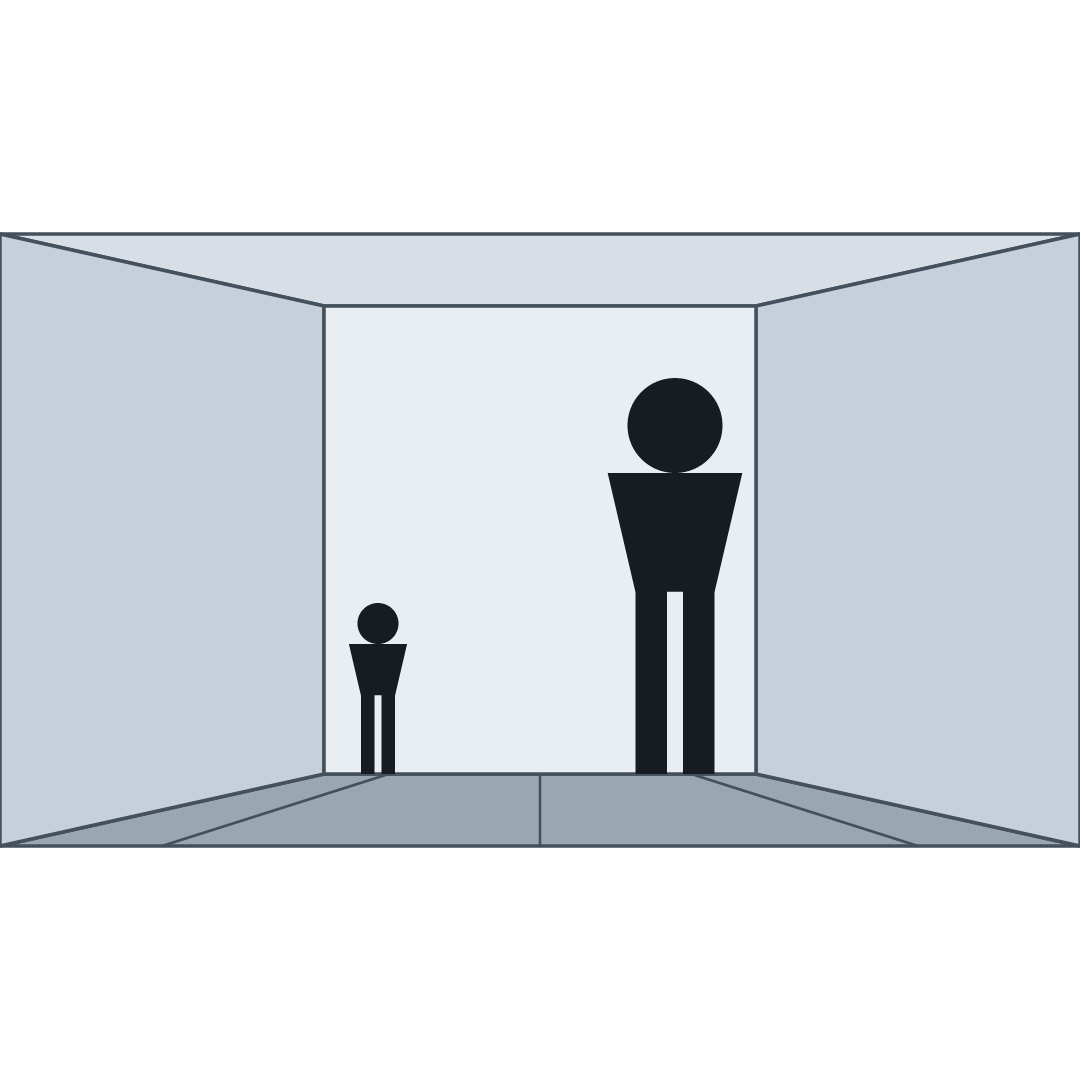
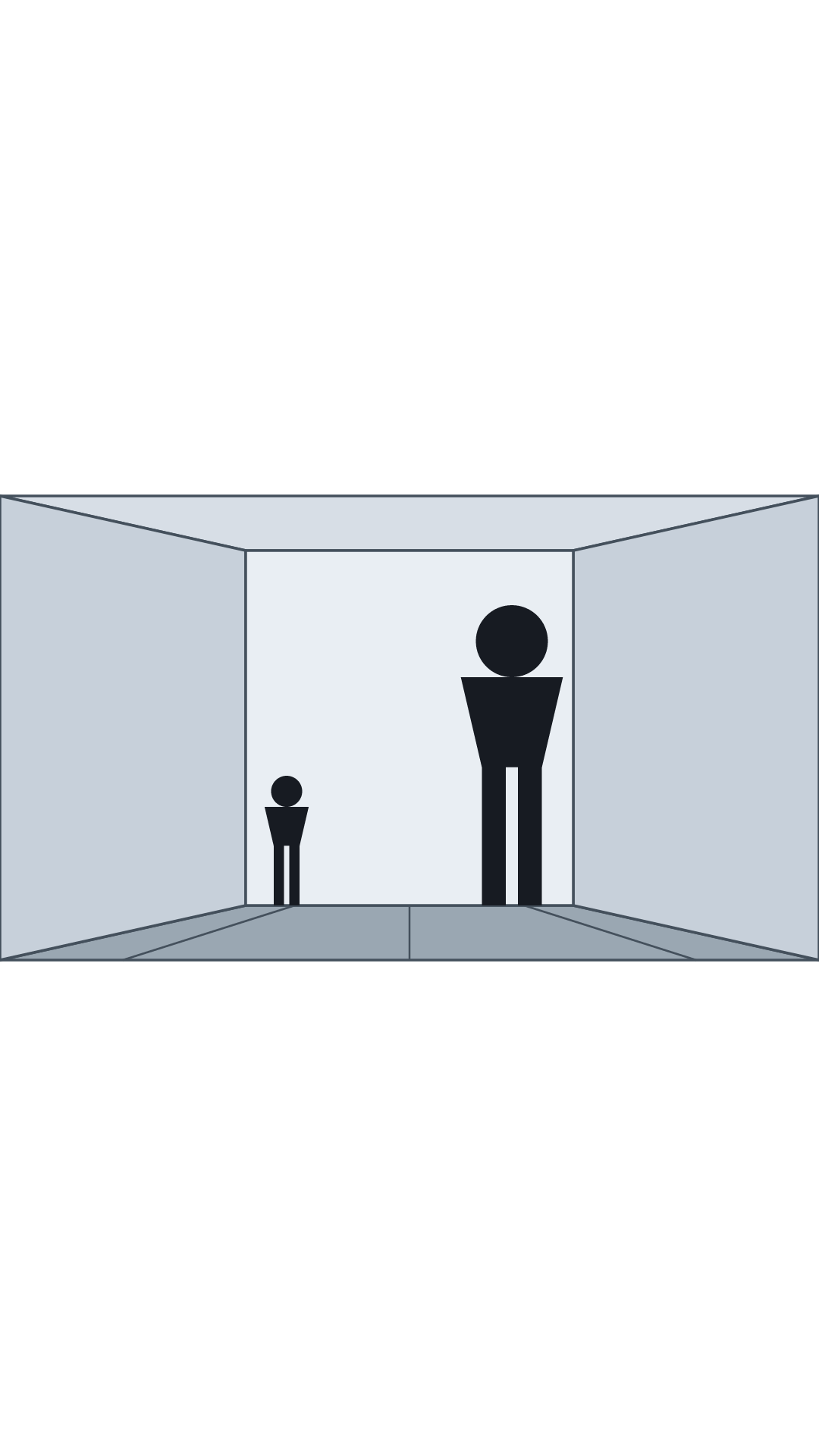
Seen from the front, the ceiling, floor, and side walls all taper neatly toward the center — an entirely ordinary-looking rectangular room. A small figure stands in the back-left corner, a large one in the back-right corner. Look at this as a photo of the room: both figures seem to stand against the same back wall, so the right one reads as a giant and the left one as a dwarf.
In fact, both figures are exactly the same height. They share the same outline — the right one is simply standing much closer, so it is drawn bigger.
Why it looks that way
A real Ames room has a back wall, ceiling, and floor that are all actually slanted — the true shape is a trapezoid. But viewed through a fixed peephole with one eye, that slant cancels out the depth difference, and the room reads as an ordinary rectangular box.
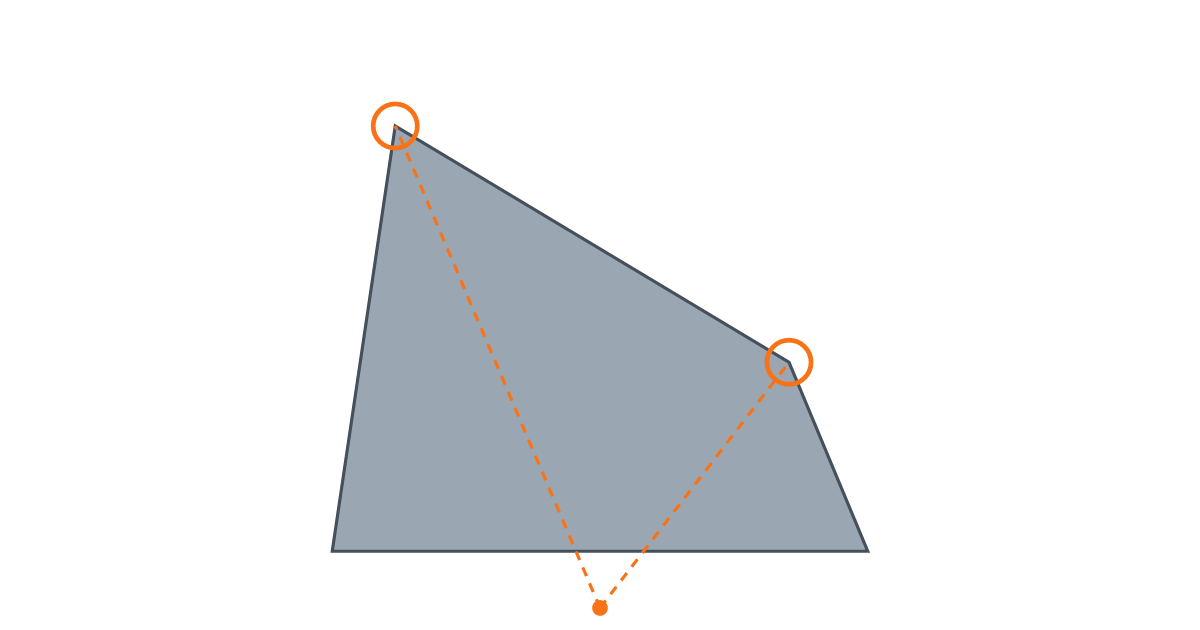
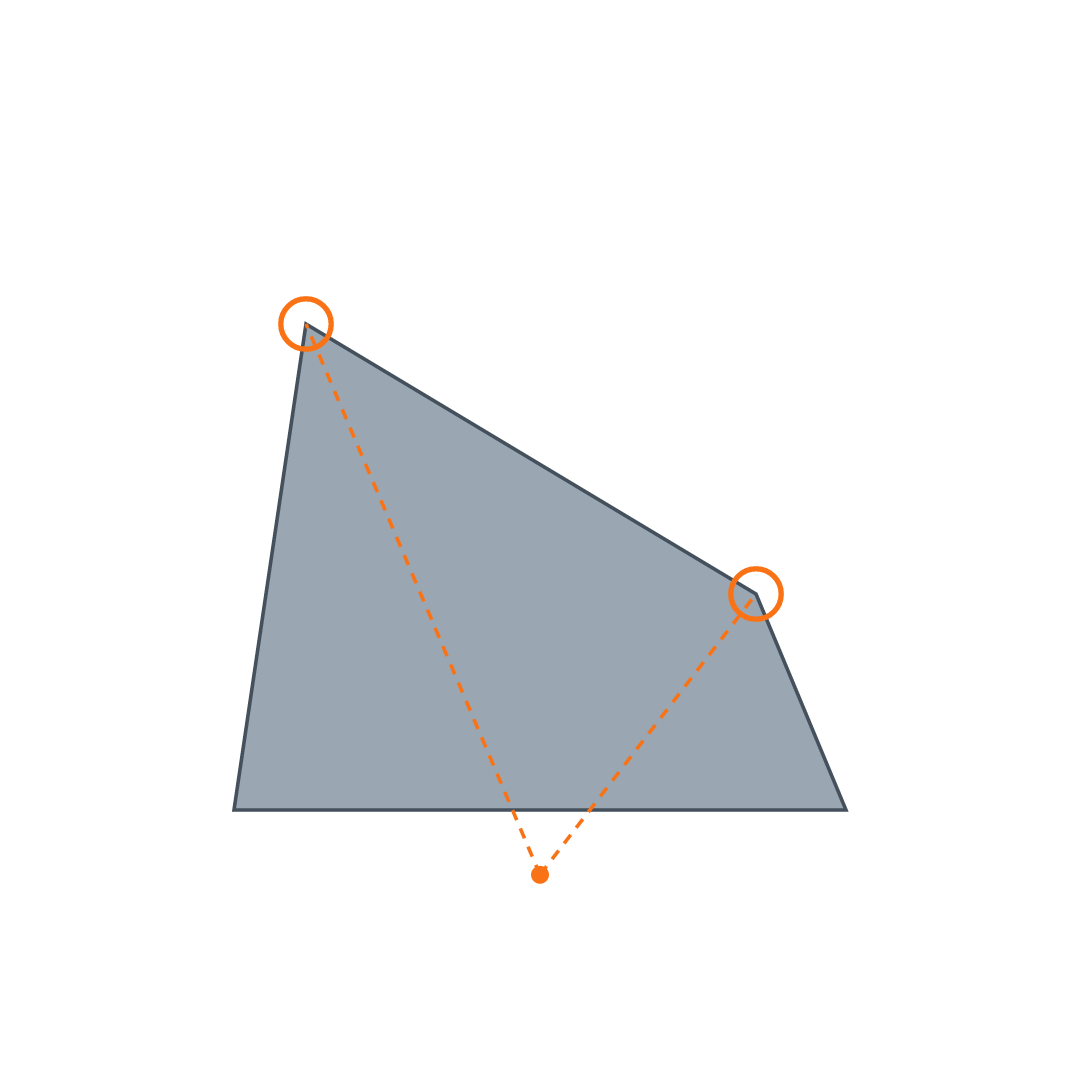
This page’s front view shows the same effect as a flat drawing. The bottom edge of the back wall — where both figures stand — is drawn as a single level line, which tells your visual system “these two people are the same distance away.” In reality the back-left corner is much farther and the back-right corner much closer (shown in the top-down plan in the answer view), but the front view carries no hint of that. With no distance cue to work with, your brain reads “same distance, different size” as “different-sized people,” rather than “different-sized drawing of the same person.”
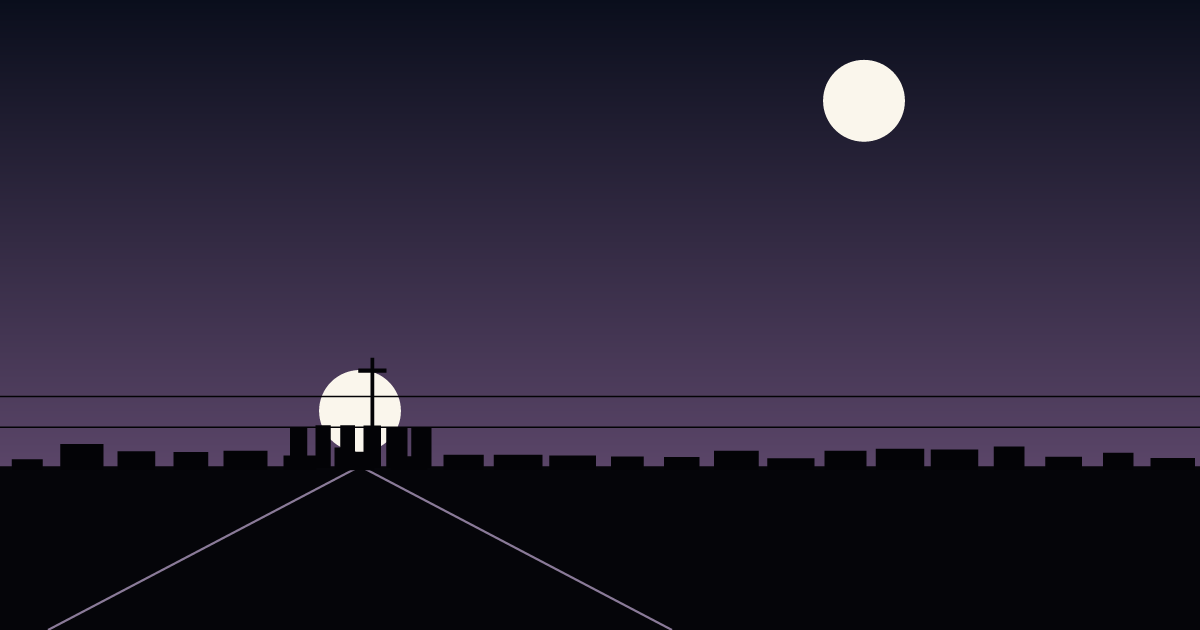
This runs the opposite direction from the Moon Illusion: the moon illusion adds depth cues (a skyline, a utility pole) to change how big something looks, while the Ames room deliberately removes depth cues to make two very different distances look identical.
How to check
Use “Remove the context” to hide the room’s walls, ceiling, and floor lines, leaving only the two figures. Once the room is gone, there’s room to read them as “two people at different distances” instead, and the size difference can feel different.
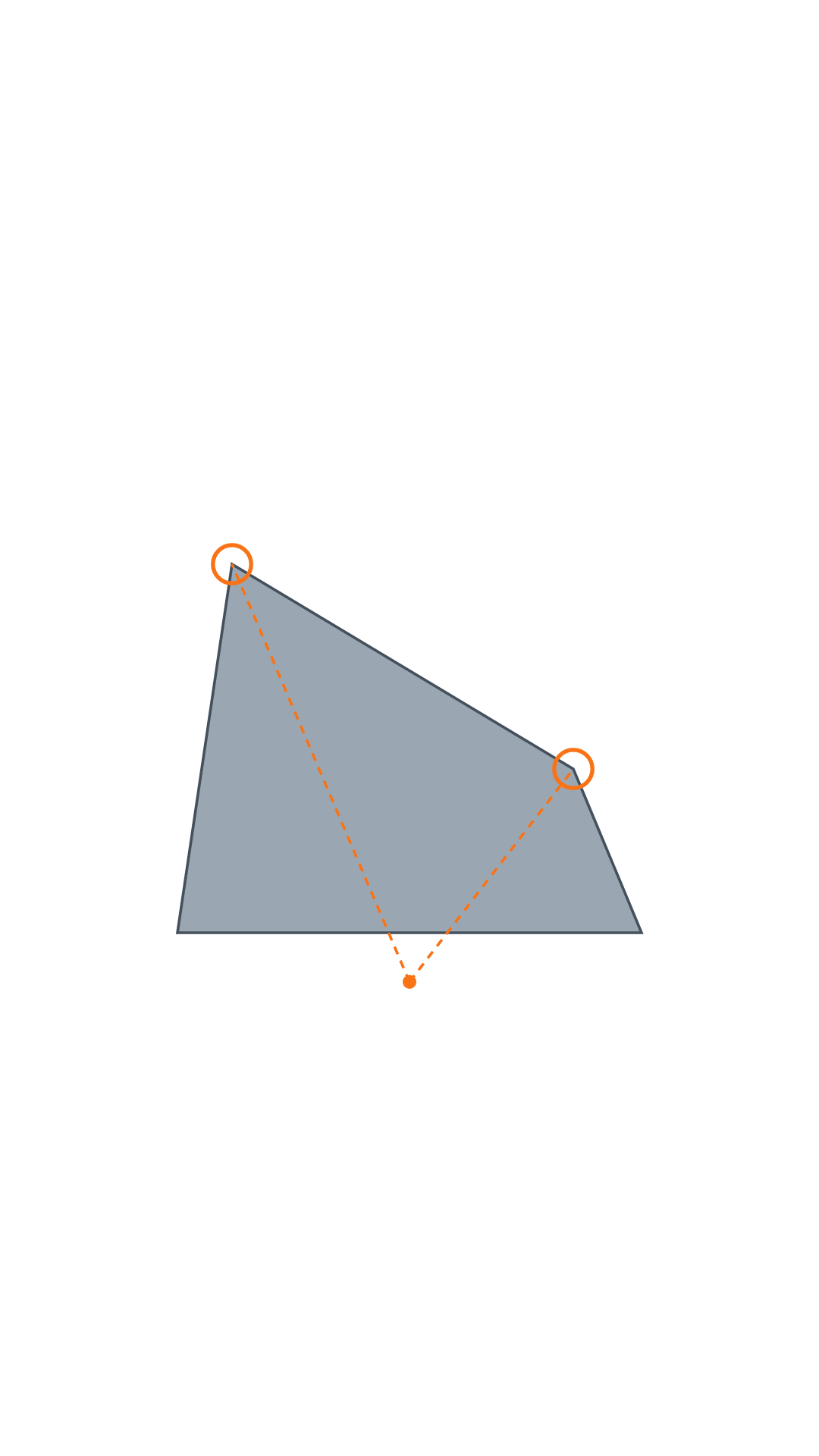
The answer view switches to a floor plan seen from above. The line from the viewpoint to the back-left corner is far longer than the line to the back-right corner — that’s what makes the left corner so much farther away. The two equal-radius circles at the back corners mark the figures’ real footprint: the same size.
First described
After Adelbert Ames Jr., 1946
Devised by perception researcher Adelbert Ames Jr. as a distorted room seen through a single peephole with one eye.

Media — images and data
- OG / X (1200×630)
- Instagram square (1080×1080)
- Shorts / Reels vertical (1080×1920)
- Answer image — landscape (X)
- Answer image — square (Instagram)
- Answer image — vertical (Shorts)
- Post drafts (JSON)
Free to use for non-commercial purposes such as classes, school projects and blogs, with a link back to this page as the credit. Commercial use is not covered
Every figure is generated here from the phenomenon itself (re-implemented). The Ames room itself is a well-known illusion first reported in 1946, but the room, the figure silhouettes, and the layout here are an original SVG implementation for this site. No photo or diagram of an actual exhibit is reproduced.