What Is Between the Circles?
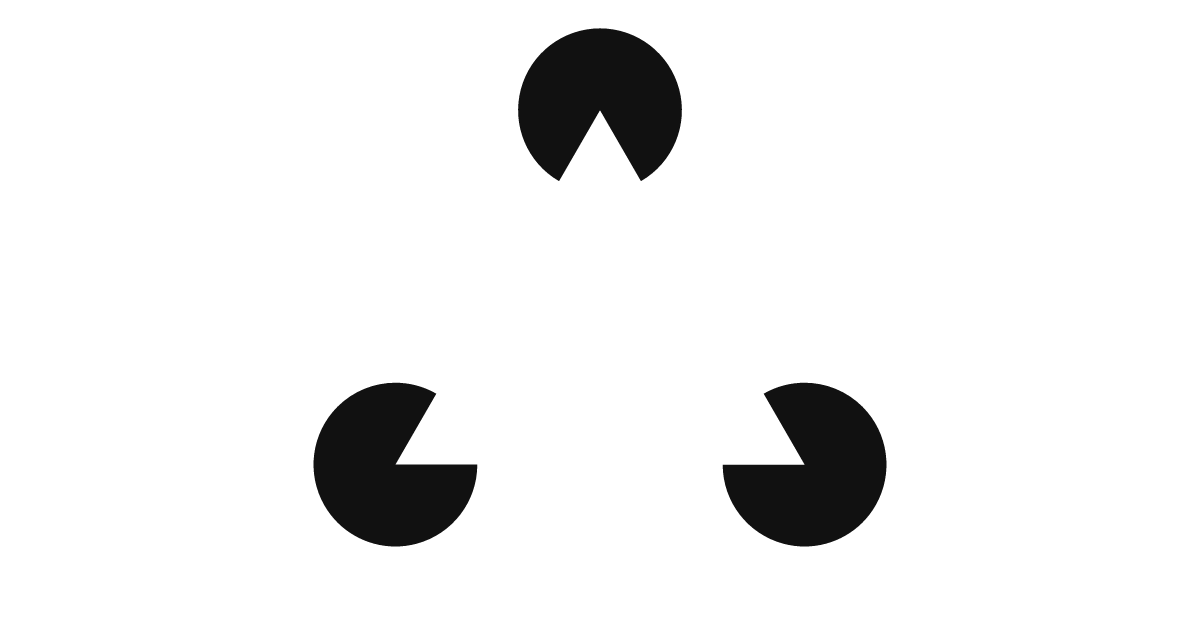
The Kanizsa Triangle uses three circles with wedges cut out. When the wedges line up, a white triangle seems to lie over the middle. The centre may even feel slightly brighter, but in the image it is the same white as the surroundings.
Focus on the space between two circles and you can check that no black line is drawn there. That you still sense the edge of a shape is what makes this figure interesting.
Reading Things as a Group
The visual system does not only treat separate cues one by one; it groups them into a single surface or object. If you read the incomplete circles as being hidden by a triangle, one object explains the positions of all the cut-outs. Still, you need not treat this explanation as having solved everything the brain does.
How It Differs From Figures With a Real Shared Contour
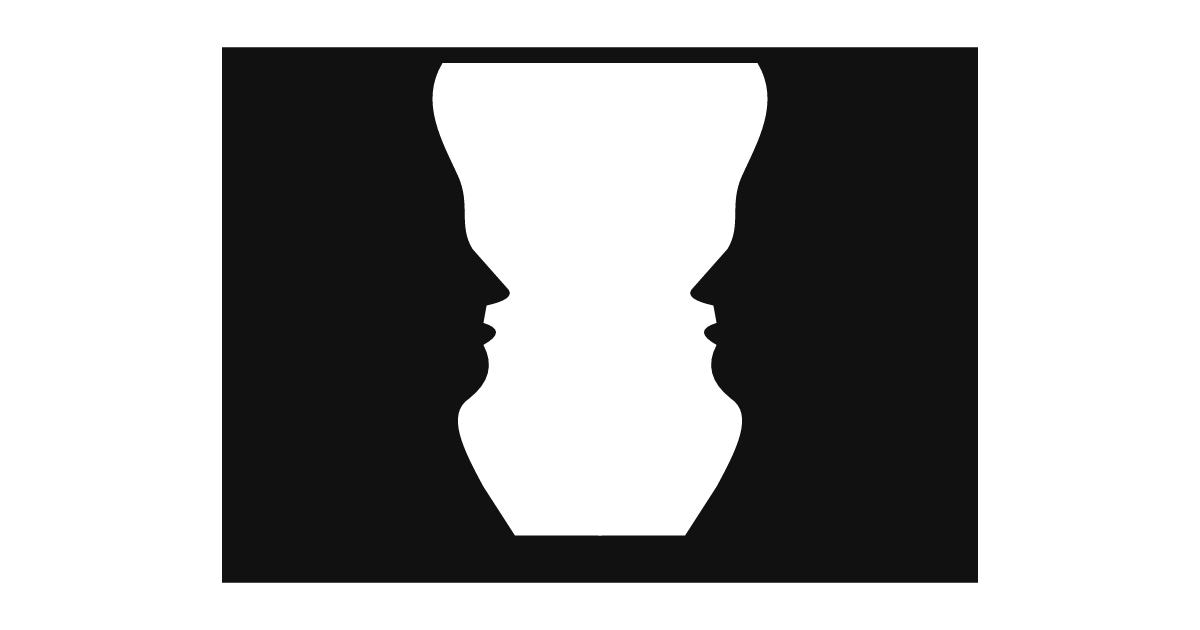
In Vase or Faces, the black-and-white boundary actually exists. The reading changes depending on which side you assign the boundary to. In the Kanizsa figure, by contrast, you sense a boundary even in places away from the circles. Both involve grouping shapes, but where the line is differs.
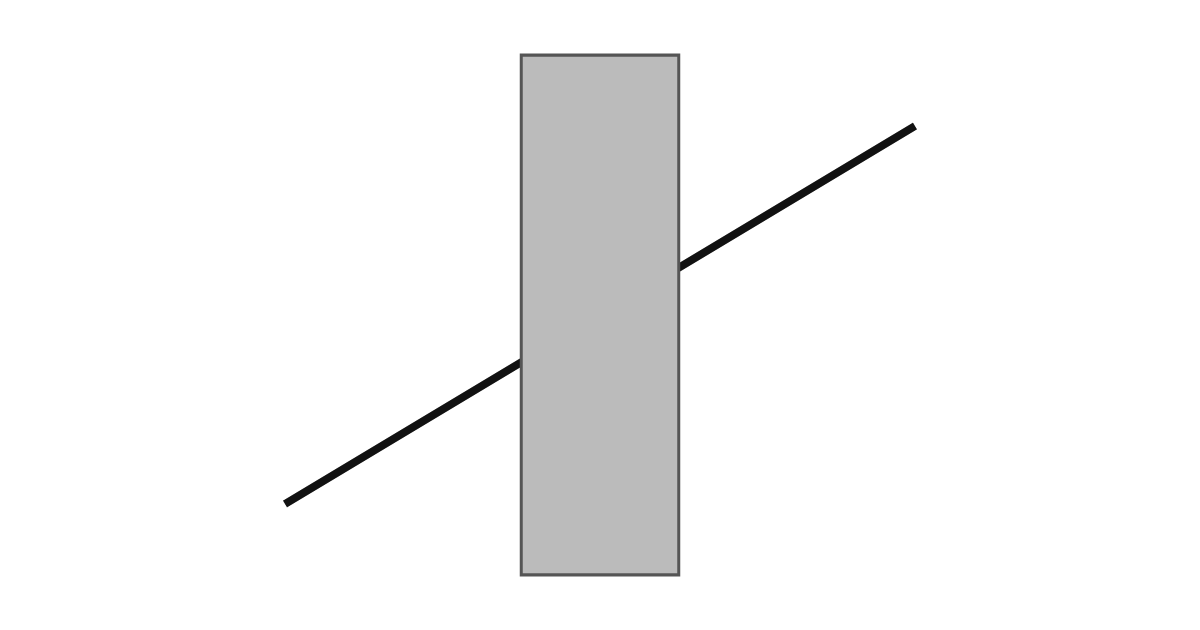
In the Poggendorff Line, you estimate where a line continues behind a band. That is a task of inferring the hidden part. Try the three in a row, and you will see that “reading a line” involves more than one process.
Remove the Dotted Line and Come Back
The answer view of this site adds a dotted line where the triangle is perceived. Compare whether the edge still seems to remain after the dotted line is closed. It matters to separate a line added for checking from what was drawn in the first place.
Reference: Michael Bach on the Kanizsa illusion, with research literature.