Hering Lines
Hering Lines — 2026, generated SVG, dimensions variable · Geometry · Still
After Ewald Hering, 1861
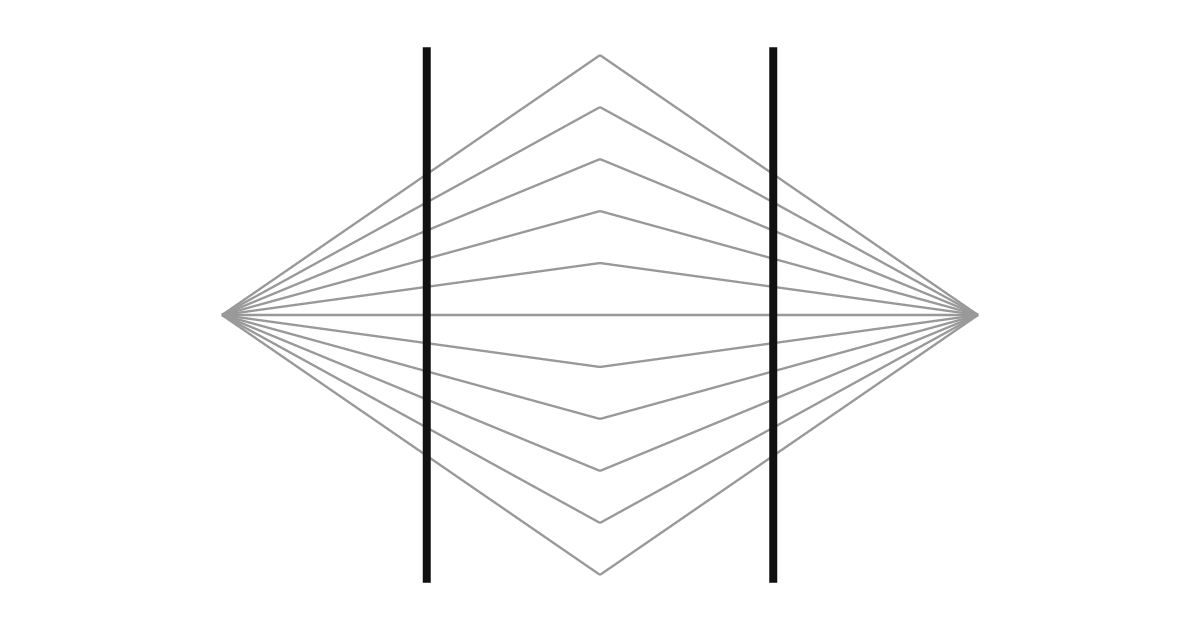
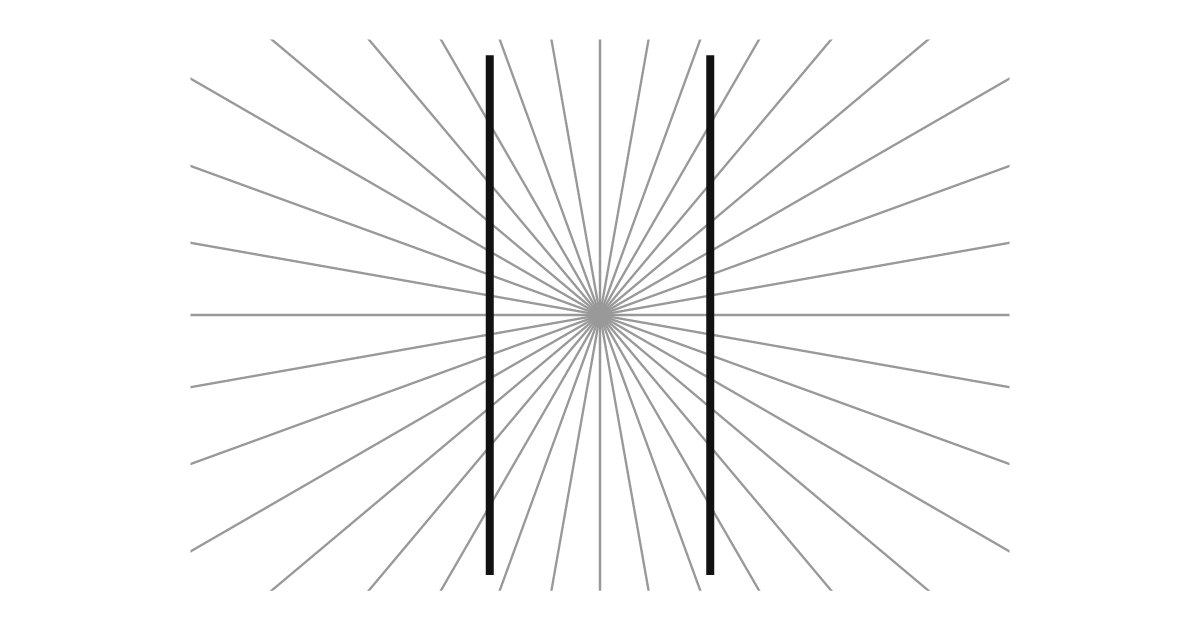
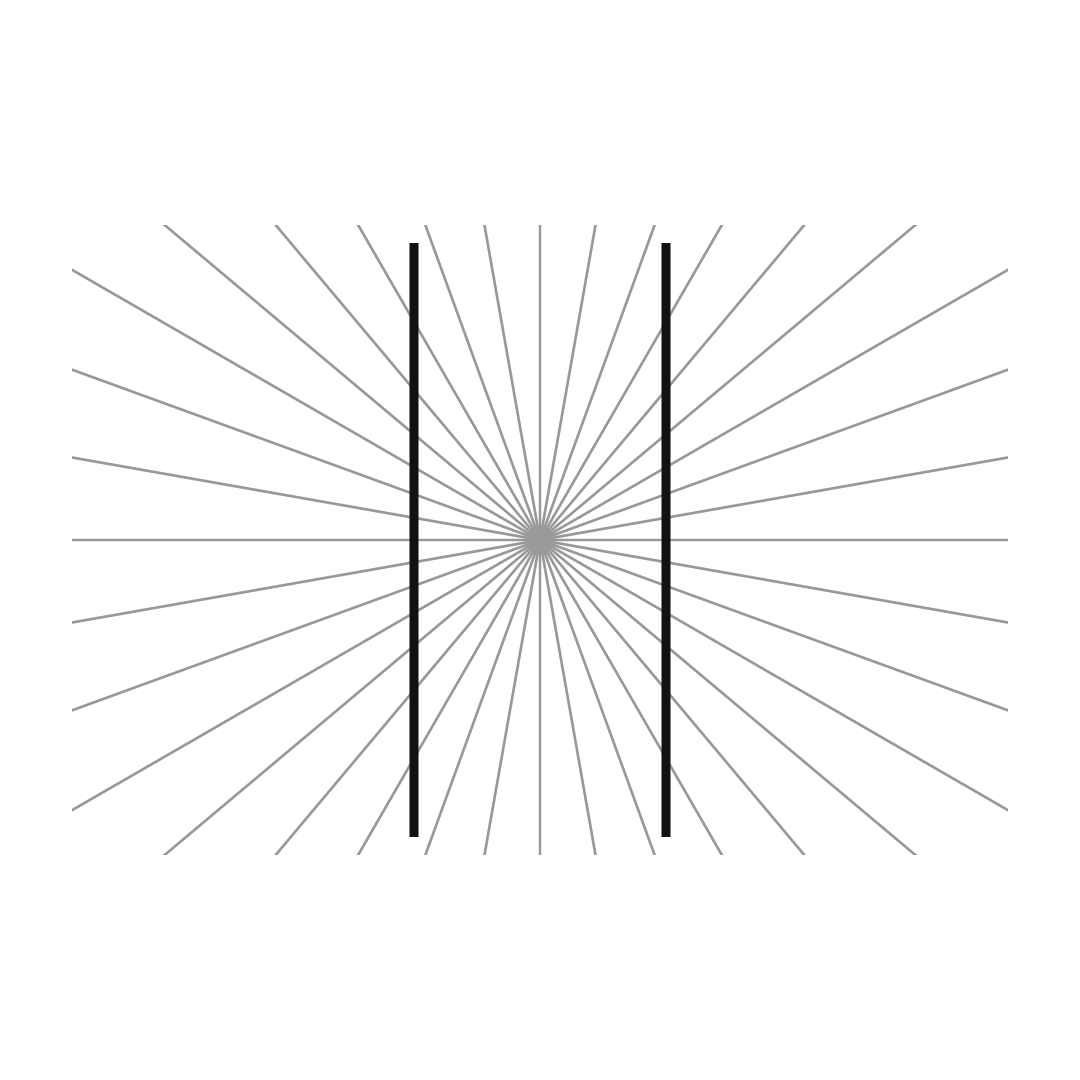
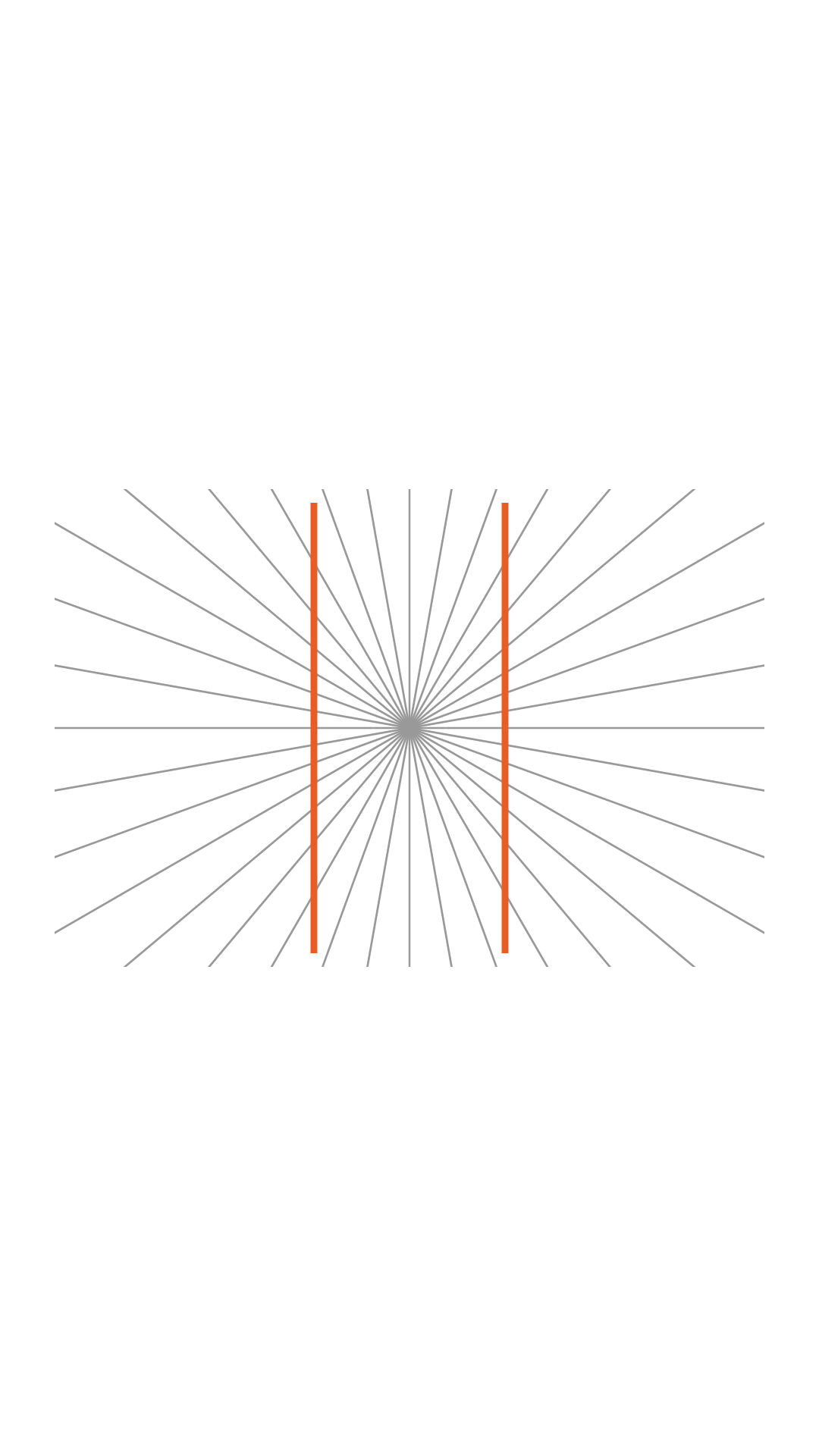
Do the two lines bow outward?
Do the two lines curve outward?
Share
Reveal the answer
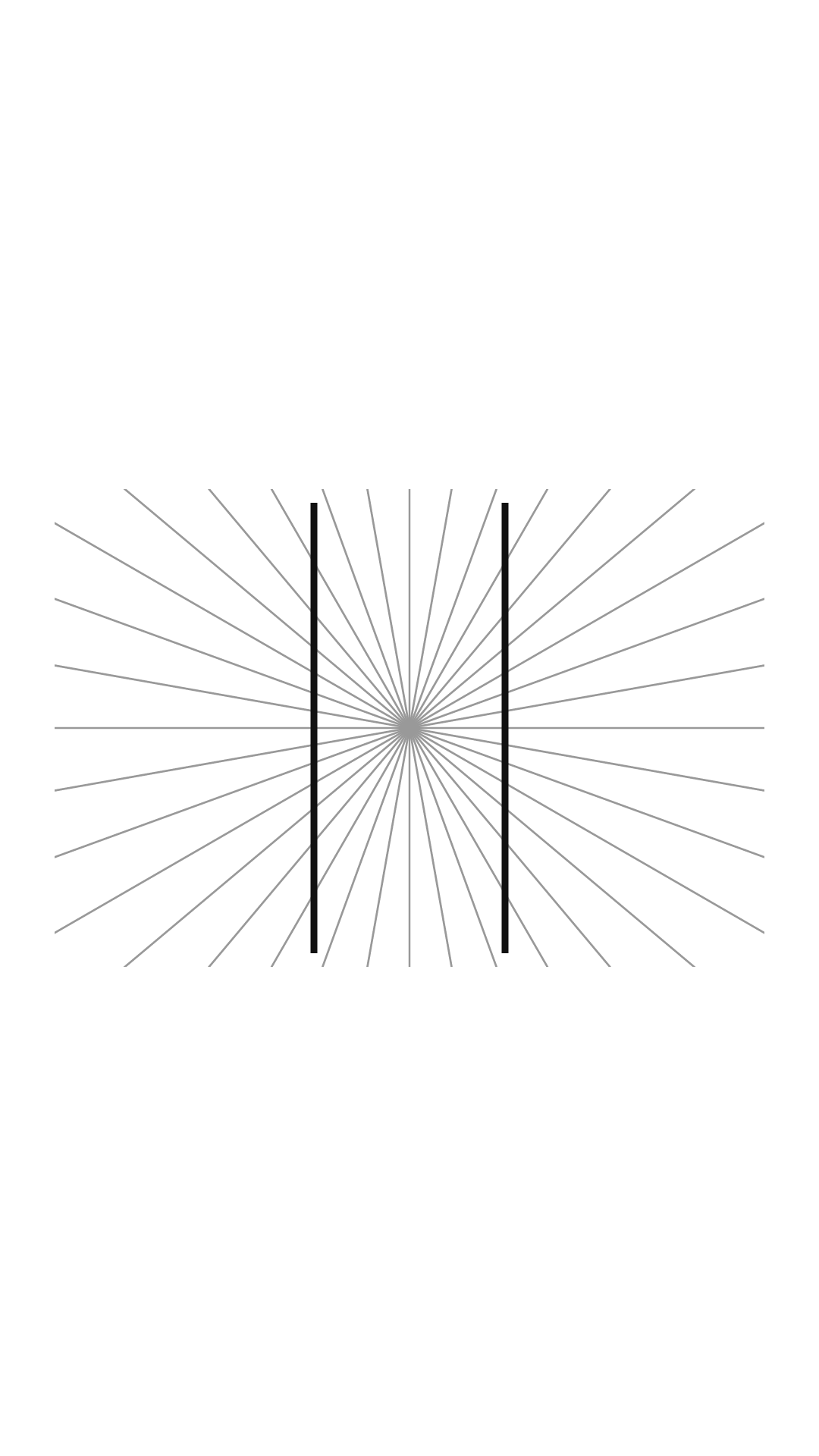
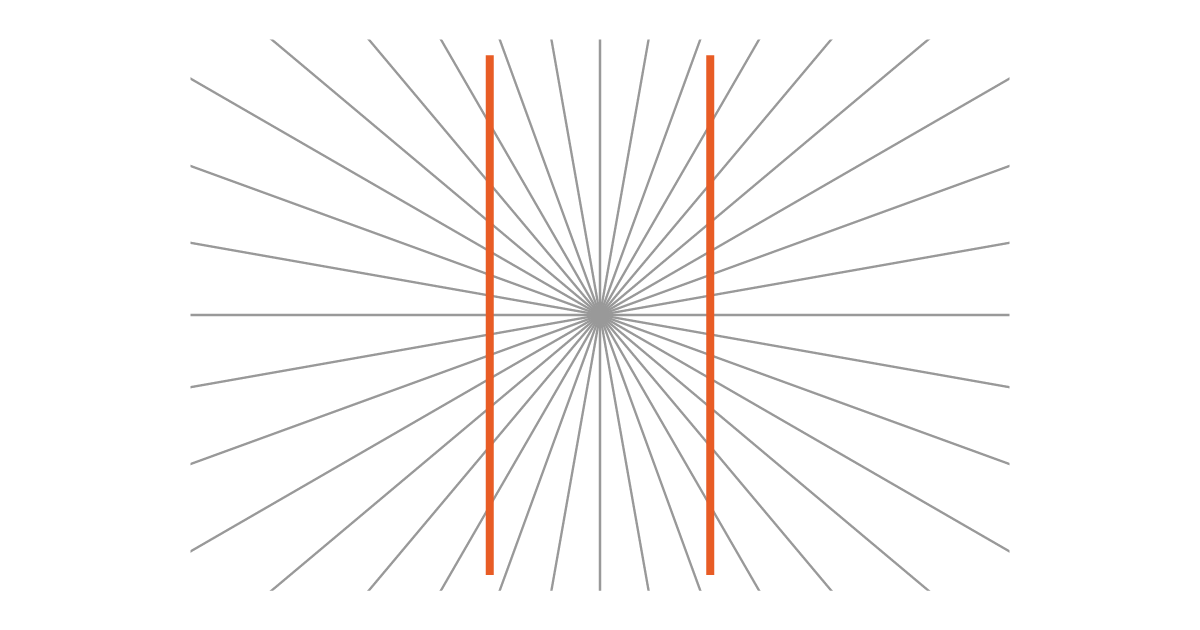
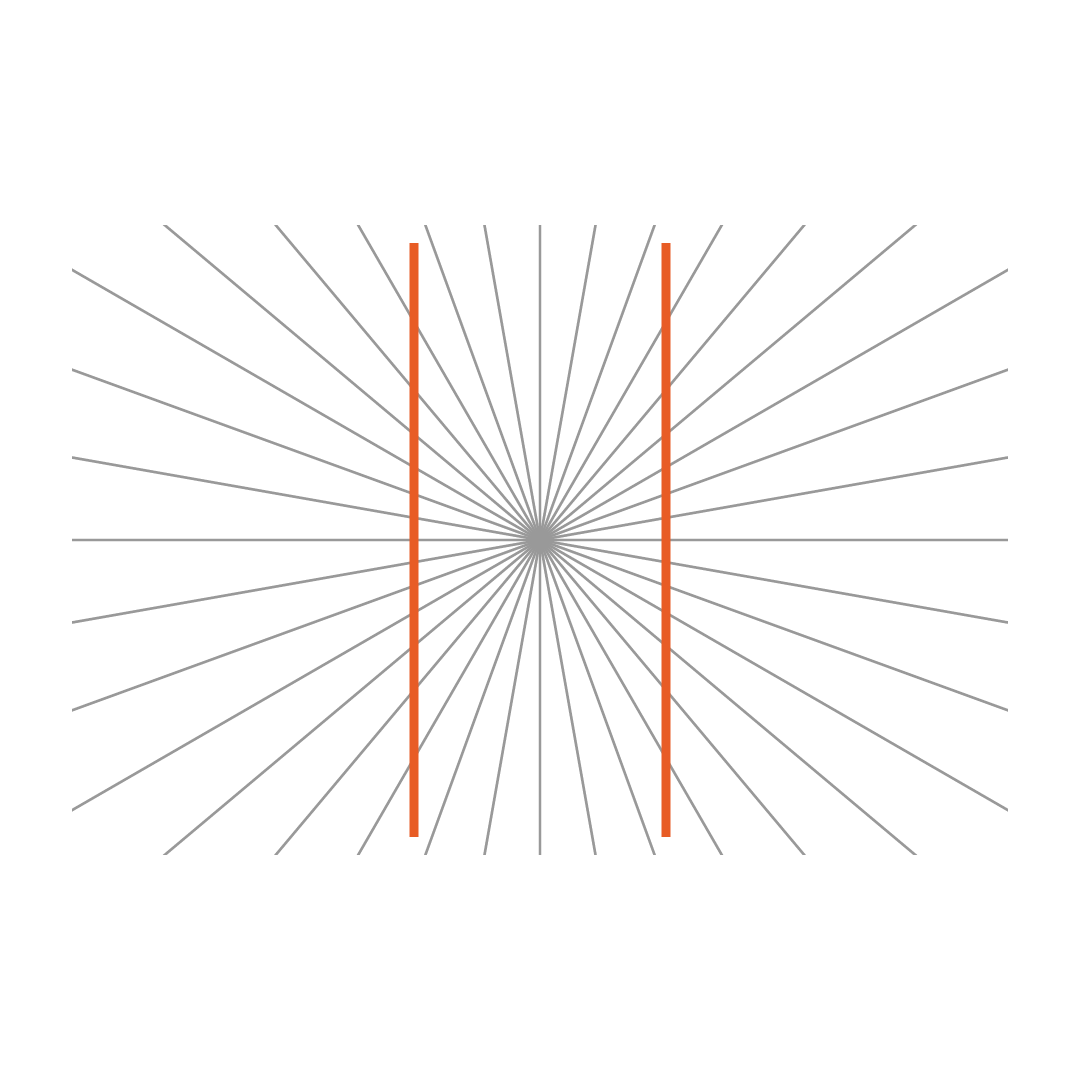
Both are straight and parallel to each other.
↑ The mechanism, made visible.
Notes — why it looks that way
What is happening
Look first at the thin lines radiating out from the center, then trace the two thick lines from top to bottom. Do the straight lines look like they’re being pushed outward in the middle? The figure places the two straight lines at fixed, separate horizontal positions — there’s no extra widening applied at the center.
Why it looks that way
The perceived direction of a long line is also affected by the lines crossing it. In a radiating pattern, the crossing angle changes depending on position, which can make the overall contour feel curved. This distinguishes a figure that’s actually been bent from one where context only makes it look bent.
How to check
Hide the surrounding radiating lines and only the two parallel lines remain. Revealing the answer highlights both in color. Compare how the impression changes when the background returns, and note that the endpoints never move — a way to confirm how surrounding directional information gets mixed into the judgment.
For reference: Michael Bach’s explanation. The figure here is an original implementation for this site.
First described
After Ewald Hering, 1861

Media — images and data
- OG / X (1200×630)
- Instagram square (1080×1080)
- Shorts / Reels vertical (1080×1920)
- Answer image — landscape (X)
- Answer image — square (Instagram)
- Answer image — vertical (Shorts)
- Post drafts (JSON)
Free to use for non-commercial purposes such as classes, school projects and blogs, with a link back to this page as the credit. Commercial use is not covered
Every figure is generated here from the phenomenon itself (re-implemented). The general Hering illusion principle is re-implemented here as SVG. No existing figure or code is reproduced.