Look at the Whole, Not Just the Ends
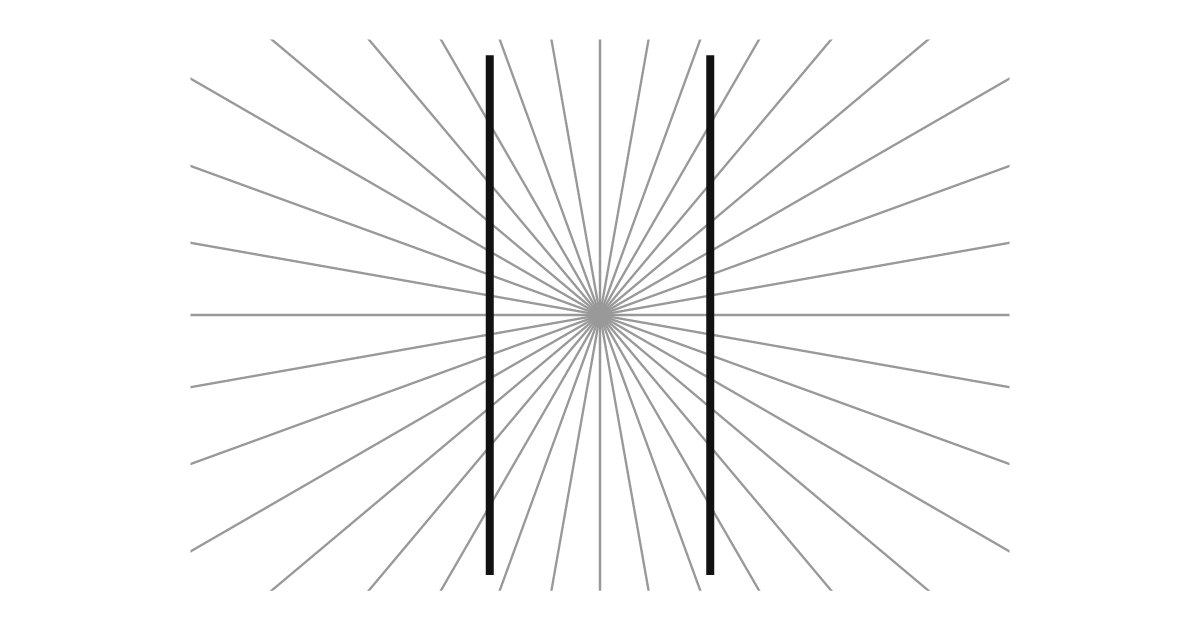
In the Hering Lines, two straight lines over radiating lines seem to bulge outward. The horizontal positions that make up the thick lines are fixed. If the impression of shape still changes, the directional information around the lines is mixing into your judgement.
Swap the Background
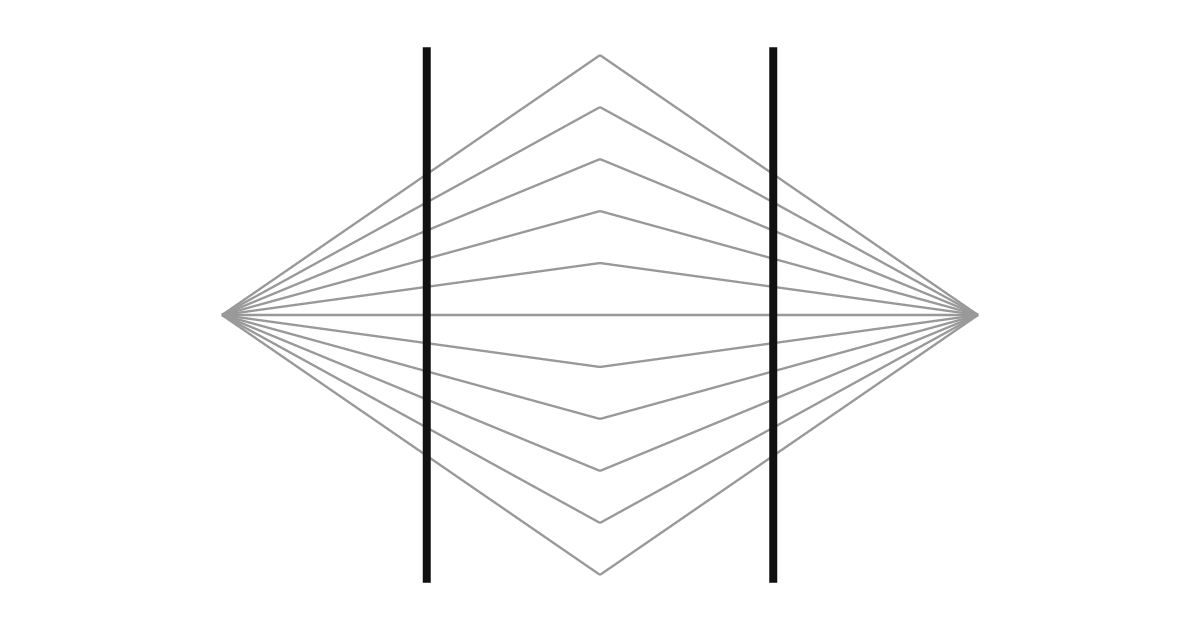
Wundt Lines uses fan-shaped lines extending from the left and right. Go back and forth with Hering and compare whether the middle spreads outward or pinches inward. In both, the targets are parallel straight lines. To check the difference in appearance, it helps to look at the state with no cue and no background, not only at the colours of the answer view.
Tiles Can Tilt Lines Too
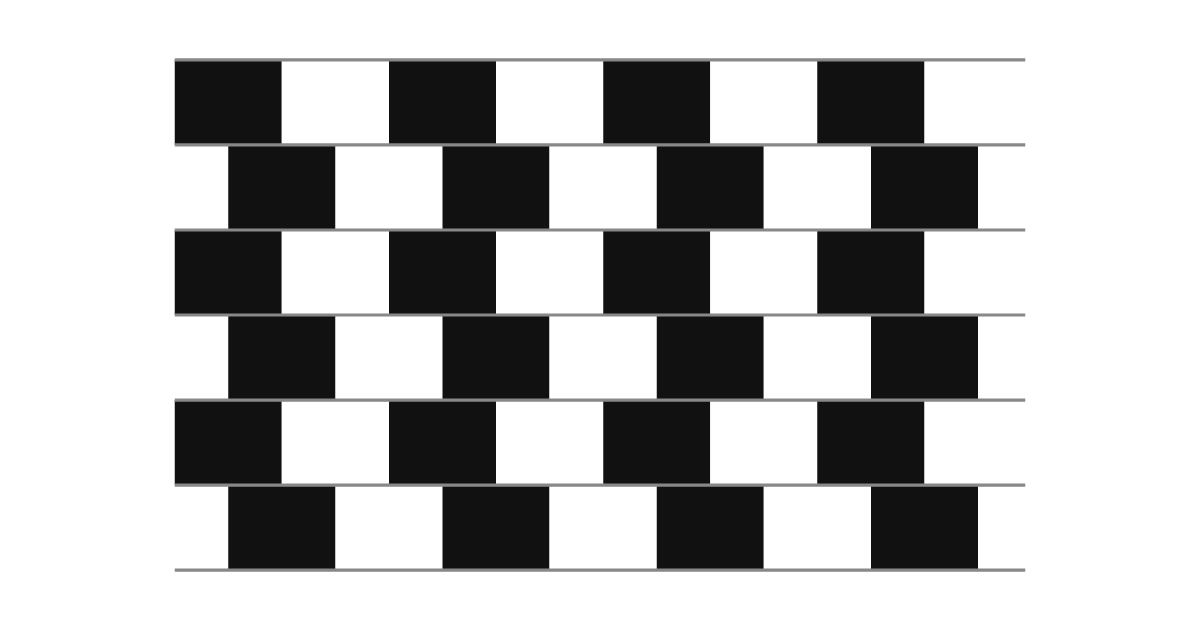
In Café Wall, black-and-white tiles are shifted row by row. Even if the grey mortar lines feel slanted, each one is horizontal. The brightness and thickness of the mortar are conditions of the effect, so even changing the colours as decoration can weaken it.
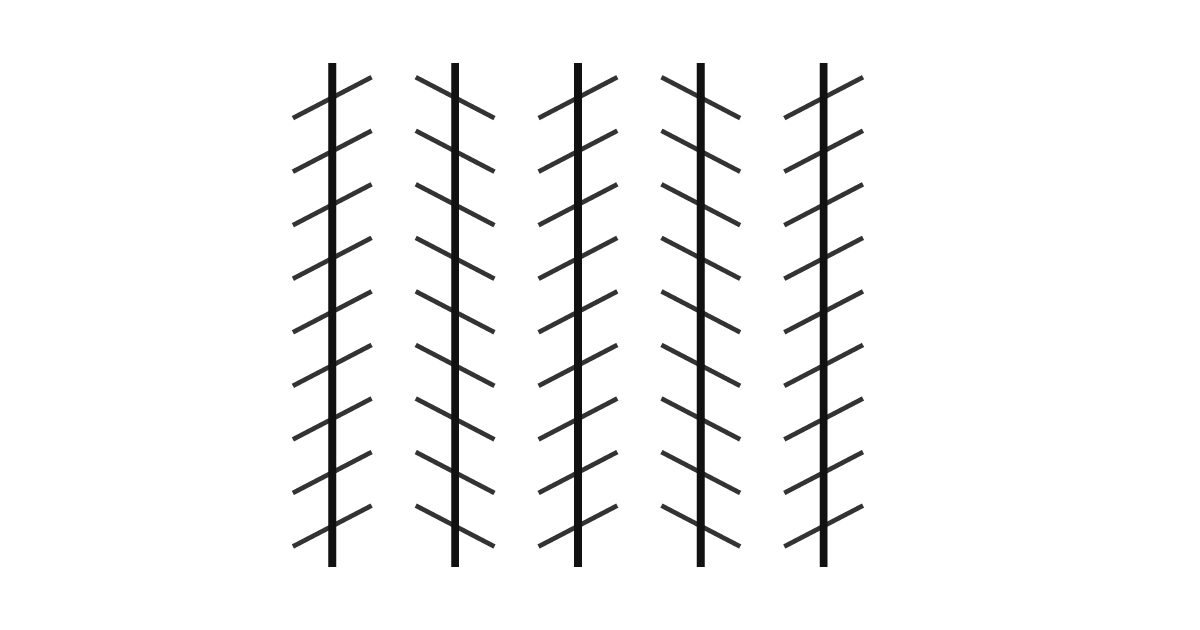
In Zöllner Lines, short diagonal strokes are laid over long lines. Observe whether the parallel long lines seem to open or close. Rather than pinning every angle illusion on one cause, a good starting point is to separate the target from the background and see what affects your judgement.
A Ruler and Appearance Have Different Jobs
Holding a ruler to the screen confirms the coordinates, but the appearance does not necessarily disappear. Separating knowing that things are geometrically the same from seeing them as the same leaves a reason to try again even after you know the answer.
References: Michael Bach on the Hering illusion, Wundt illusion at Illusions Index.