Leaning Tower Illusion
Leaning Tower — 2026, generated SVG, dimensions variable · Geometry · Still
After Frederick Kingdom, 2007
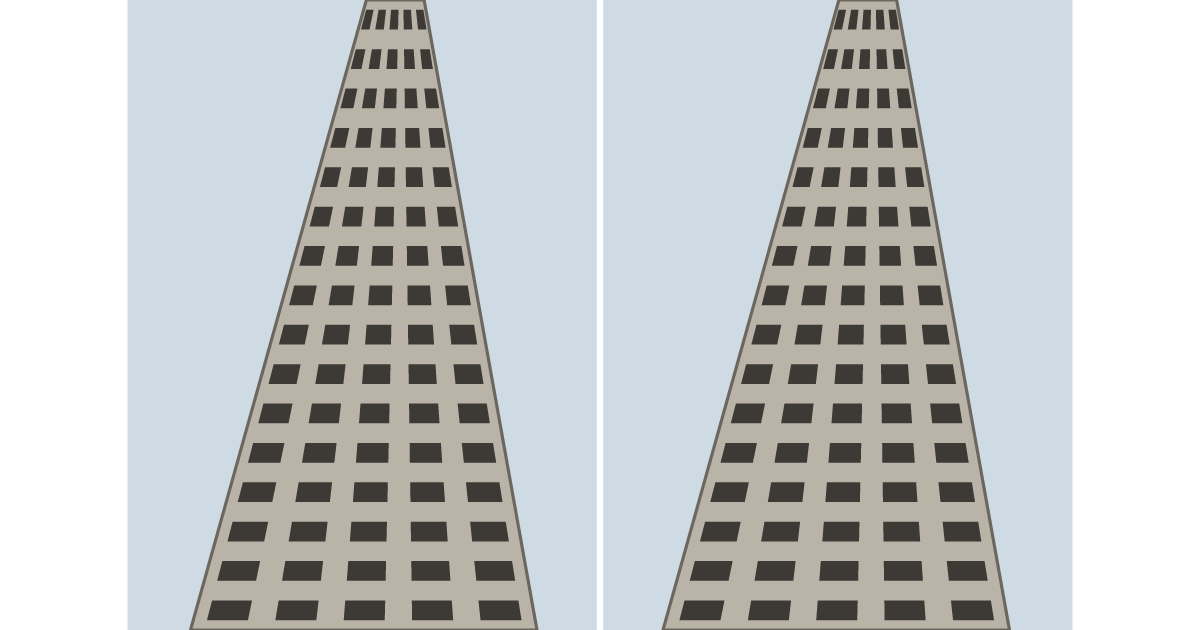
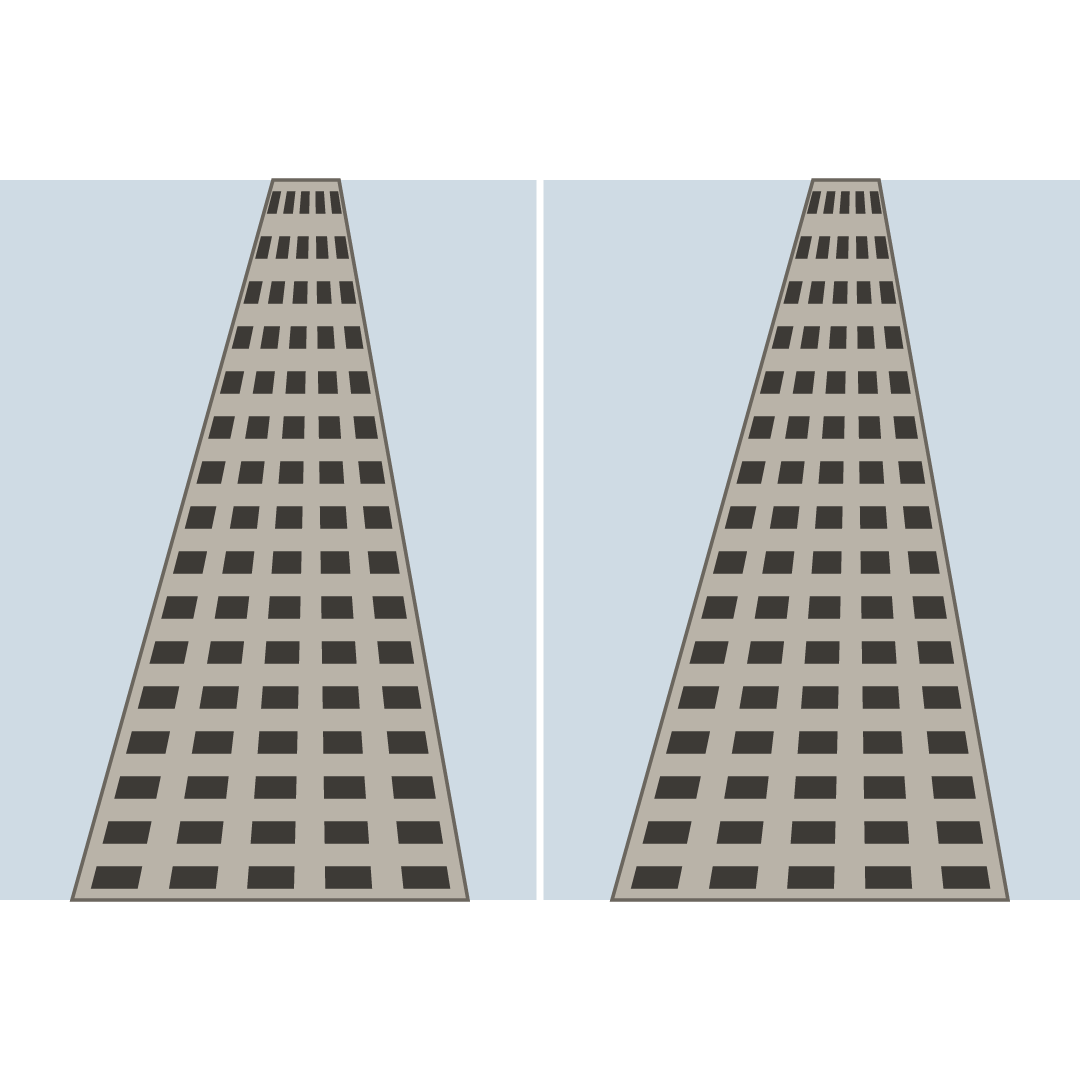
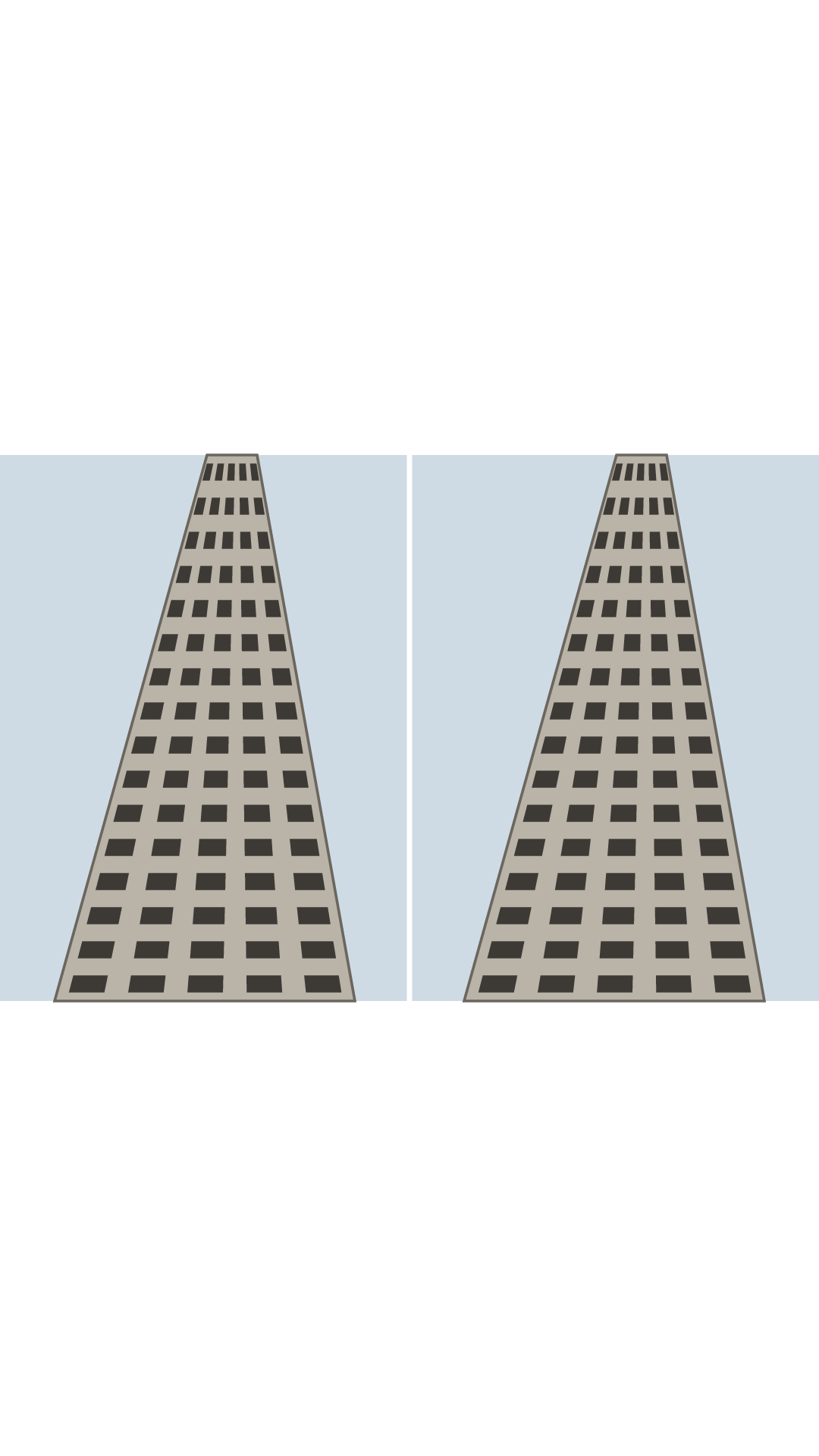
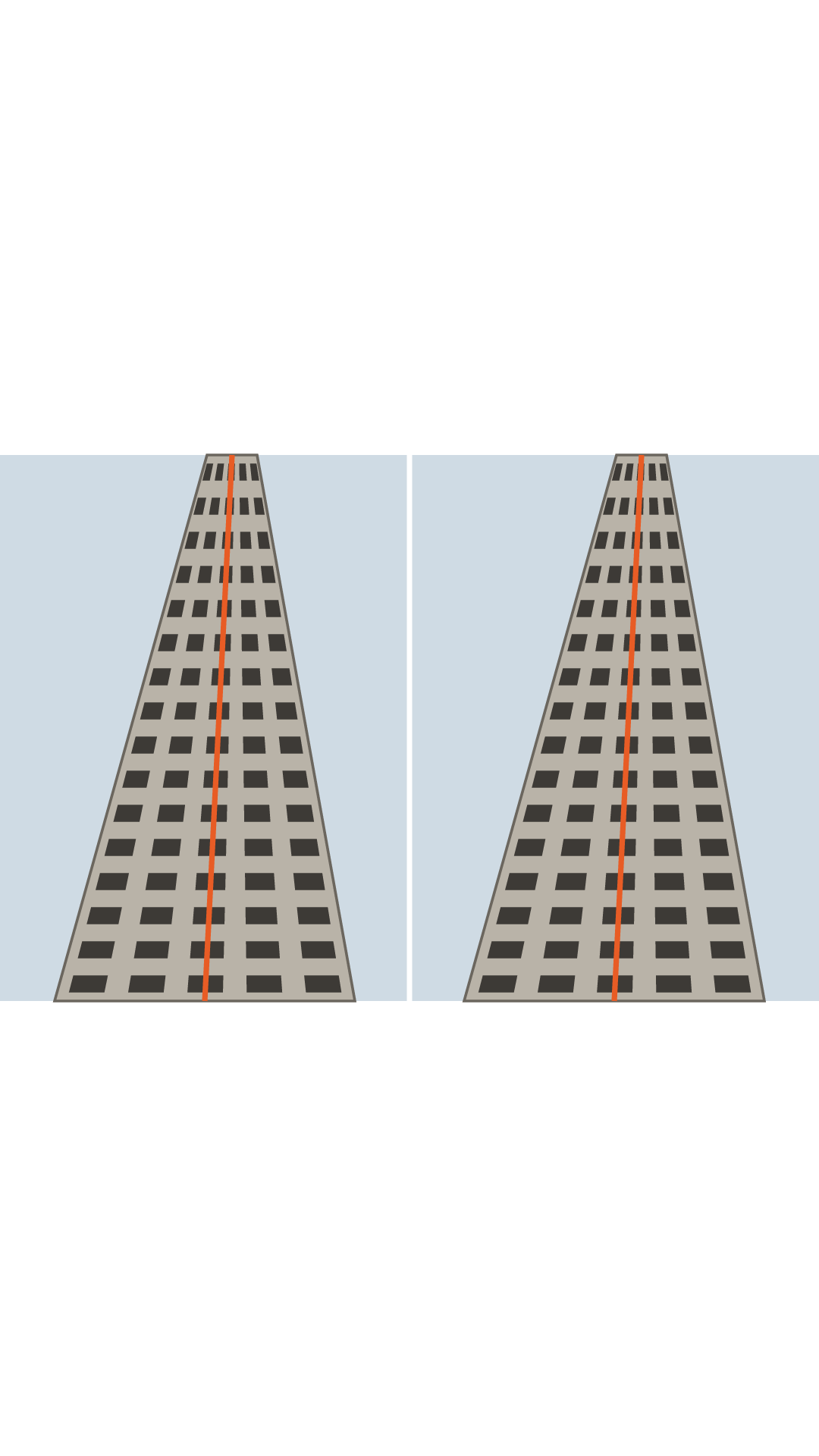
Which tower leans more to the right?
Which tower leans more to the right?
Share
Reveal the answer
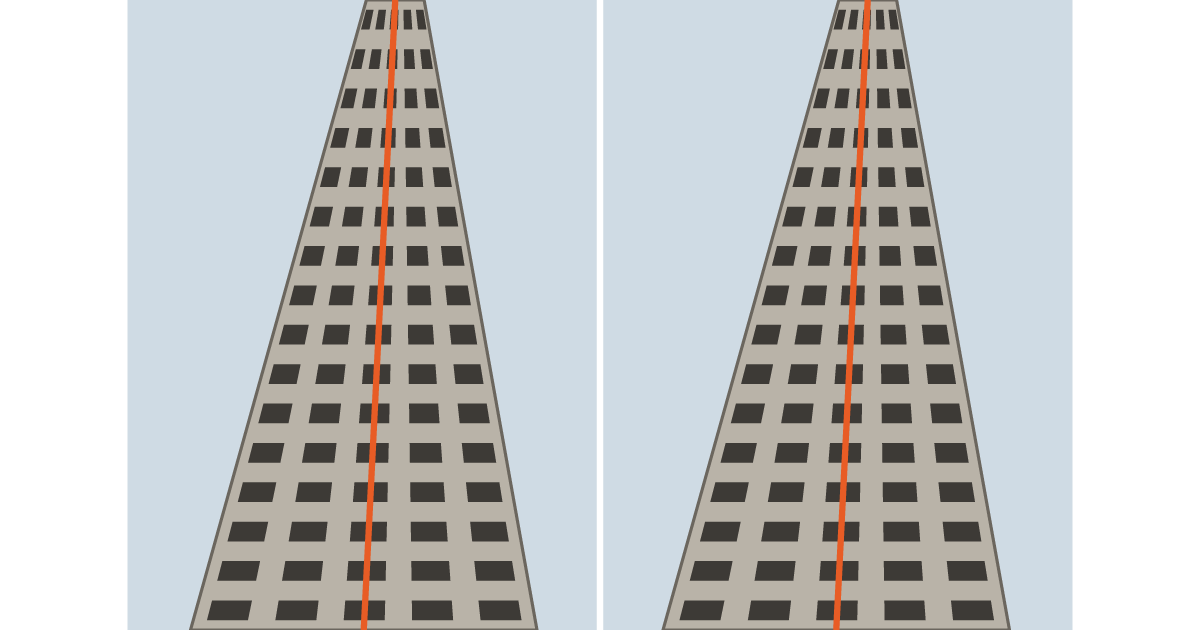
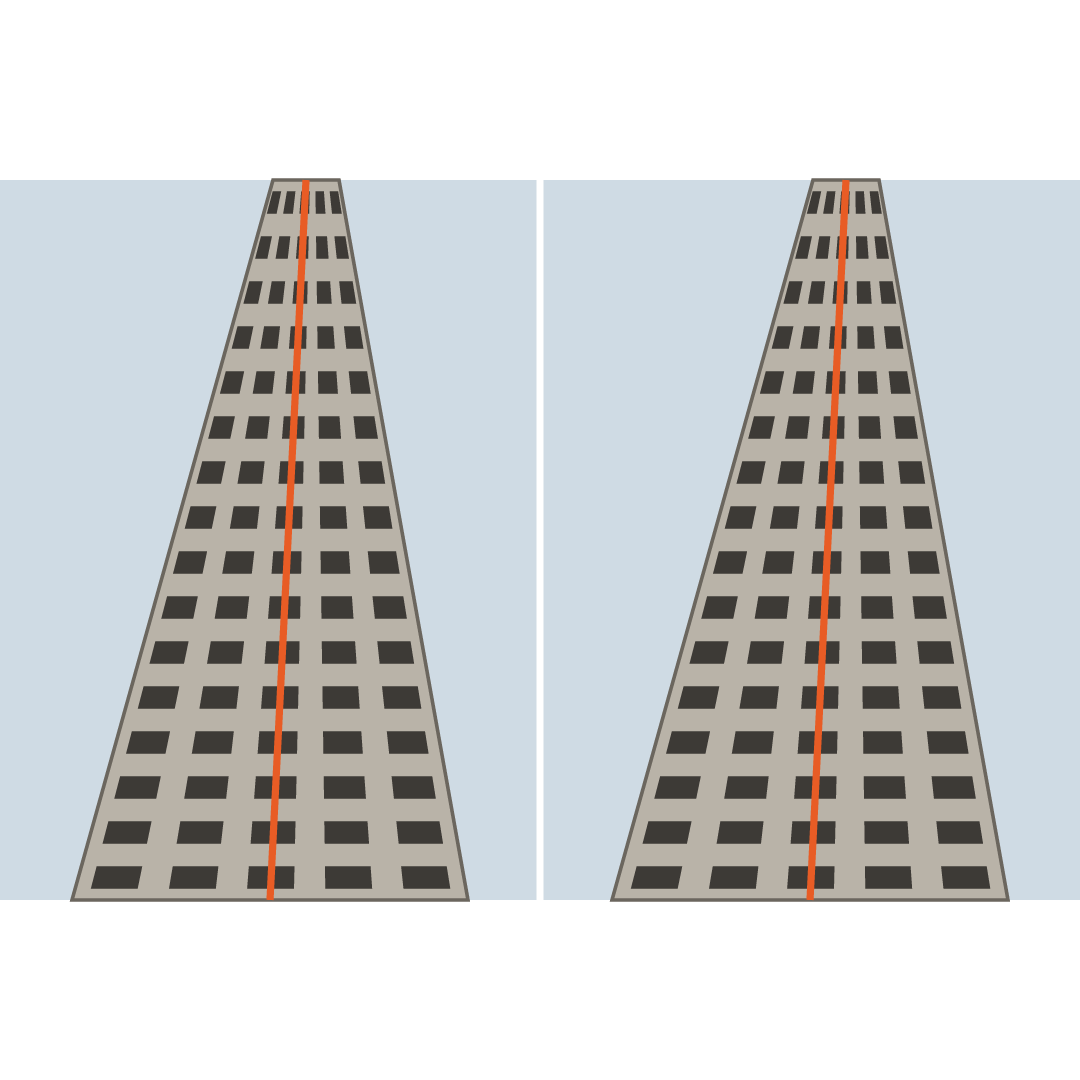
They lean equally. Both panels are the same image, with parallel center lines.
↑ The mechanism, made visible.

Notes — why it looks that way
What is happening
Two identical panels of a tall tower seen from the ground are placed side by side. The right tower should look like it leans farther to the right, with the two towers seeming to drift apart as they rise. But the two panels are simply the same image shifted sideways — not a single degree of angle or shape has changed. Revealing the answer draws each tower’s center line in the same color to show they are parallel.
Why it looks that way
A building seen from below appears to narrow toward a single point as it rises. Your visual system tries to merge the two panels into “two towers standing in the same scene.” If two truly parallel towers were seen from below, their images should converge toward each other near the top. Since they don’t converge in this figure, your visual system interprets it as “the towers are actually splaying outward,” which you feel as a difference in lean. Frederick Kingdom and colleagues reported this in 2007, and confirmed it also happens with photos of roads or railway tracks, not just towers.
How to check
Cover the gap between the two panels with your hand and look at each one alone — the difference in lean nearly disappears. That it only happens when they’re placed together is evidence you are reading them as one combined scene. Even after seeing the answer lines, going back usually still looks tilted.
See an illusion where perspective cues change apparent size
First described
After Frederick Kingdom, 2007
Source: Kingdom, Yoonessi & Gheorghiu, "The Leaning Tower illusion: a new illusion of perspective", Perception (2007)
Published with Ali Yoonessi and Elena Gheorghiu. Winner of the Best Illusion of the Year Contest that same year.
Media — images and data
- OG / X (1200×630)
- Instagram square (1080×1080)
- Shorts / Reels vertical (1080×1920)
- Answer image — landscape (X)
- Answer image — square (Instagram)
- Answer image — vertical (Shorts)
- Post drafts (JSON)
Free to use for non-commercial purposes such as classes, school projects and blogs, with a link back to this page as the credit. Commercial use is not covered
Every figure is generated here from the phenomenon itself (re-implemented). The leaning tower illusion principle — placing two copies of a receding object side by side — is re-implemented here as SVG. No photograph from the original research, nor any existing figure or code, is used. The tower is a fictional building drawn with perspective projection math.