Penrose Triangle
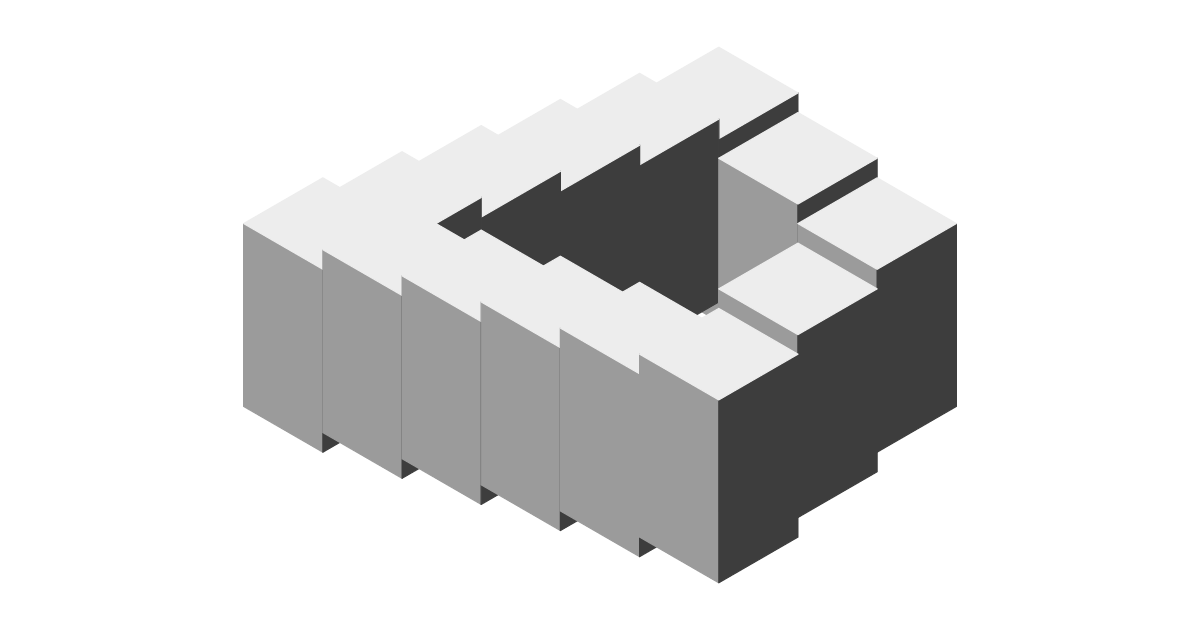
Penrose Triangle — 2026, generated SVG, dimensions variable · Ambiguity · Still
After Oscar Reutersvärd, 1934
Could this triangle really be built?
Could this triangle really be built?
Share
Reveal the answer
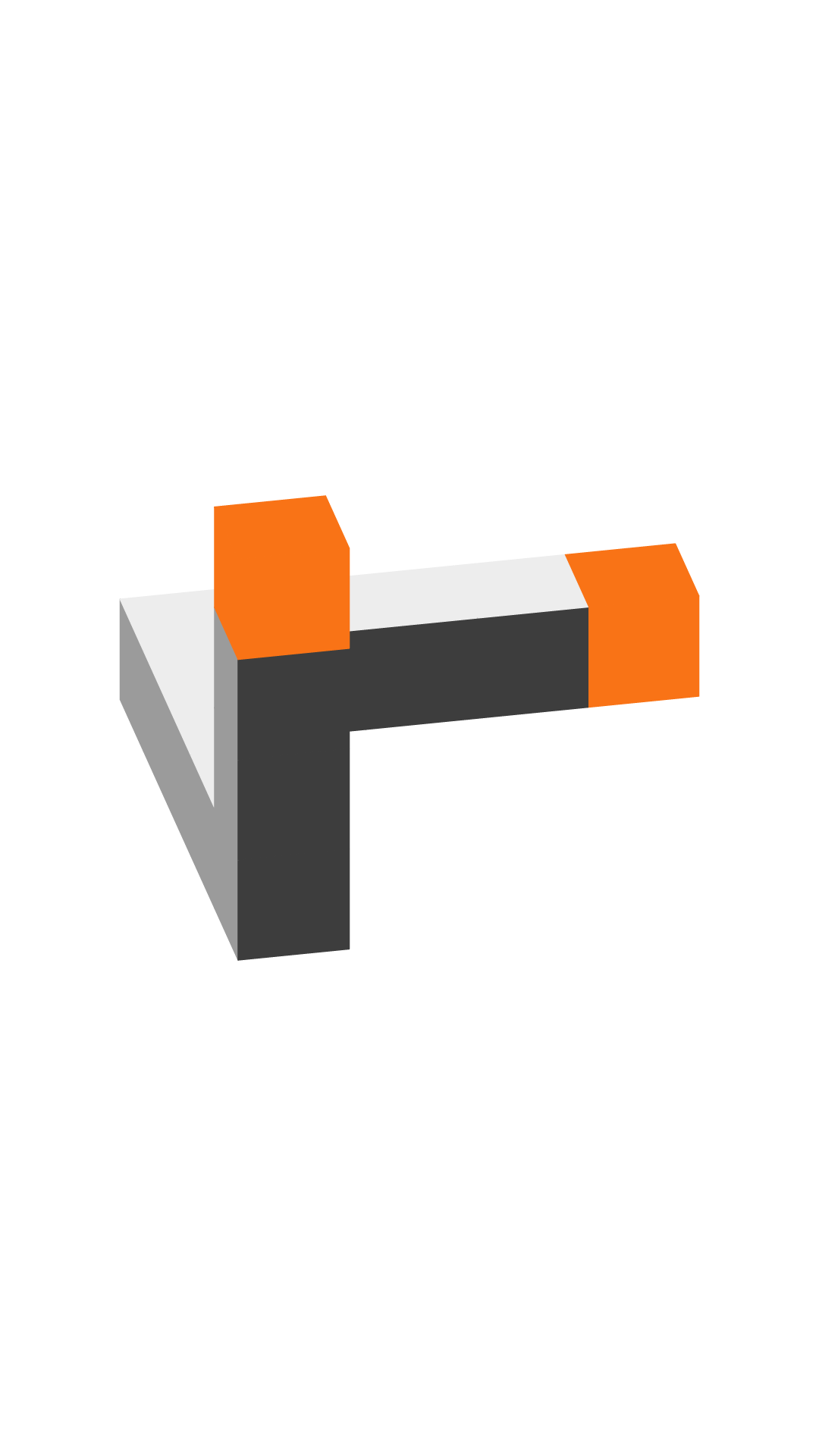
Yes, but it is open: an L-shaped beam seen from the angle where its ends meet.
↑ The mechanism, made visible.
Notes — why it looks that way
What is happening
Three square beams seem to join at right angles and close into a triangular loop. Cover the corners one at a time and each one looks like a perfectly ordinary solid. Look at the whole, though, and three right angles close a loop — something no real object can do.
Why it looks this way
The picture shows a solid that can actually be built. It is an L-shaped beam made of cubes laid out sideways, then backwards, then upwards, and the first and last cubes are really far apart. Seen from exactly one direction, diagonally from above, the last cube lands just below the first one in the picture, so the two ends seem to touch.
We read two surfaces that touch in a picture as surfaces that touch in space. A flat picture does not record distance in depth, so a near end and a far end that happen to overlap look the same. Each corner makes sense on its own; the contradiction only appears when you connect them all.
How to check
The answer view turns the same solid sideways. The two cubes painted orange are the ends that seemed to join in the normal view. Turned, they sit at different heights and depths, and the loop is open. The same trick also draws a staircase that climbs forever.
For reference: Penrose triangle (Wikipedia). The figure here is an original implementation.
First described
After Oscar Reutersvärd, 1934
The Swedish artist drew it first, out of stacked cubes. Lionel and Roger Penrose made it famous as an "impossible object" in 1958.
Media — images and data
- OG / X (1200×630)
- Instagram square (1080×1080)
- Shorts / Reels vertical (1080×1920)
- Answer image — landscape (X)
- Answer image — square (Instagram)
- Answer image — vertical (Shorts)
- Post drafts (JSON)





Free to use for non-commercial purposes such as classes, school projects and blogs, with a link back to this page as the credit. Commercial use is not covered
Every figure is generated here from the phenomenon itself (re-implemented). Cube layout and paint order designed from scratch and rendered as SVG. No existing figure or code is reproduced.