Only a Flat Image Reaches the Eye
The image formed at the back of your eye is always flat. Depth is not in it. We can still see the world as three-dimensional because the brain infers depth from the flat image.
The cues used for that inference can be drawn on paper too. So even a flat picture can seem to pop out or sink in once the cues are in place. This is a 3D illusion.
The Depth Cues the Brain Uses
Besides the offset between the two eyes (stereo vision), there are many cues that work with one eye. Illusions on paper and screens use these.
| Cue | How the brain reads it | Figure to try |
|---|---|---|
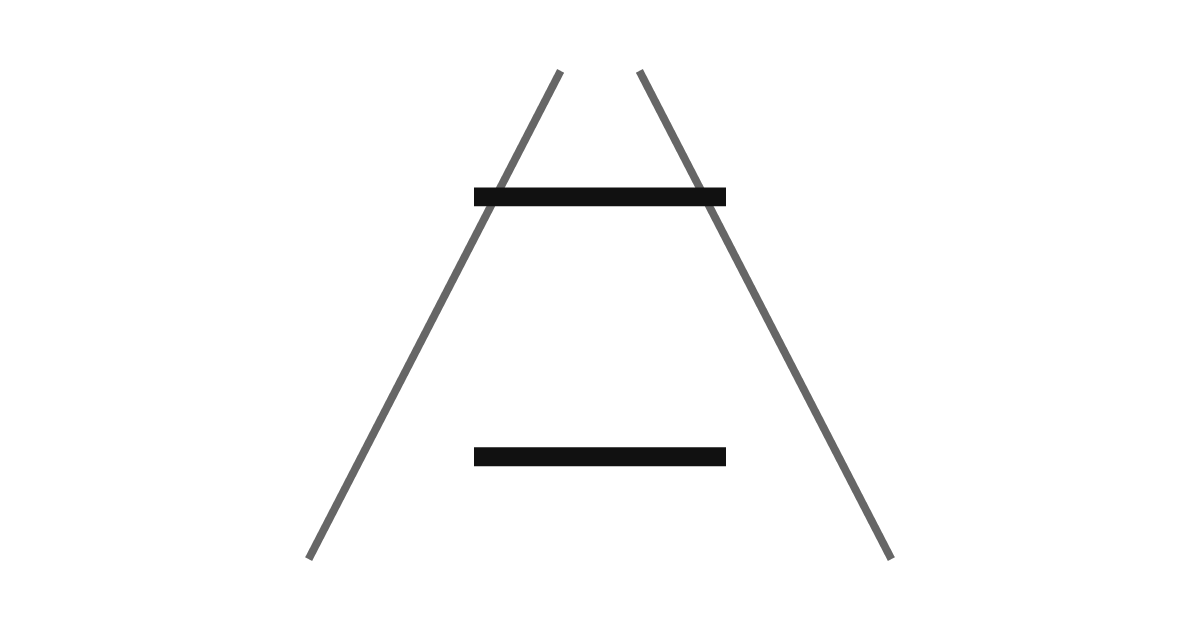
| Linear perspective | Lines narrowing into the distance continue far away | Ponzo Rails |
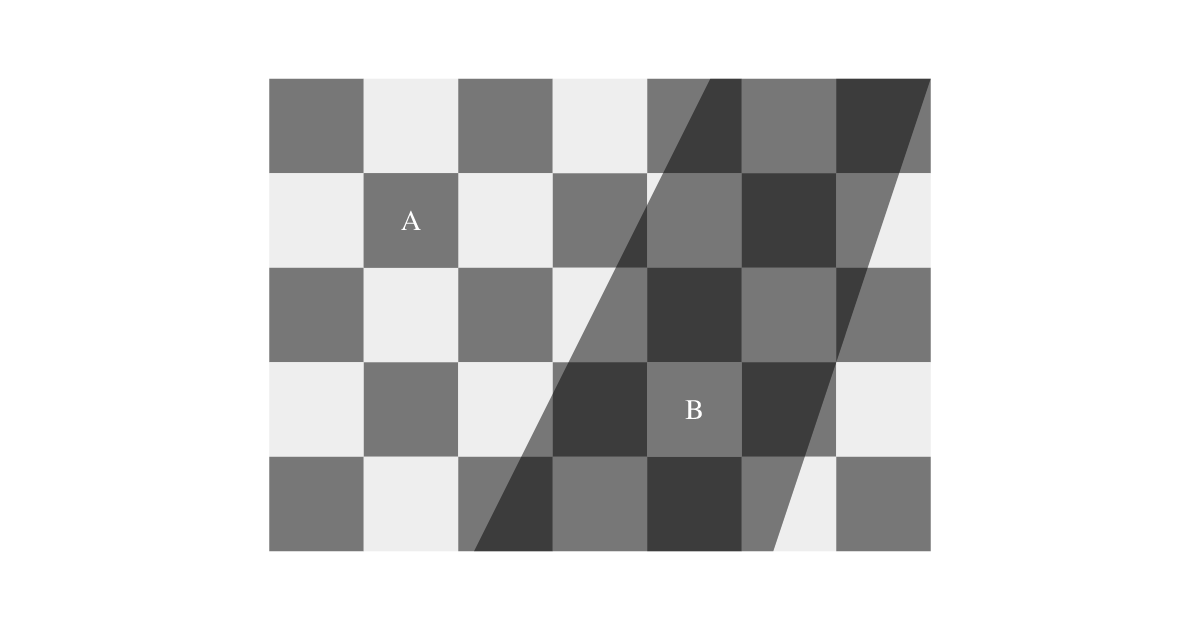
| Shading and shadow | Shadows tell you an object’s form and the light direction. It is natural for things in shadow to be dark | Checker Shadow |
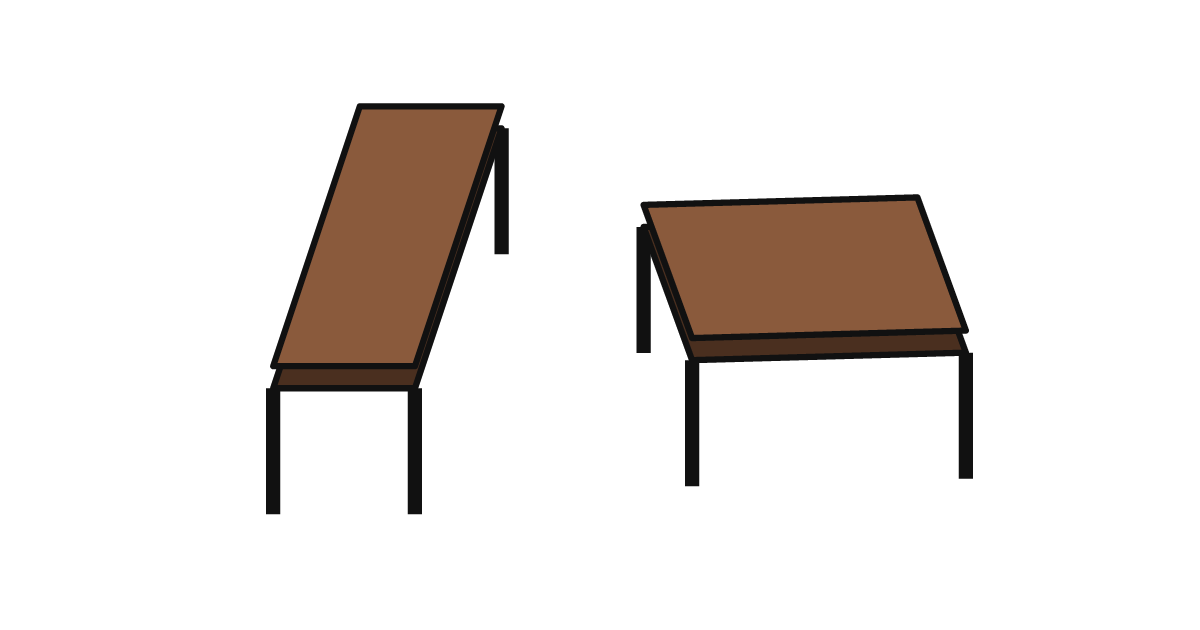
| Distortion of shape | A rectangle appears as a parallelogram because it is tilted away | Shepard Tables |
| Overlap | A near object hides a far one | Kanizsa Triangle |
| Apparent size | If two things are the same, the one that looks smaller is farther | Moon illusion |
When the Cues Are There — a 3D You Cannot Stop
In Shepard Tables, the two tabletops are exactly the same parallelogram. Yet once legs and thickness are drawn, the brain reads each top as a “rectangle tilted away”, and they look like a long, thin table and a wide one.
What matters is that even when you know the shapes are the same, the appearance does not correct itself. The inference about depth runs automatically, before you think.
Checker Shadow is the same. The moment you read a shadow as present, the brain corrects brightness by the amount of the shadow. That is why squares with the same pixel value look different in brightness.
When the Cues Are Missing — the Solid Flips
Take away the depth cues and the brain can no longer settle on one answer.
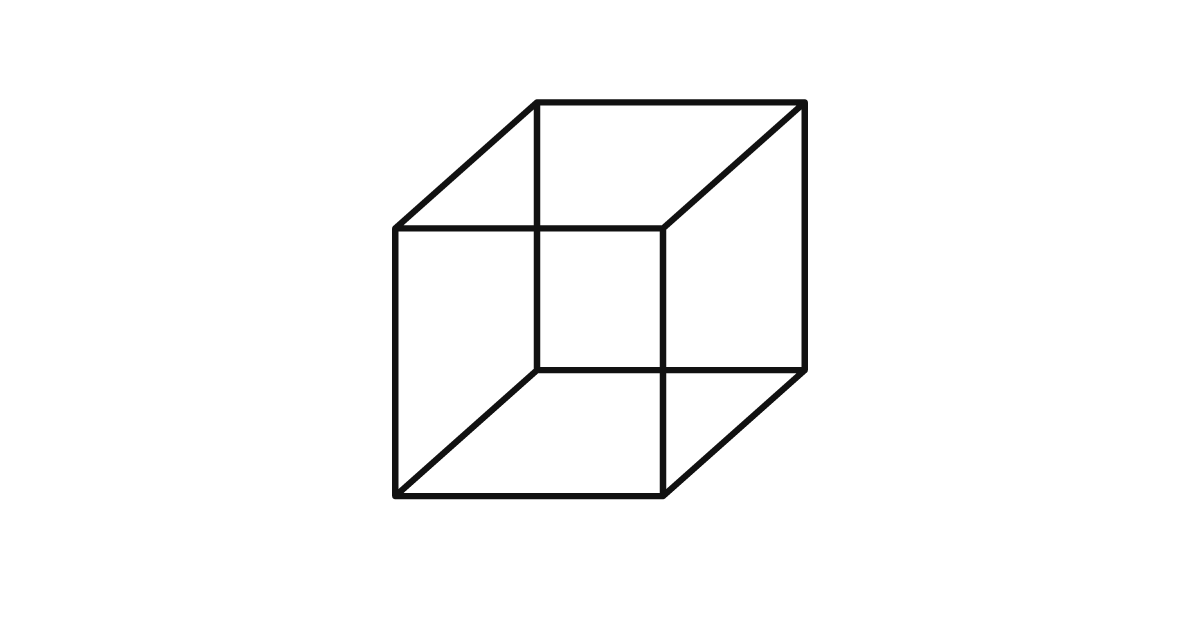
- Necker Cube — a cube with no shading and no hidden lines. Which face is in front keeps switching
- Spinning Point Clouds — a solid made only of dots. It can look like it spins clockwise or counterclockwise
- Reversing Ring — the rotation direction of a ring of dots suddenly flips
All of them look three-dimensional, yet which way the solid faces is undecided. This shows that looking 3D and deciding the direction of depth are separate jobs.
The Assumption That “Light Comes From Above”
When reading bumps and dents from shading, the brain tends to assume the light comes from above. A circle that is bright at the top and dark at the bottom tends to look like a bump, and one that is dark at the top and bright at the bottom like a dent.
A familiar example: turn a photo of lunar craters upside down, and the hollows may look like raised mounds. The content of the photo has not changed. What changed is only the relationship with the light direction the brain assumed.
Why Floor Trick Art Works From Only One Point
The floor pictures in interactive trick art exhibits are drawn stretched out so that the perspective is right only when seen from one fixed point. From that position, linear perspective and shading cues line up, and objects seem to jump out of the floor.
Move away from the spot and the cues fall apart, and it goes back to a distorted picture. It works well in photos because a camera is like a single eye and lacks the strong cue of the offset between two eyes.
Check It Yourself
- Trace the two tabletops of Shepard Tables onto paper held against the screen. Overlaid, they are the same shape
- While looking at the Necker Cube, concentrate on the face you want in front. See whether you can flip it on purpose
- When you photograph floor art or trick art, compare while closing one eye. Check whether the 3D effect is stronger with one eye
For the kinds of trick pictures overall, see What Is Trick Art?, and for how size illusions work, see Size and Context.