Trick Art Is a “Work”, an Illusion Is a “Phenomenon”
Trick art is a general term for pictures made so that viewers misread them on purpose. It includes pictures where you hunt for a hidden animal, pictures that turn into something else when you look another way, and flat pictures that seem to have the real thing in them.
The differences from similar words are as follows.
| Term | What it means | Example |
|---|---|---|
| Optical illusion | The phenomenon itself, where appearance and reality differ. It happens even with simple figures | Lines of the same length look different |
| Trick art | A picture or work made to fool the viewer using illusions and assumptions | Hidden pictures, figure-ground pictures, impossible buildings |
| Interactive trick art | Close to the same meaning. In Japan it often means hands-on exhibitions where you take photos | Pictures that seem to jump out of the floor, or look like a hole in the wall |
| Trompe-l’œil | French for “deceive the eye”. A painting so realistic it is mistaken for the real thing | A window painted on a wall, a figure that seems to step out of the frame |
In short, an illusion is the material and trick art is a work made with that material. The figures on this site are made not to be displayed as trick art, but to check one by one which material works and how.
Four Types of Trick Art
1. Hidden Pictures — Something Hides in a Pattern
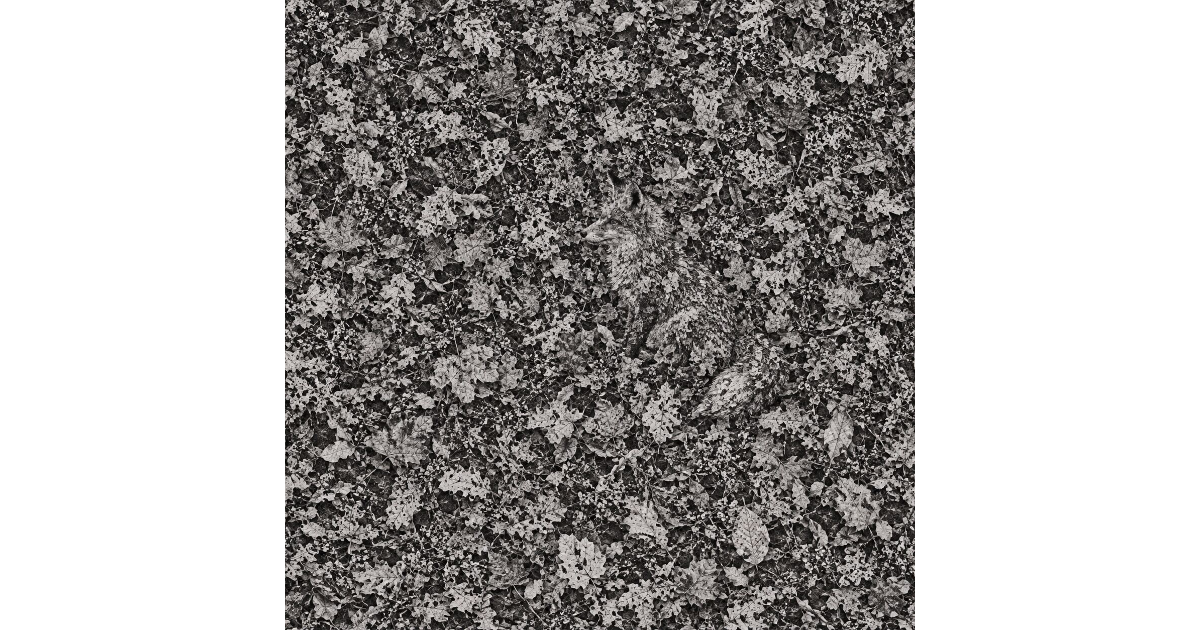
A picture with an animal, a face, or text mixed into a pattern or scenery. It cannot be seen until you find it, and once you find it, you can no longer pretend not to see it.
- Hidden in the Leaves — one animal in a black-and-white pattern of fallen leaves
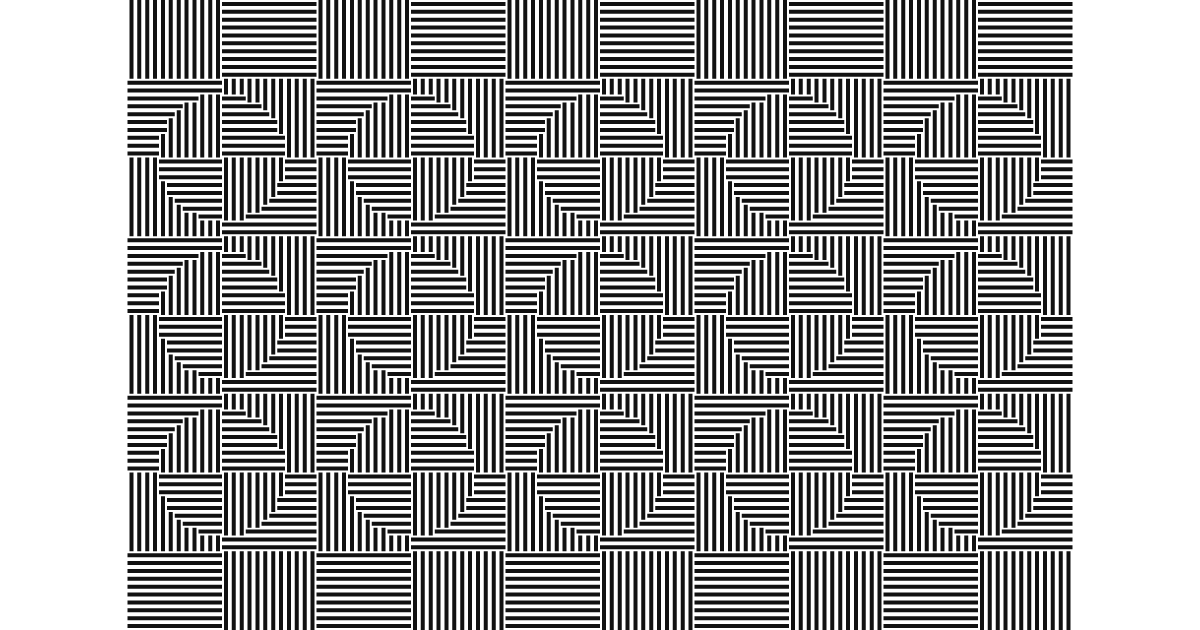
- Coffer Illusion — circles hidden in a grid of rectangles
- Hidden Text — noise up close, text from far away
Hidden pictures work because the brain links outlines to search for shapes. If the lines of the pattern and the outline of the hidden object are equally strong, the brain cannot decide which outline is which, and the hidden object melts into the background.
2. Figure-Ground and Ambiguous Figures — Another Thing Depending on How You Look
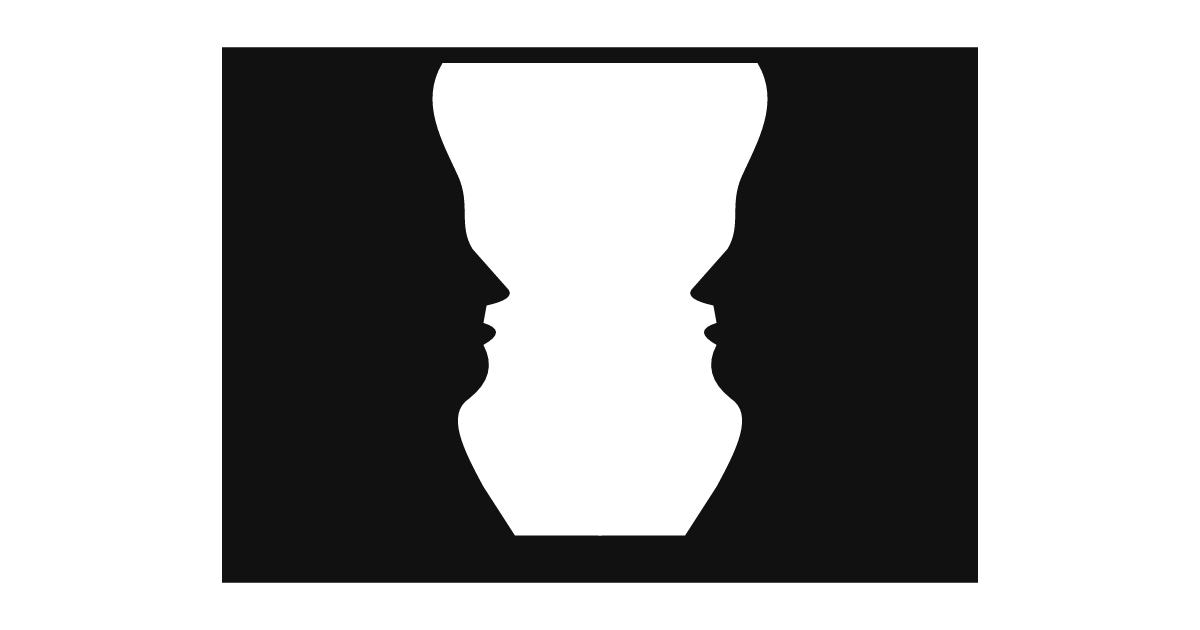
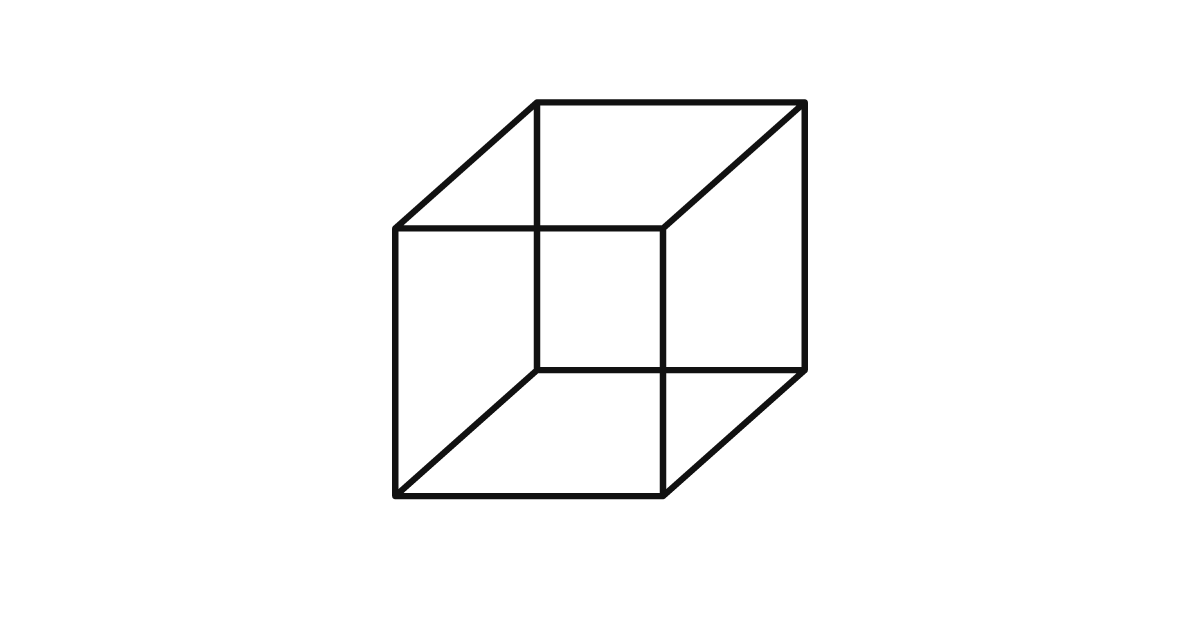
A picture with two readings inside one figure at the same time. You can see only one at a time, and while you look it suddenly switches.
- Vase or Faces — it can look like a white vase or like two faces looking at each other
- Necker Cube — which face is in front keeps switching
- Spinning Point Clouds — it can look like it spins clockwise or counterclockwise
The Edo-period yose-e (composite pictures), where many people gather to form one face, belong here too. Up close it is a group of people; from far away it is a face. The answer changes depending on whether you read the parts or the whole as the “figure”. The mechanism is covered in more detail in One Picture, Two Answers.
3. Pictures That Look 3D — Depth on a Flat Surface
Draw in shadows and perspective lines, and a flat sheet or floor seems to sink in or jump out. This is the most common type at trick art exhibitions.
- Checker Shadow — if you think there is a shadow, squares of the same colour look different in brightness
- Shepard Tables — tops of the same shape look completely different once legs are added
Many floor pictures at exhibitions are deliberately drawn stretched so that they look right only from one fixed point. From another place, they go back to a distorted picture. Why a flat surface looks 3D is summarised in 3D Illusions.
4. Impossible Figures — Every Part Is Right but the Whole Cannot Exist
Every corner is drawn correctly, yet following the whole thing gives a shape that cannot be built in reality. Famous examples are a triangle whose three beams all join at right angles, and a staircase that keeps going up yet returns to where it started.
The brain reads the figure as 3D part by part, and notices the contradiction of the whole only afterwards. Try this type here with the Penrose Triangle and Penrose Stairs.
Tips for Enjoying Trick Art
- Do not look at the answer first. With a hidden picture, the moment you find it is the best part
- When you find it, try making it unseen. Making something you have seen disappear again is harder than finding it
- Change distance and angle. Some pictures change just by moving away, squinting, or tilting the screen
- Show it to someone and ask what they saw first. With ambiguous figures, which reading appears first differs between people
The kinds of optical illusions themselves and why they happen are covered in What Is an Optical Illusion?.