Illusions Are Not Only on Screens
Illusion figures simplify lines and colours to pull out “where judgement goes off”. The same shift happens in everyday scenery. You rarely notice, because most of the time the guessing is useful. Here are familiar examples, along with figures where you can check the mechanism.
Examples of Size and Length
| Everyday scene | What is happening | Figure to try |
|---|---|---|
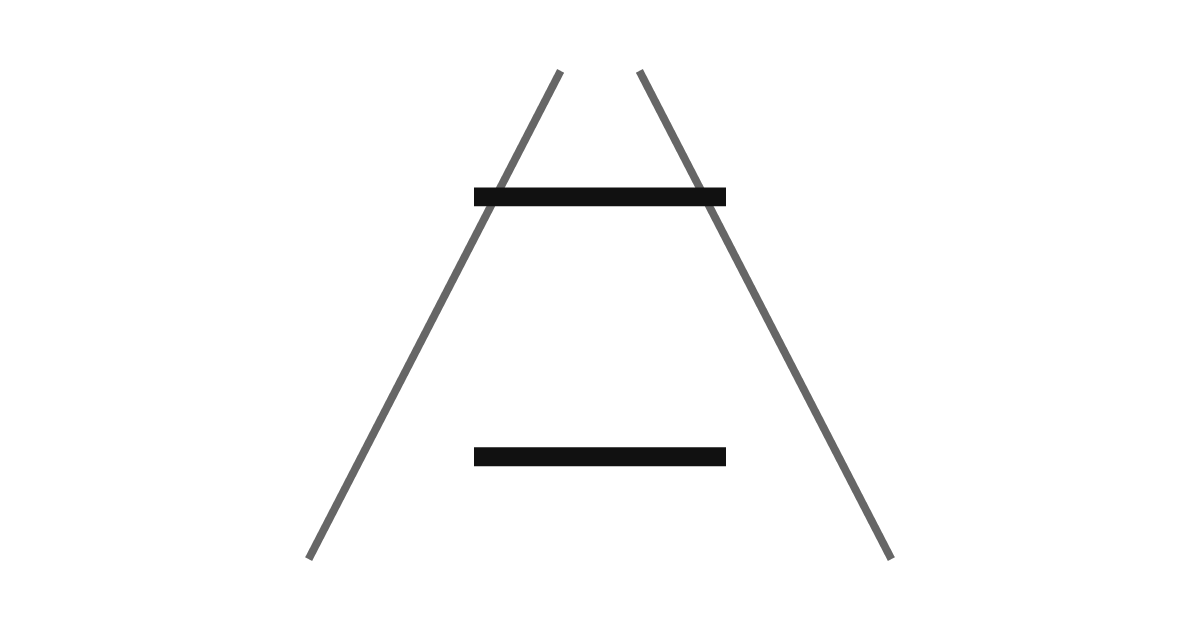
| The moon near the horizon looks bigger (moon illusion) | Distance cues change the judgement of size. The cause is debated | Ponzo Rails |
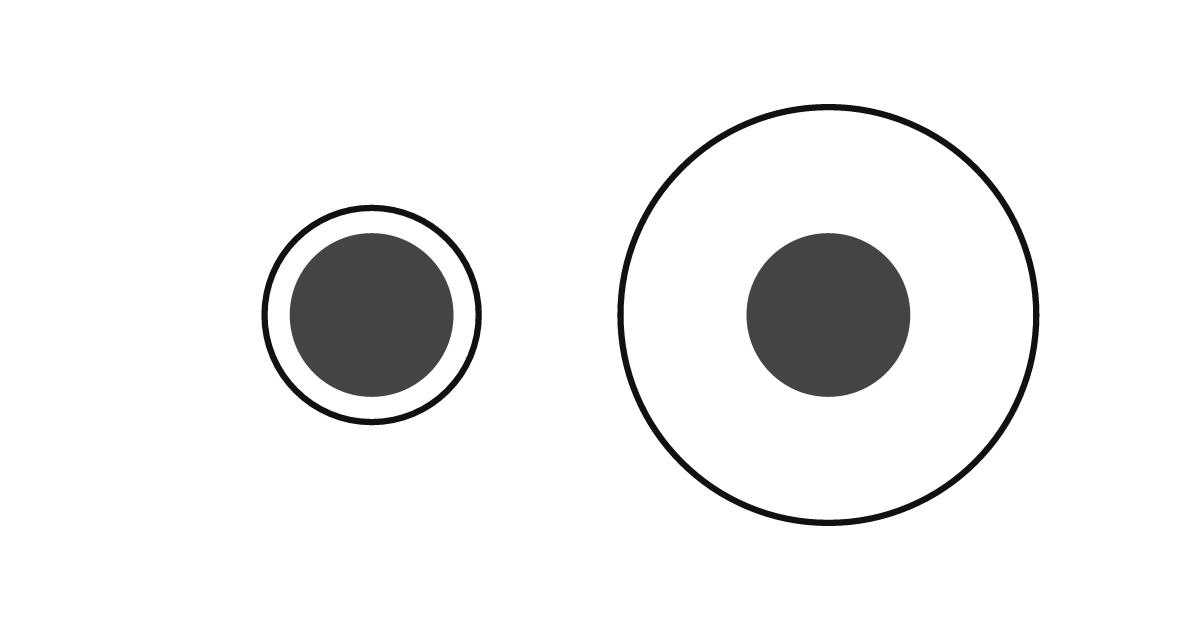
| Food on a big plate looks like less | You judge the size of the contents by comparing with the ring around it | Delboeuf Circles |
| A house in front looks small next to big buildings | You estimate size by comparison with surrounding objects | Ebbinghaus |
| A tall tower or building feels longer vertically | Vertical lengths tend to be overestimated relative to horizontal ones | Vertical / Horizontal |
| A shelf full of things can look longer than an empty wall of the same width | A distance with many divisions looks longer | Oppel-Kundt |
Examples of Brightness and Color
| Everyday scene | What is happening | Figure to try |
|---|---|---|
| The same clothes look a different colour depending on the background | Colour is judged by differences from its surroundings (simultaneous contrast) | Simultaneous Contrast |
| White paper in shadow looks whiter than grey paper in sunlight | The visual system subtracts the lighting to guess an object’s colour | Checker Shadow |
| A bright or dark band appears right next to a shadow edge | Brightness boundaries are emphasised | Mach Bands |
Examples of Motion and Adaptation
| Everyday scene | What is happening | Figure to try |
|---|---|---|
| After watching a river or waterfall, the bank seems to move the other way | The rebound from getting used to the same motion (motion aftereffect) | Gaze and adaptation |
| In a stopped train, when the next train moves you feel you moved | When most of the visual field moves, you tend to interpret it as your own motion | — |
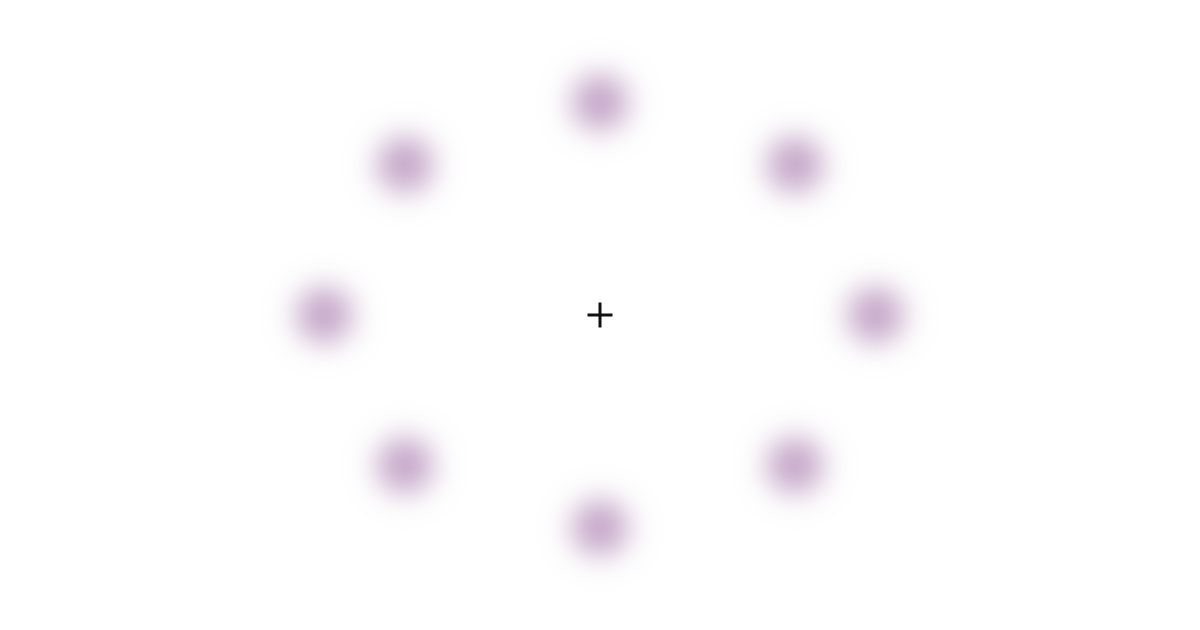
| Staring at one point, blurry things around it disappear | You get used to an unchanging stimulus and stop sensing it | Fading Dots |
| A road that looks uphill although it goes downhill (gravity hills and the like) | You judge the road’s slope against the slope of the surrounding terrain | — |
Examples of Shape and Interpretation
Seeing faces in clouds or stains on a wall, or misreading the letters on a distant sign as another word, are also expressions of the tendency to fit a “likely shape” to limited information. Figures that can be seen in two ways are covered in ambiguous figures, and the phenomenon of seeing an outline where no line exists can be tried in the Kanizsa Triangle.
If You Make It a Science Project
- Pick one illusion. Length illusions (such as the Müller-Lyer) are easy to handle because you can check with a ruler
- Change only one condition. The angle of the fins, the background colour, the viewing distance, and so on
- Have several people look and record their answers. Appearances differ between people, so do not decide from one person’s result
- Look for everyday examples and photograph them. The scenes in the tables above are a starting point
How an illusion looks says nothing good or bad about ability or personality. If someone could not see it, that is an important record too.